Larus heermanni
Heermann's Gull
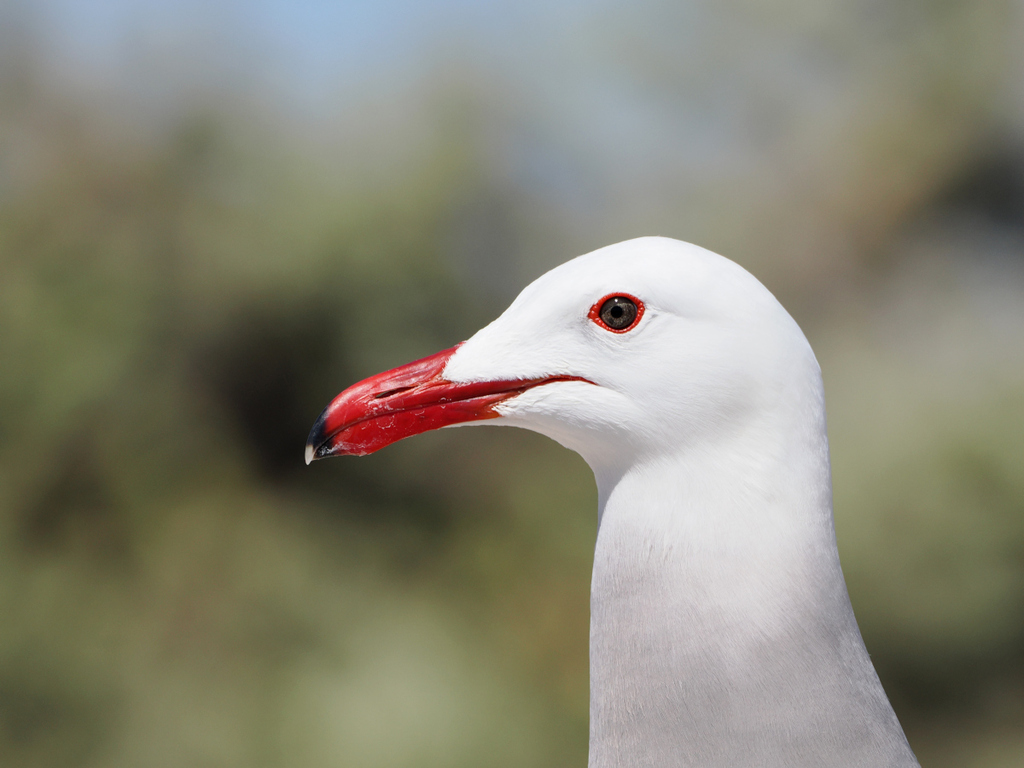
no rights reserved · CC0
Family: Laridae · Class: Aves · Order: Charadriiformes
Larus heermanni (Heermann's Gull) is a California animal in the Laridae family.
Heermann's Gull is a medium-sized gull endemic to the Pacific Coast, distinguished by its unique dark plumage and white head in breeding adults. Adults measure 46 to 51 centimeters (18 to 20 inches) in length with a wingspan of 109 to 124 centimeters (43 to 49 inches), weighing 370 to 540 grams (13 to 19 ounces). Breeding adults display a striking white head contrasting with a dark gray body and wings, bright red bill with a black tip, and red legs. Non-breeding adults develop a dusky head with darker streaking, while juveniles appear uniformly brown with pink legs and a pink bill with a dark tip. The species exhibits sexual dimorphism, with males slightly larger than females. Heermann's Gull breeds almost exclusively on islands off the Pacific coast of Mexico, primarily in the Gulf of California. Approximately 95 percent of the world's population nests on Isla Rasa in the Gulf of California. During the non-breeding season, the species disperses northward along the Pacific Coast from southern Baja California to British Columbia, with regular occurrence as far north as Washington and occasional records in Oregon. In California, post-breeding birds arrive in late spring and early summer, with peak numbers occurring from July through September. The species is most abundant along the central and southern California coast. The species inhabits coastal marine environments, showing strong preference for rocky shores, sandy beaches, harbors, and offshore waters within the continental shelf. Heermann's Gulls forage primarily in nearshore waters, typically within 10 kilometers of the coast. They frequent areas with upwelling that support high concentrations of small schooling fish. The species also utilizes human-modified habitats including fishing ports, piers, and coastal urban areas where food resources are available. Heermann's Gulls are opportunistic feeders with a diet consisting primarily of small fish, particularly anchovies and sardines. They employ various foraging strategies including surface dipping, shallow diving, and kleptoparasitism, stealing food from pelicans and other seabirds. The species often follows feeding pelicans, attempting to steal fish from their pouches. Breeding occurs in dense colonies on isolated islands, with nesting beginning in April. Females lay 2 to 3 eggs in ground nests lined with vegetation and debris. Incubation lasts 25 to 29 days, and chicks fledge after 45 to 50 days. Heermann's Gull is not federally or state listed but faces conservation challenges due to its highly restricted breeding range. The species' dependence on Isla Rasa for reproduction makes it vulnerable to catastrophic events including storms, human disturbance, and introduced predators. Climate change poses additional threats through alterations in ocean productivity and prey availability. Historically, egg collection and guano harvesting reduced populations, but protective measures have allowed recovery. Current population estimates suggest approximately 150,000 to 200,000 individuals. Conservation efforts focus on protecting breeding colonies and monitoring population trends along the Pacific flyway.
Classification
Class: Aves · Order: Charadriiformes · Family: Laridae
Frequently asked questions
How is Larus heermanni classified?
Larus heermanni belongs to class Aves, order Charadriiformes, family Laridae.
What family does Larus heermanni belong to?
Larus heermanni is in the Laridae family.
What is Larus heermanni?
Heermann's Gull is a medium-sized gull endemic to the Pacific Coast, distinguished by its unique dark plumage and white head in breeding adults.
Is Larus heermanni found in California?
Yes. Larus heermanni is recorded in California in The California Species Project's catalogue.
Related species
Other California species in the same genus, family, or bioregion.
Data from The California Species Project — 14,000+ California species with verified data from CNPS, CDFW, USFWS, and more.