Larus livens
Yellow-footed Gull
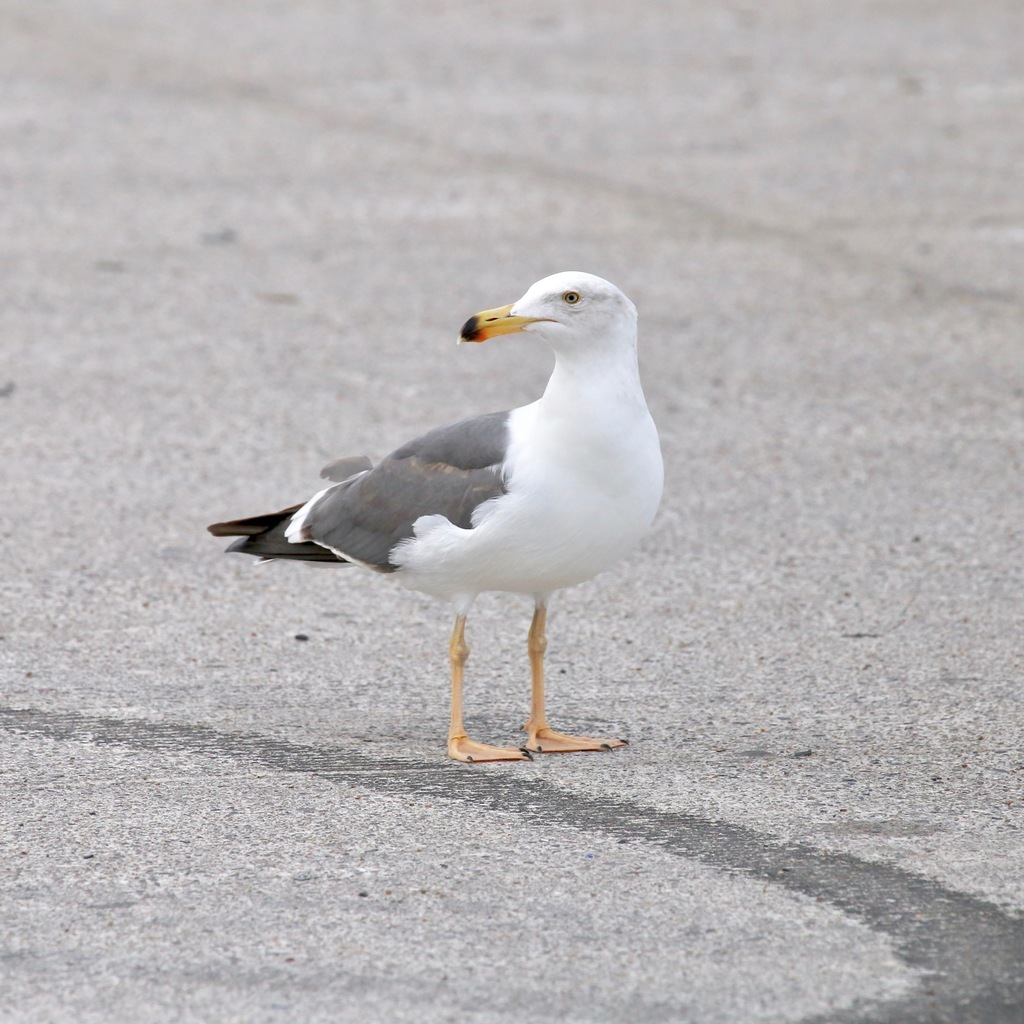
(c) Laura Gaudette, some rights reserved (CC BY) · licence
Family: Laridae · Class: Aves · Order: Charadriiformes
Larus livens (Yellow-footed Gull) is a California animal in the Laridae family.
The Yellow-footed Gull (Larus livens) is a large seabird endemic to the Gulf of California region. Adults measure 53 to 64 centimeters (21 to 25 inches) in length with a wingspan reaching 140 to 160 centimeters (55 to 63 inches). The species weighs between 1,050 to 1,625 grams (2.3 to 3.6 pounds). Adults display a white head, neck, and underparts, with a gray mantle and black wingtips marked by white spots. The distinctive bright yellow legs and feet give the species its common name. The bill is yellow with a red spot near the tip of the lower mandible. During winter, adults develop light streaking on the head and neck. Juveniles are mottled brown and gray, requiring three to four years to reach adult plumage. The Yellow-footed Gull breeds exclusively along the coasts of the Gulf of California (Sea of Cortez) in Mexico, with major colonies on islands including Isla San Pedro Mártir, Isla Rasa, and several smaller islands. In California, the species occurs as a post-breeding visitor to the Salton Sea, typically arriving in late May and June after the breeding season. Small numbers may remain through winter. The species occasionally appears along the Pacific coast from San Diego County north to Monterey County, though these sightings are rare. The primary habitat consists of rocky islands and coastal areas in the Gulf of California during breeding season. At the Salton Sea, Yellow-footed Gulls utilize mudflats, sandy shores, rocky breakwaters, and nearby agricultural fields. They roost on pilings, breakwaters, and islands within the sea. The species shows strong site fidelity to traditional roosting areas and foraging zones. Yellow-footed Gulls are opportunistic feeders with a diverse diet including fish, invertebrates, eggs, chicks of other seabirds, and human-generated food waste. At the Salton Sea, they consume tilapia, barnacles, and other available prey items. The species breeds colonially on rocky islands, constructing nests in scrapes lined with vegetation and debris. Breeding occurs from April through August, with peak laying in May and June. Clutch size typically ranges from two to three eggs, with an incubation period of 28 to 30 days. Chicks fledge after approximately 50 to 55 days. The Yellow-footed Gull is not federally or state listed in California, as it is not a resident breeding species. The global population is estimated at approximately 60,000 to 90,000 individuals according to BirdLife International. The species faces threats from human disturbance at breeding colonies, introduced mammals on nesting islands, pollution, and climate change impacts on marine food webs. In California, habitat changes at the Salton Sea, including declining water levels and increasing salinity, may affect the species' post-breeding occurrence. Conservation efforts focus on protecting critical breeding islands in Mexico and monitoring population trends.
Classification
Class: Aves · Order: Charadriiformes · Family: Laridae
Frequently asked questions
How is Larus livens classified?
Larus livens belongs to class Aves, order Charadriiformes, family Laridae.
What family does Larus livens belong to?
Larus livens is in the Laridae family.
What is Larus livens?
The Yellow-footed Gull (Larus livens) is a large seabird endemic to the Gulf of California region.
Is Larus livens found in California?
Yes. Larus livens is recorded in California in The California Species Project's catalogue.
Related species
Other California species in the same genus, family, or bioregion.
Data from The California Species Project — 14,000+ California species with verified data from CNPS, CDFW, USFWS, and more.