Larus marinus
Great Black-backed Gull
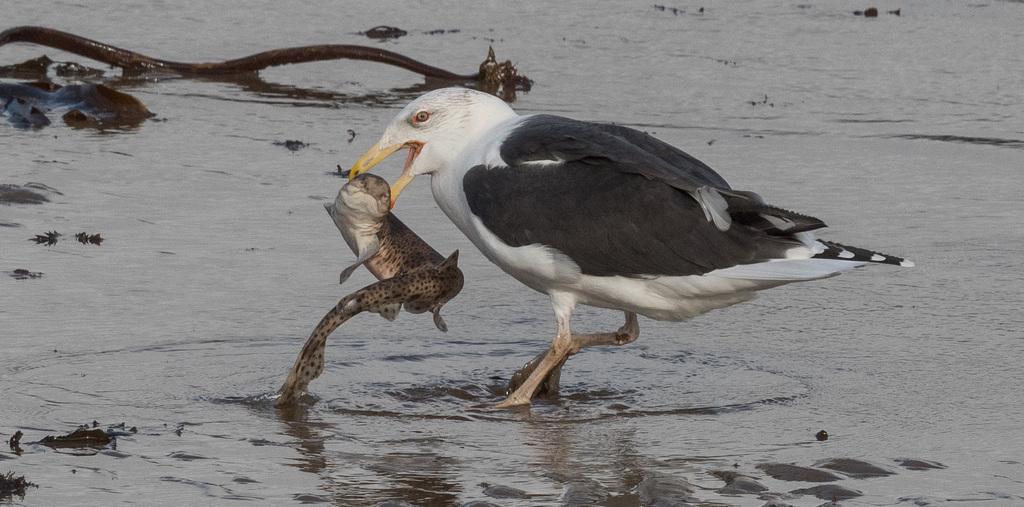
no rights reserved · CC0
Family: Laridae · Class: Aves · Order: Charadriiformes
Larus marinus (Great Black-backed Gull) is a California animal in the Laridae family.
The Great Black-backed Gull is the largest gull species in the world, with adults measuring 64 to 79 centimeters (25 to 31 inches) in length and weighing 1.3 to 2.3 kilograms (2.9 to 5.1 pounds). The wingspan ranges from 150 to 170 centimeters (59 to 67 inches). Adults display distinctive dark slate-gray to black dorsal plumage on the wings and back, contrasting sharply with white underparts, head, and tail. The bill is yellow with an orange-red spot on the lower mandible, and the legs are pinkish to flesh-colored. Juveniles show mottled brown plumage with dark bills and take four years to reach adult coloration. In California, Great Black-backed Gulls are extremely rare visitors, primarily occurring as vagrants along the coast during winter months. The species breeds primarily in the North Atlantic, with populations concentrated along the coasts of eastern Canada, Greenland, Iceland, northern Europe, and the northeastern United States from Maine to North Carolina. California records are sporadic and typically involve single individuals observed at coastal locations, harbors, and large inland water bodies. The species inhabits marine and coastal environments, including rocky shores, sandy beaches, estuaries, and offshore waters. Great Black-backed Gulls frequent harbors, fishing ports, and garbage dumps near coastal areas. They can be found from sea level to moderate elevations when following rivers or visiting inland lakes. The species shows strong site fidelity to breeding colonies, typically nesting on isolated islands, cliff tops, and coastal marshes with minimal human disturbance. Great Black-backed Gulls are opportunistic predators and scavengers with a varied diet including fish, crustaceans, mollusks, marine worms, bird eggs, chicks of other seabirds, small mammals, and carrion. They are known to prey on other gull species and can take birds as large as cormorants. Breeding occurs from May through July, with pairs constructing nests of vegetation, seaweed, and debris on the ground. Females typically lay two to three olive-brown eggs with dark markings, which are incubated for 27 to 28 days. Both parents care for the semi-precocial young, which fledge after seven to eight weeks. The Great Black-backed Gull is not federally listed and is considered a species of least concern globally. The species has shown population stability and even increases in some regions following historical declines due to hunting and egg collection in the early 20th century. In North America, breeding populations have expanded southward along the Atlantic coast. Climate change may affect the species through altered prey availability and shifting ocean conditions. In California, the species remains an exceptional vagrant with no established breeding populations or regular wintering areas.
Classification
Class: Aves · Order: Charadriiformes · Family: Laridae
Frequently asked questions
How is Larus marinus classified?
Larus marinus belongs to class Aves, order Charadriiformes, family Laridae.
What family does Larus marinus belong to?
Larus marinus is in the Laridae family.
What is Larus marinus?
The Great Black-backed Gull is the largest gull species in the world, with adults measuring 64 to 79 centimeters (25 to 31 inches) in length and weighing 1.3 to 2.3 kilograms (2.9 to 5.1 pounds).
Is Larus marinus found in California?
Yes. Larus marinus is recorded in California in The California Species Project's catalogue.
Related species
Other California species in the same genus, family, or bioregion.
Data from The California Species Project — 14,000+ California species with verified data from CNPS, CDFW, USFWS, and more.