Lasioglossum channelense
Channel Island Sweat Bee
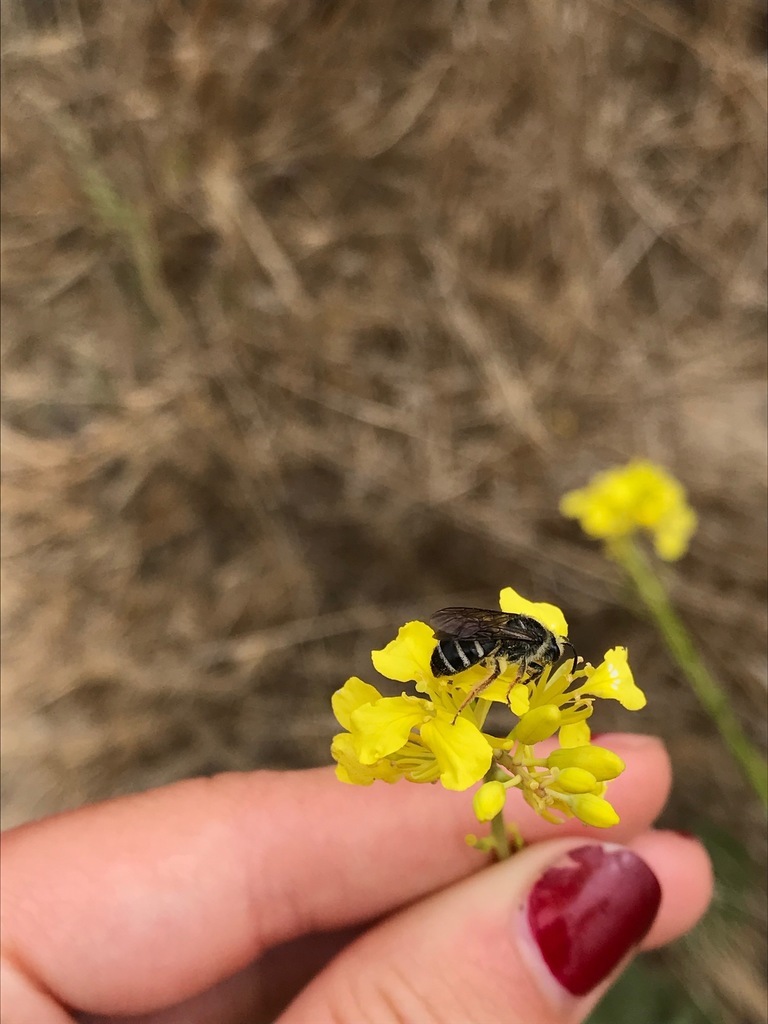
(c) Emily Chebul, some rights reserved (CC BY-SA) · licence
Family: Halictidae · Class: Insecta · Order: Hymenoptera
Conservation status: G3 S3
Lasioglossum channelense (Channel Island Sweat Bee) is a California animal in the Halictidae family.
The Channel Island Sweat Bee (Lasioglossum channelense) is a small native bee endemic to California's Channel Islands. As a member of the family Halictidae, this species belongs to a diverse group of ground-nesting bees commonly known as sweat bees. Like other Lasioglossum species, L. channelense likely measures 4 to 11 millimeters (0.16 to 0.43 inches) in length, though specific morphological details for this species have not been well documented in the scientific literature. This species is endemic to the Channel Islands off the coast of California, representing one of the few bee species restricted to this island archipelago. The specific islands where L. channelense occurs and the extent of its distribution within the Channel Islands ecosystem have not been comprehensively documented in available literature. The species' island endemism makes it particularly vulnerable to environmental changes and habitat modifications. Channel Island Sweat Bees likely inhabit the diverse vegetation communities found across the Channel Islands, which include coastal sage scrub, chaparral, grasslands, and oak woodlands. As ground-nesting bees, they require suitable soil conditions for excavating burrows where females construct their nests. The specific habitat preferences, nesting requirements, and elevation range of L. channelense remain poorly documented in the scientific literature. Like other sweat bees, L. channelense is presumed to be a generalist forager, collecting pollen and nectar from a variety of flowering plants to provision their underground nests. The species likely exhibits the typical halictid life cycle, with females constructing burrows in soil where they create individual cells provisioned with pollen balls. Eggs are laid on these provisions, and larvae develop within the protected underground environment. The specific flowering plants utilized by this species, breeding season timing, and social structure have not been well studied. Lasioglossum channelense has a global and state conservation ranking of G3 S3, indicating it is vulnerable to extirpation due to restricted range or other factors. According to NatureServe, the only known threat to this species is competition by non-native plant species with native nectar sources. The introduction and spread of invasive plant species on the Channel Islands could reduce the availability of native flowering plants that serve as important pollen and nectar resources for the bee. Island ecosystems are particularly susceptible to invasive species impacts due to their isolation and the evolutionary naivety of native species to introduced competitors. The limited scientific documentation available for L. channelense reflects the broader challenge of studying and conserving invertebrate biodiversity, particularly on islands where specialized endemic species may have restricted distributions and face unique conservation pressures. Further research is needed to document this species' biology, distribution, and specific conservation needs within the Channel Islands ecosystem.
Classification
Class: Insecta · Order: Hymenoptera · Family: Halictidae
Conservation status
G3 S3
Frequently asked questions
How is Lasioglossum channelense classified?
Lasioglossum channelense belongs to class Insecta, order Hymenoptera, family Halictidae.
What family does Lasioglossum channelense belong to?
Lasioglossum channelense is in the Halictidae family.
Is Lasioglossum channelense protected or of conservation concern?
Lasioglossum channelense carries the following status: G3 S3.
What is Lasioglossum channelense?
The Channel Island Sweat Bee (Lasioglossum channelense) is a small native bee endemic to California's Channel Islands.
Is Lasioglossum channelense found in California?
Yes. Lasioglossum channelense is recorded in California in The California Species Project's catalogue.
Related species
Other California species in the same genus, family, or bioregion.
Data from The California Species Project — 14,000+ California species with verified data from CNPS, CDFW, USFWS, and more.