Lasioglossum sisymbrii
Tansy Mustard Sweat Bee
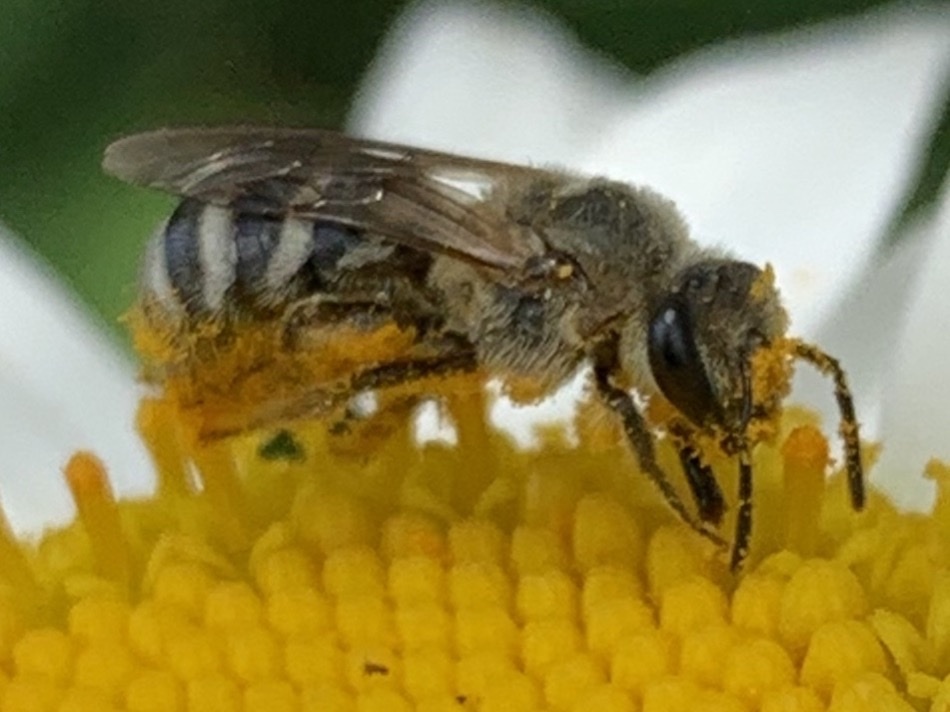
(c) eebee, some rights reserved (CC BY) · licence
Family: Halictidae · Class: Insecta · Order: Hymenoptera
Lasioglossum sisymbrii (Tansy Mustard Sweat Bee) is a California animal in the Halictidae family.
The Tansy Mustard Sweat Bee is a small halictid bee in the subgenus Lasioglossum. According to observations from Nevada, adults measure approximately 10.2 mm in length (BugGuide.Net 2019). Like other sweat bees in the genus Lasioglossum, this species typically displays metallic coloration, though specific color patterns for L. sisymbrii have not been well documented in available literature. Lasioglossum sisymbrii occurs across western North America, with documented records from California, Nevada, and other western states. The species has been observed in Red Rock Canyon near Las Vegas, Clark County, Nevada, indicating its presence in arid southwestern habitats (BugGuide.Net 2019). NatureServe assigns this species a global conservation rank of G5, suggesting it is secure across its range (NatureServe Explorer). This species inhabits diverse western landscapes, from desert environments to areas with mustard family plants. The common name suggests an association with tansy mustard (Sisymbrium species), though specific host plant relationships have not been thoroughly documented. Observations from Red Rock Canyon indicate the species can utilize arid, rocky canyon habitats typical of the Mojave Desert region. As suggested by its common name, L. sisymbrii likely forages on flowers of tansy mustard and related plants in the Brassicaceae family. Like other Lasioglossum species, females probably construct ground nests in suitable soil substrates. The species was observed active in March in Nevada, suggesting early spring flight periods coinciding with mustard flower blooms. Many sweat bees are generalist pollinators, visiting multiple flower types while showing preferences for certain plant families. Social behavior patterns for this species have not been specifically studied, though related Lasioglossum species exhibit varying degrees of sociality from solitary to primitively social. Conservation status appears stable based on the G5 global ranking from NatureServe, indicating the species faces no immediate conservation threats. The widespread distribution across western states suggests adequate population stability. However, like many native bee species, L. sisymbrii may face pressures from habitat modification, pesticide use, and climate change effects on flowering plant communities. Specific population trends and conservation needs have not been assessed. Detailed ecological studies of this species remain limited. The information presented here synthesizes available observations from taxonomic databases and community reports. Research gaps exist regarding specific nesting biology, detailed host plant relationships, seasonal activity patterns, and population dynamics. Additional field studies would enhance understanding of this species' ecological role in western pollinator communities and any conservation requirements.
Classification
Class: Insecta · Order: Hymenoptera · Family: Halictidae
Frequently asked questions
How is Lasioglossum sisymbrii classified?
Lasioglossum sisymbrii belongs to class Insecta, order Hymenoptera, family Halictidae.
What family does Lasioglossum sisymbrii belong to?
Lasioglossum sisymbrii is in the Halictidae family.
What is Lasioglossum sisymbrii?
The Tansy Mustard Sweat Bee is a small halictid bee in the subgenus Lasioglossum.
Is Lasioglossum sisymbrii found in California?
Yes. Lasioglossum sisymbrii is recorded in California in The California Species Project's catalogue.
Related species
Other California species in the same genus, family, or bioregion.
Data from The California Species Project — 14,000+ California species with verified data from CNPS, CDFW, USFWS, and more.