Lasiurus xanthinus
Western Yellow Bat
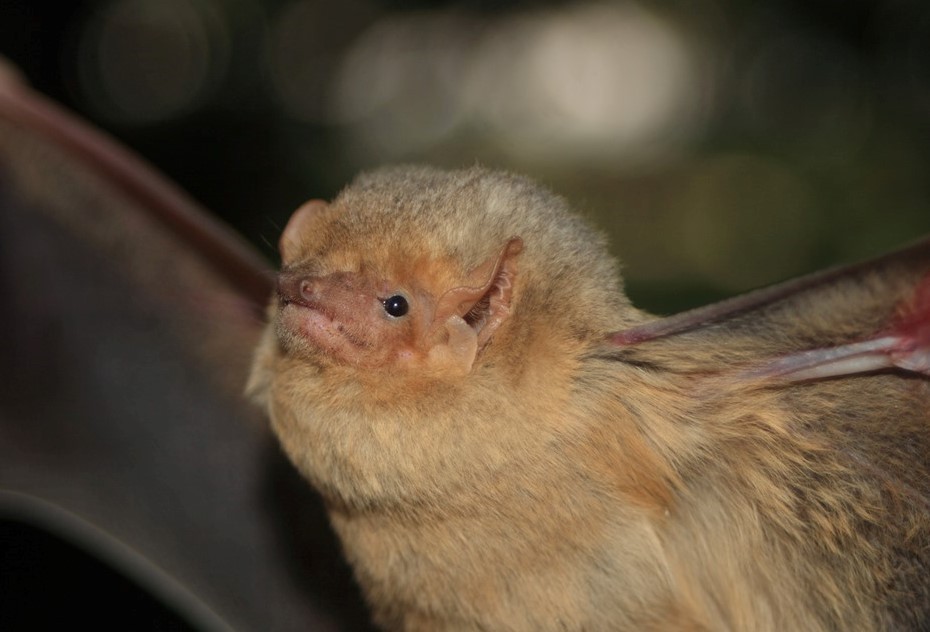
(c) Juan Cruzado Cortés, some rights reserved (CC BY-SA) · licence
Family: Vespertilionidae · Class: Mammalia · Order: Chiroptera
Conservation status: G4G5 S3
Lasiurus xanthinus (Western Yellow Bat) is a California animal in the Vespertilionidae family.
The Western Yellow Bat is a medium-sized vespertilionid bat with distinctive yellowish coloration. Adults measure 95 to 110 mm (3.7 to 4.3 inches) in total length, with a forearm length of 48 to 55 mm (1.9 to 2.2 inches). Body mass ranges from 12 to 20 grams. The dorsal fur is bright yellow to yellowish-brown, while the ventral surface is paler yellow. The wing and tail membranes are dark brown to black, creating a striking contrast with the body fur. The ears are relatively small and rounded, measuring approximately 12 to 15 mm in length. Males and females are similar in size and coloration, though males may have slightly brighter yellow fur during breeding season. The Western Yellow Bat occurs primarily in the southwestern United States and northwestern Mexico. In California, the species is found in the southern desert regions, including the Colorado Desert and portions of the Mojave Desert. Confirmed records exist from Imperial, Riverside, and San Bernardino counties, with the species' range extending eastward into Arizona and southward into Baja California and Sonora, Mexico. The California range represents the northwestern extent of the species' distribution. This bat inhabits desert and semi-desert environments characterized by low elevation areas typically below 500 meters (1,640 feet). Western Yellow Bats show strong association with riparian corridors and desert oases where palm trees are present. They commonly roost in the dead fronds of fan palms (Washingtonia species) and date palms (Phoenix species), though they may also utilize other large trees with dense foliage. The species requires access to open water sources and typically forages over desert streams, agricultural areas, and golf courses where insect prey is abundant. Western Yellow Bats are insectivorous, feeding primarily on small moths, beetles, flies, and other soft-bodied insects. Foraging typically occurs within 3 to 5 meters (10 to 16 feet) above ground or water surfaces. The species emerges to hunt approximately 30 minutes after sunset and may remain active throughout the night during peak insect availability. Mating occurs in late summer, with delayed fertilization and implantation occurring in spring. Females give birth to one to four young, typically twins, in late May or early June after a gestation period of approximately 60 days. Young are capable of flight at four to five weeks of age. The Western Yellow Bat is not federally listed but has a California state rank of S3, indicating it is vulnerable to extirpation from the state. The global rank of G4G5 suggests the species is apparently secure to secure throughout its range. Primary threats in California include habitat loss due to development, removal of palm trees for aesthetic or safety reasons, and degradation of riparian areas. Water diversions that reduce available surface water may limit suitable foraging habitat. Climate change may affect prey availability and water resources in desert environments. Conservation efforts focus on protecting riparian corridors and maintaining palm tree roosts in urban and agricultural settings where the species persists.
Classification
Class: Mammalia · Order: Chiroptera · Family: Vespertilionidae
Conservation status
G4G5 S3
Frequently asked questions
How is Lasiurus xanthinus classified?
Lasiurus xanthinus belongs to class Mammalia, order Chiroptera, family Vespertilionidae.
What family does Lasiurus xanthinus belong to?
Lasiurus xanthinus is in the Vespertilionidae family.
Is Lasiurus xanthinus protected or of conservation concern?
Lasiurus xanthinus carries the following status: G4G5 S3.
What is Lasiurus xanthinus?
The Western Yellow Bat is a medium-sized vespertilionid bat with distinctive yellowish coloration.
Is Lasiurus xanthinus found in California?
Yes. Lasiurus xanthinus is recorded in California in The California Species Project's catalogue.
Related species
Other California species in the same genus, family, or bioregion.
Data from The California Species Project — 14,000+ California species with verified data from CNPS, CDFW, USFWS, and more.