Laterallus jamaicensis coturniculus
California Black Rail
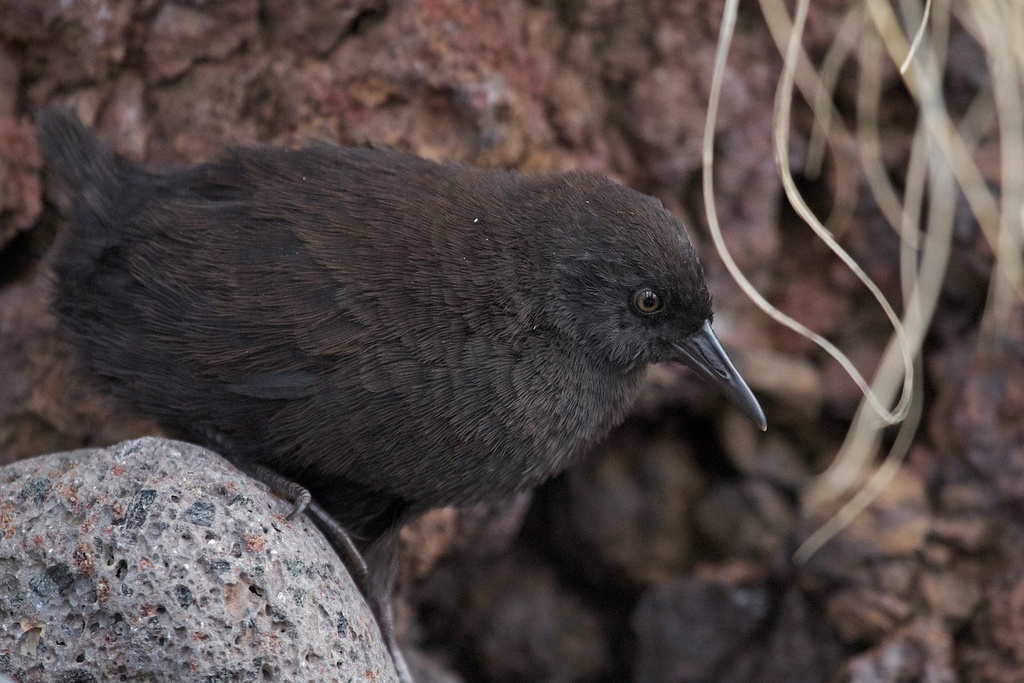
(c) Brian Gratwicke, some rights reserved (CC BY) · licence
Family: Rallidae · Class: Aves · Order: Gruiformes
Conservation status: FP · G3T1 S2
Laterallus jamaicensis coturniculus (California Black Rail) is a California animal in the Rallidae family.
The California black rail is a small, secretive marsh bird averaging only 13 centimeters (5 inches) in length, approximately the size of a large sparrow. This diminutive member of the family Rallidae displays dark plumage with distinctive white speckling on the back and wings. The species exhibits sexual dimorphism, with males typically showing more pronounced markings than females. Its compressed body shape and strong legs are well-adapted for navigating dense marsh vegetation. Historically, California black rails occurred throughout the San Francisco Bay estuary, Central Valley wetlands, and coastal marshes from Humboldt Bay to San Diego County. Current populations are severely fragmented, with the largest remaining concentrations found in San Francisco Bay salt ponds, Suisun Marsh, and select coastal wetlands. Isolated populations persist in the Sierra Nevada foothills and around the Salton Sea in Imperial County. The species has experienced dramatic range contraction, with many historical sites no longer supporting breeding populations. California black rails inhabit shallow-water and emergent wetlands characterized by specific structural requirements rather than particular plant species composition. Optimal habitat features water depths of 2.5 to 7 centimeters (1 to 3 inches) with dense, low-growing vegetation typically under 1 meter in height. The species utilizes both salt and freshwater marshes, including pickleweed-dominated salt marshes, cattail and bulrush stands, and managed wetlands. Habitat structure is critical, requiring adequate cover for nesting while maintaining sufficient open water for foraging. This highly secretive species is primarily active during dawn and dusk hours, though breeding birds may be active throughout the day. California black rails are omnivorous, feeding on small invertebrates, seeds, and vegetative matter gleaned from water surfaces and marsh substrate. Breeding occurs from March through August, with peak activity from April to June. Females construct well-concealed nests in dense vegetation, typically laying 4 to 8 eggs. The species exhibits strong site fidelity, often returning to the same territories across multiple breeding seasons. The California black rail is listed as Threatened under the California Endangered Species Act and designated as Fully Protected under California Fish and Game Code. The subspecies holds a G3T1 S2 ranking, indicating it is critically imperiled globally and imperiled in California. Primary threats include habitat loss and degradation from urban development, water diversions, and invasive species. Sea level rise poses an increasing threat to coastal populations, while altered hydrology affects inland marsh systems. The species is also vulnerable to predation by introduced mammals and domestic cats. Conservation efforts focus on habitat restoration, water management, and predator control in remaining occupied sites. Population monitoring indicates continued decline across the subspecies' range, emphasizing the urgent need for comprehensive habitat protection and management.
Classification
Class: Aves · Order: Gruiformes · Family: Rallidae
Conservation status
FP · G3T1 S2
Frequently asked questions
How is Laterallus jamaicensis coturniculus classified?
Laterallus jamaicensis coturniculus belongs to class Aves, order Gruiformes, family Rallidae.
What family does Laterallus jamaicensis coturniculus belong to?
Laterallus jamaicensis coturniculus is in the Rallidae family.
Is Laterallus jamaicensis coturniculus protected or of conservation concern?
Laterallus jamaicensis coturniculus carries the following status: FP · G3T1 S2.
What is Laterallus jamaicensis coturniculus?
The California black rail is a small, secretive marsh bird averaging only 13 centimeters (5 inches) in length, approximately the size of a large sparrow.
Is Laterallus jamaicensis coturniculus found in California?
Yes. Laterallus jamaicensis coturniculus is recorded in California in The California Species Project's catalogue.
Related species
Other California species in the same genus, family, or bioregion.
Data from The California Species Project — 14,000+ California species with verified data from CNPS, CDFW, USFWS, and more.