Latrodectus geometricus
Brown Widow
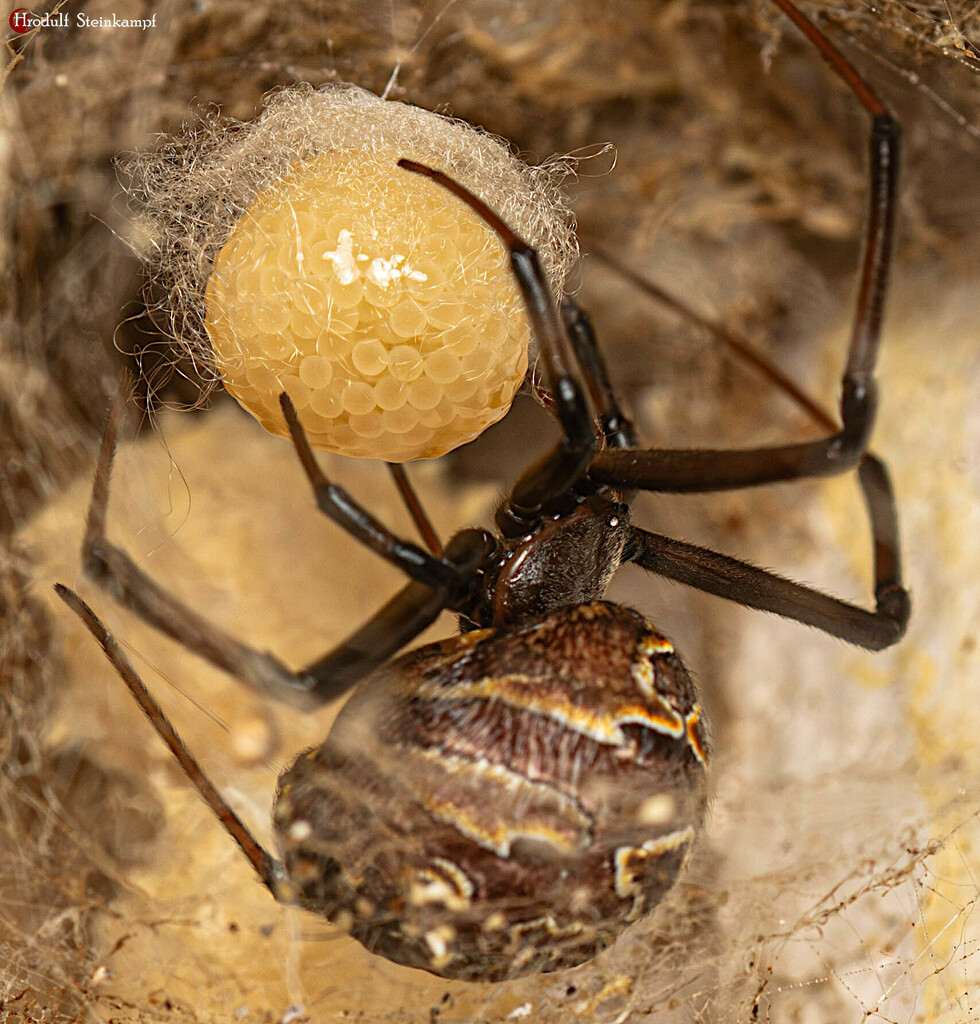
(c) Rudolph Steenkamp, some rights reserved (CC BY-SA) · licence
Family: Theridiidae · Class: Arachnida · Order: Araneae
Latrodectus geometricus (Brown Widow) is a California animal in the Theridiidae family.
The brown widow (Latrodectus geometricus) is a medium-sized spider in the family Theridiidae, introduced to North America from tropical regions worldwide. Adult females measure 9.5 to 14 millimeters in body length, while males are approximately half the size with proportionally longer legs. Females display distinctive brown to tan coloration with geometric patterns on the abdomen, distinguishing them from the black widow complex. The characteristic hourglass marking on the ventral abdomen ranges from red to orange in color, with minimal variation across populations. Males are smaller and less conspicuous, with elongated legs relative to body size. The brown widow has established populations across the southern United States, with confirmed records in California, Florida, Texas, Alabama, Mississippi, Georgia, South Carolina, Louisiana, Arizona, and other states (BugGuide). In California, the species occurs throughout multiple counties including Fresno, Los Angeles, Ventura, Orange, Alameda, Monterey, and Santa Clara counties based on documented observations. The species was introduced to Florida and has since expanded its range northward and westward. BugGuide data indicates year-round activity in California, with peak observations during summer months from July through September. Brown widows inhabit areas around human structures in warm climates, making them the most human-adapted widow spider species in the southeastern United States (BugGuide). They construct webs on buildings, fences, outdoor furniture, and other artificial structures. Unlike typical cobweb spiders that build tangled webs, brown widows create more organized funnel-shaped webs with strong silk. The species shows preference for protected locations such as railings, eaves, and garden equipment where webs remain undisturbed. Female brown widows produce distinctive egg sacs that differ markedly from other widow species. While black widows create smooth, white, pear-shaped egg sacs, brown widow egg sacs are tan to brown with distinctive spiky projections covering the surface. This characteristic provides a reliable identification tool even when adult spiders are not present. Females can produce multiple egg sacs throughout the year in favorable climates. The species feeds on various small arthropods caught in their webs, including flies, beetles, and other insects. As an introduced species, the brown widow is not protected under federal or state conservation legislation. The species continues to expand its range in North America, facilitated by human transportation and suitable urban habitats. While venomous, brown widows are generally less aggressive than black widows and their bite is considered less medically significant. The species' adaptation to human environments and ability to outcompete native widow species in some areas raises ecological concerns. Population monitoring occurs primarily through citizen science observations and university research programs rather than formal conservation surveys.
Classification
Class: Arachnida · Order: Araneae · Family: Theridiidae
Frequently asked questions
How is Latrodectus geometricus classified?
Latrodectus geometricus belongs to class Arachnida, order Araneae, family Theridiidae.
What family does Latrodectus geometricus belong to?
Latrodectus geometricus is in the Theridiidae family.
What is Latrodectus geometricus?
The brown widow (Latrodectus geometricus) is a medium-sized spider in the family Theridiidae, introduced to North America from tropical regions worldwide.
Is Latrodectus geometricus found in California?
Yes. Latrodectus geometricus is recorded in California in The California Species Project's catalogue.
Related species
Other California species in the same genus, family, or bioregion.
Data from The California Species Project — 14,000+ California species with verified data from CNPS, CDFW, USFWS, and more.