Lavinia exilicauda
Hitch
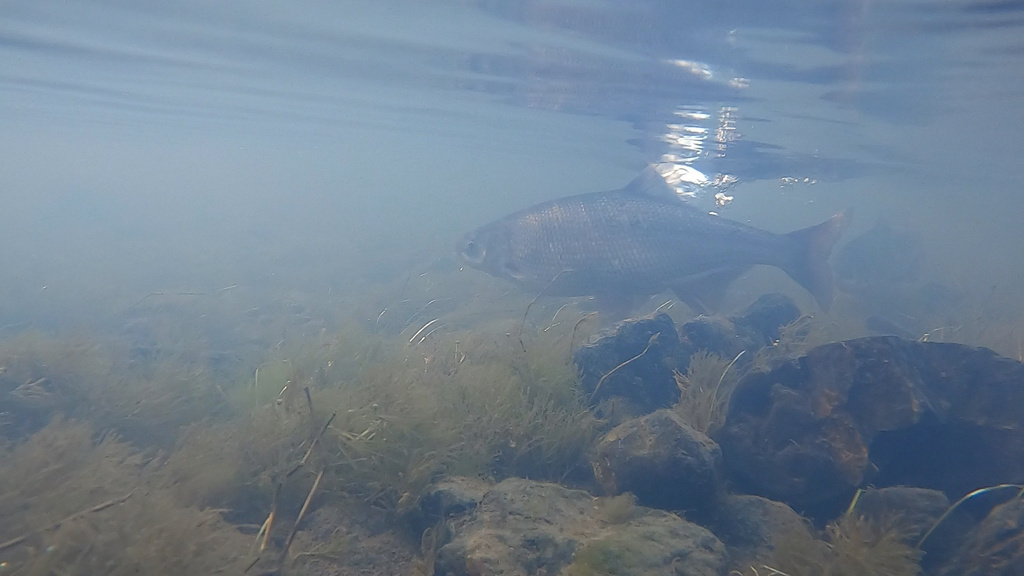
(c) Mike Heine, some rights reserved (CC BY) · licence
Family: Cyprinidae · Class: Actinopterygii · Order: Cypriniformes
Lavinia exilicauda (Hitch) is a California animal in the Cyprinidae family.
The hitch (Lavinia exilicauda) is a medium-sized freshwater fish endemic to California's Central Valley and coastal drainages. Adults typically reach 150 to 300 mm (6 to 12 inches) in total length, with some individuals growing up to 350 mm (14 inches). The body is elongate and laterally compressed, with a relatively small head and terminal mouth. Coloration varies from silvery-gray to olive-brown dorsally, fading to silver or white ventrally. Breeding males develop tubercles on the head and fins and may display more intense coloration. The species has 8 to 10 dorsal fin rays, 7 to 9 anal fin rays, and typically 40 to 43 lateral line scales. Historically, hitch occupied the entire Sacramento-San Joaquin River system, including tributaries extending into the Sierra Nevada foothills and coastal streams from the Russian River south to the Salinas River. The species was once abundant in Central Valley rivers, sloughs, and associated wetlands. Current distribution is severely fragmented, with populations persisting primarily in foothill streams of the Sierra Nevada, some coastal drainages, and isolated reservoir populations. Major population centers include the American, Feather, and Mokelumne river systems, Clear Lake, and several coastal watersheds. Hitch inhabit slow-moving or still waters including natural lakes, reservoirs, sloughs, and lower reaches of streams and rivers. The species tolerates a wide range of water temperatures and can survive in both clear and turbid conditions. Adults prefer areas with aquatic vegetation and depths ranging from 1 to 10 meters. Juveniles utilize shallow nearshore areas and backwater habitats with emergent vegetation for cover and foraging. The species exhibits complex life history patterns, with some populations displaying anadromous behavior in coastal systems while others complete their entire life cycle in freshwater. Spawning occurs from April through July when water temperatures reach 15 to 20 degrees Celsius. Adults migrate to tributary streams or shallow areas of lakes to spawn over gravel substrates. Females deposit 10,000 to 40,000 adhesive eggs in multiple nests, with males providing parental care by defending nest sites. Hitch are omnivorous, feeding on algae, aquatic plants, insects, crustaceans, and small fish. Juveniles consume primarily zooplankton and small invertebrates. While not federally or state listed, hitch populations have experienced significant decline throughout their historic range. The California Department of Fish and Wildlife considers many populations to be of conservation concern. Primary threats include habitat loss from dam construction, water diversions, channelization of streams, and degradation of spawning habitat. Introduced species, including predatory fish and competing cyprinids, have negatively impacted native populations. Water management practices that alter natural flow regimes and temperature patterns continue to affect remaining populations. Climate change poses additional challenges through altered precipitation patterns and increased water temperatures. Several reservoir populations provide genetic refugia, though these isolated populations face potential genetic bottlenecks and reduced adaptive capacity.
Classification
Class: Actinopterygii · Order: Cypriniformes · Family: Cyprinidae
Frequently asked questions
How is Lavinia exilicauda classified?
Lavinia exilicauda belongs to class Actinopterygii, order Cypriniformes, family Cyprinidae.
What family does Lavinia exilicauda belong to?
Lavinia exilicauda is in the Cyprinidae family.
What is Lavinia exilicauda?
The hitch (Lavinia exilicauda) is a medium-sized freshwater fish endemic to California's Central Valley and coastal drainages.
Is Lavinia exilicauda found in California?
Yes. Lavinia exilicauda is recorded in California in The California Species Project's catalogue.
Related species
Other California species in the same genus, family, or bioregion.
Data from The California Species Project — 14,000+ California species with verified data from CNPS, CDFW, USFWS, and more.