Lavinia exilicauda chi
Clear Lake hitch
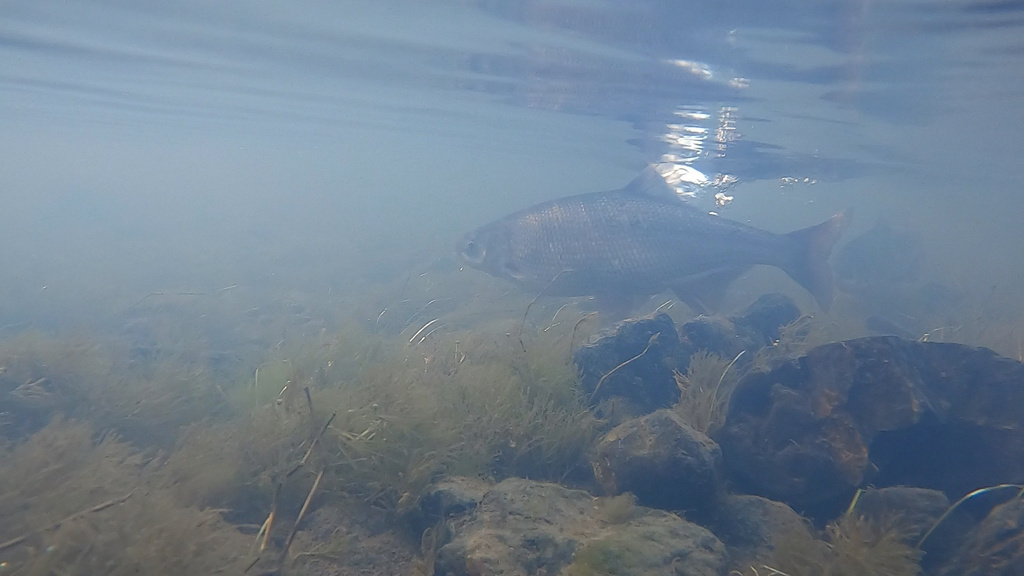
(c) Mike Heine, some rights reserved (CC BY) · licence
Family: Leuciscidae · Class: Actinopterygii · Order: Cypriniformes
Conservation status: ST · Proposed Threatened · G4T1 S1
Lavinia exilicauda chi (Clear Lake hitch) is a California animal in the Leuciscidae family.
The Clear Lake hitch (Lavinia exilicauda chi) is a subspecies of hitch endemic to California's Clear Lake basin in Lake County. This small cyprinid fish represents one of the most geographically restricted freshwater fish taxa in California, occurring naturally only within Clear Lake and its tributary streams. Adult Clear Lake hitch typically measure 100 to 200 mm (4 to 8 inches) in total length, though some individuals may reach 250 mm (10 inches). The body is laterally compressed with a moderately deep profile. The species exhibits typical cyprinid characteristics including a single dorsal fin, abdominal pelvic fins, and a forked caudal fin. Coloration consists of olive-brown to bronze dorsal surfaces grading to silvery sides and a white ventral surface. During spawning season, males develop pronounced tubercles on the head and fins, and both sexes may display enhanced coloration with golden or reddish hues. Historically, Clear Lake hitch occupied Clear Lake proper and several tributary streams including Kelsey Creek, Middle Creek, and Scotts Creek. The current distribution has contracted significantly, with the subspecies now primarily restricted to Clear Lake itself and limited portions of inflowing streams. The subspecies is distinguished from other hitch populations by morphological characteristics and genetic isolation resulting from its endemic status to the Clear Lake drainage. Clear Lake hitch inhabit the littoral and pelagic zones of Clear Lake, typically at depths ranging from 1 to 15 meters (3 to 49 feet). The lake is a natural alkaline water body with relatively high pH levels between 7.5 and 9.5. Adults prefer areas with submerged aquatic vegetation, rocky substrates, and moderate water circulation. Spawning occurs in tributary streams and shallow lake margins over gravel and cobble substrates during spring months when water temperatures reach 15 to 18°C (59 to 64°F). Clear Lake hitch are omnivorous, feeding on algae, aquatic insects, zooplankton, and small invertebrates. Spawning typically occurs from March through May, with females depositing adhesive eggs in shallow water over clean gravel substrates. Males establish and defend spawning territories, exhibiting aggressive behavior toward competitors. The species demonstrates anadromous-like behavior, with adults moving from the lake into tributary streams for spawning before returning to deeper lake waters. The U.S. Fish and Wildlife Service proposed listing the Clear Lake hitch as threatened under the Endangered Species Act in 2023, with California listing the subspecies as threatened at the state level. Population estimates suggest fewer than 50,000 individuals remain, representing a significant decline from historical abundance. Primary threats include habitat degradation from shoreline development, water level fluctuations from diversions, introduction of non-native fish species, and water quality degradation from agricultural runoff and urban development. Climate change poses additional risks through increased water temperatures and altered precipitation patterns affecting spawning habitat in tributary streams.
Classification
Class: Actinopterygii · Order: Cypriniformes · Family: Leuciscidae
Conservation status
ST · Proposed Threatened · G4T1 S1
Frequently asked questions
How is Lavinia exilicauda chi classified?
Lavinia exilicauda chi belongs to class Actinopterygii, order Cypriniformes, family Leuciscidae.
What family does Lavinia exilicauda chi belong to?
Lavinia exilicauda chi is in the Leuciscidae family.
Is Lavinia exilicauda chi protected or of conservation concern?
Lavinia exilicauda chi carries the following status: ST · Proposed Threatened · G4T1 S1.
What is Lavinia exilicauda chi?
The Clear Lake hitch (Lavinia exilicauda chi) is a subspecies of hitch endemic to California's Clear Lake basin in Lake County.
Is Lavinia exilicauda chi found in California?
Yes. Lavinia exilicauda chi is recorded in California in The California Species Project's catalogue.
Related species
Other California species in the same genus, family, or bioregion.
Data from The California Species Project — 14,000+ California species with verified data from CNPS, CDFW, USFWS, and more.