Lavinia exilicauda exilicauda
Sacramento hitch
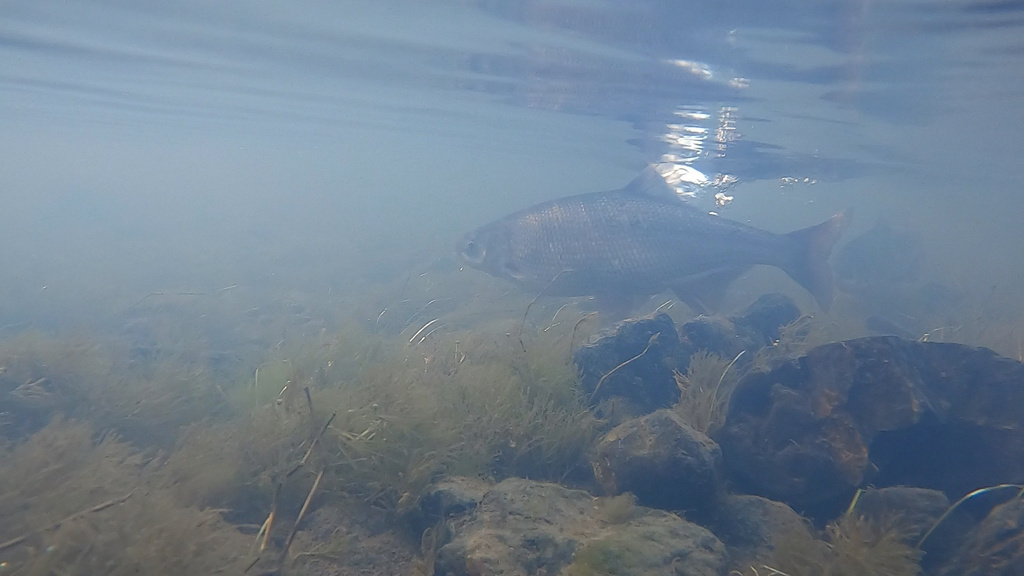
(c) Mike Heine, some rights reserved (CC BY) · licence
Family: Leuciscidae · Class: Actinopterygii · Order: Cypriniformes
Conservation status: G4T2T4 S2S4
Lavinia exilicauda exilicauda (Sacramento hitch) is a California animal in the Leuciscidae family.
The Sacramento hitch (Lavinia exilicauda exilicauda) is a medium-sized cyprinid fish endemic to California's Central Valley. Adults typically measure 150 to 300 mm (6 to 12 inches) in total length, with a maximum recorded length of approximately 350 mm (14 inches). The body is laterally compressed and fusiform, with a relatively small head comprising about 22-25% of the standard length. The species displays a silvery coloration with darker dorsal surfaces ranging from olive to bronze. The dorsal fin contains 8 rays, while the anal fin has 7-9 rays. Sacramento hitch can be distinguished from other Central Valley cyprinids by their terminal mouth position and the absence of barbels. Historically, Sacramento hitch occupied the entire Sacramento-San Joaquin river system, including the mainstem Sacramento River, San Joaquin River, and their major tributaries. The subspecies was distributed from Redding south through the Central Valley to the Sacramento-San Joaquin Delta. Current distribution is severely fragmented, with populations persisting primarily in foothill streams and some valley floor locations. Remaining populations are found in tributaries such as Clear Creek in Shasta County, portions of the American River system, and scattered locations in the San Joaquin River drainage. Sacramento hitch inhabit slow-moving pools and backwaters of rivers and streams, typically at elevations below 500 meters (1,640 feet). The species prefers areas with sandy or muddy substrates and moderate to heavy vegetation. Water temperatures in occupied habitats range from 10 to 25 degrees Celsius (50 to 77 degrees Fahrenheit). Adults are commonly found in deeper pools during summer months, moving to shallow areas with gravel substrates for spawning. Juveniles utilize nearshore areas with emergent and submerged vegetation for cover and foraging. Sacramento hitch are omnivorous, feeding on aquatic insects, crustaceans, algae, and detritus. Adults consume larger prey items including terrestrial insects that fall into the water. Spawning occurs from March through June when water temperatures reach 15-20 degrees Celsius (59-68 degrees Fahrenheit). Females broadcast adhesive eggs over gravel and cobble substrates in shallow riffles or pool tailouts. Clutch sizes range from 2,000 to 10,000 eggs depending on female size. Eggs hatch after 4-7 days, and larvae remain in the gravel for an additional 5-8 days before emerging as free-swimming fry. The Sacramento hitch receives a global rank of G4T2T4, indicating the subspecies ranges from imperiled to apparently secure, with a state rank of S2S4 reflecting similar uncertainty about population status. Primary threats include habitat modification from dam construction and water diversions, which have eliminated much of the species' historical spawning and rearing habitat. Water quality degradation from agricultural runoff and urban development further impacts remaining populations. Competition and predation from introduced species, particularly centrarchid bass and inland silversides, pose additional challenges to population recovery throughout the subspecies' remaining range.
Classification
Class: Actinopterygii · Order: Cypriniformes · Family: Leuciscidae
Conservation status
G4T2T4 S2S4
Frequently asked questions
How is Lavinia exilicauda exilicauda classified?
Lavinia exilicauda exilicauda belongs to class Actinopterygii, order Cypriniformes, family Leuciscidae.
What family does Lavinia exilicauda exilicauda belong to?
Lavinia exilicauda exilicauda is in the Leuciscidae family.
Is Lavinia exilicauda exilicauda protected or of conservation concern?
Lavinia exilicauda exilicauda carries the following status: G4T2T4 S2S4.
What is Lavinia exilicauda exilicauda?
The Sacramento hitch (Lavinia exilicauda exilicauda) is a medium-sized cyprinid fish endemic to California's Central Valley.
Is Lavinia exilicauda exilicauda found in California?
Yes. Lavinia exilicauda exilicauda is recorded in California in The California Species Project's catalogue.
Related species
Other California species in the same genus, family, or bioregion.
Data from The California Species Project — 14,000+ California species with verified data from CNPS, CDFW, USFWS, and more.