Lavinia exilicauda harengus
Monterey hitch
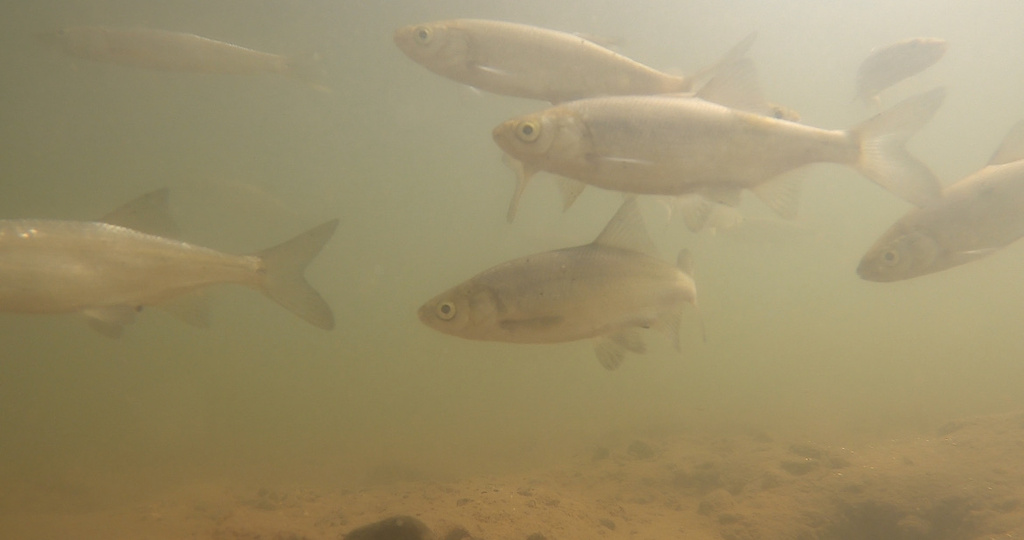
(c) Mike Heine, some rights reserved (CC BY) · licence
Family: Leuciscidae · Class: Actinopterygii · Order: Cypriniformes
Conservation status: G4T2T4 S2S4
Lavinia exilicauda harengus (Monterey hitch) is a California animal in the Leuciscidae family.
The Monterey hitch (Lavinia exilicauda harengus) is a subspecies of hitch, a cyprinid fish endemic to California's coastal drainages. Adult Monterey hitch typically measure 100 to 200 mm (4 to 8 inches) in total length, with a streamlined, laterally compressed body characteristic of the minnow family. The species displays a silvery coloration with darker dorsal surfaces and lighter ventral areas. Males develop breeding tubercles on the head and fins during spawning season, and both sexes may exhibit subtle color changes during reproduction. Historically, the Monterey hitch inhabited coastal streams and rivers from the Pajaro River system south to the Salinas River drainage in central California. The subspecies is endemic to Monterey County and surrounding areas within the Central Coast bioregion. Current distribution is more restricted than historical range, with populations documented in tributaries of the Salinas River system and select coastal drainages. The species has been extirpated from portions of its former range due to habitat modifications and water diversions. Monterey hitch occupy freshwater stream environments, typically in pools and slower-moving sections of creeks and small rivers. The species prefers areas with moderate depths ranging from 0.3 to 2 meters, often associated with overhanging riparian vegetation that provides cover and insect prey. Substrate preferences include sand, gravel, and cobble bottoms. Water temperatures suitable for the subspecies range from 10 to 24 degrees Celsius (50 to 75 degrees Fahrenheit), with spawning occurring in spring when temperatures reach optimal ranges. The dietary habits of Monterey hitch consist primarily of aquatic and terrestrial insects, including mayflies, caddisflies, midges, and ants that fall into the water. The species also consumes algae, plant matter, and small crustaceans. Spawning typically occurs from March through June, coinciding with increased water flows from winter and spring precipitation. Females broadcast eggs over gravel beds in shallow riffles, with males fertilizing eggs externally. Clutch sizes range from 1,000 to 5,000 eggs depending on female size and condition. Juveniles remain in natal streams for their first year before potentially dispersing to other suitable habitats. The Monterey hitch currently holds a global rank of G4T2T4, indicating the subspecies ranges from imperiled to apparently secure, while the state rank of S2S4 reflects similar uncertainty about population stability in California. The subspecies faces threats from habitat degradation, water diversions for agricultural and municipal use, and invasive species competition. Stream channelization, dam construction, and riparian vegetation removal have reduced suitable habitat throughout the historical range. Climate change poses additional challenges through altered precipitation patterns and increased drought frequency, potentially reducing stream flows critical for spawning success. Conservation efforts focus on habitat restoration, water flow management, and monitoring of remaining populations to assess long-term viability.
Classification
Class: Actinopterygii · Order: Cypriniformes · Family: Leuciscidae
Conservation status
G4T2T4 S2S4
Frequently asked questions
How is Lavinia exilicauda harengus classified?
Lavinia exilicauda harengus belongs to class Actinopterygii, order Cypriniformes, family Leuciscidae.
What family does Lavinia exilicauda harengus belong to?
Lavinia exilicauda harengus is in the Leuciscidae family.
Is Lavinia exilicauda harengus protected or of conservation concern?
Lavinia exilicauda harengus carries the following status: G4T2T4 S2S4.
What is Lavinia exilicauda harengus?
The Monterey hitch (Lavinia exilicauda harengus) is a subspecies of hitch, a cyprinid fish endemic to California's coastal drainages.
Is Lavinia exilicauda harengus found in California?
Yes. Lavinia exilicauda harengus is recorded in California in The California Species Project's catalogue.
Related species
Other California species in the same genus, family, or bioregion.
Data from The California Species Project — 14,000+ California species with verified data from CNPS, CDFW, USFWS, and more.