Lavinia symmetricus
California roach
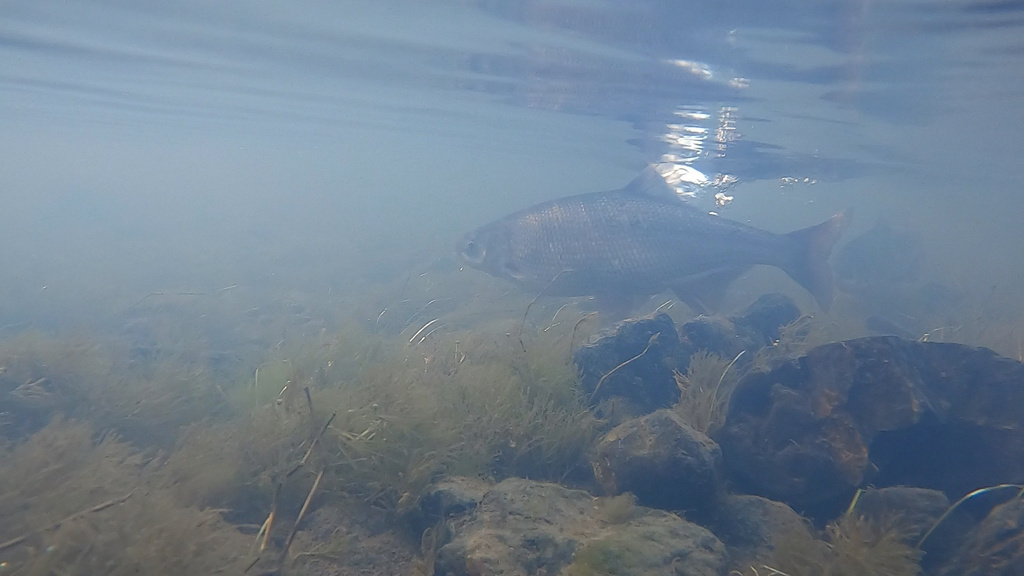
(c) Mike Heine, some rights reserved (CC BY) · licence
Family: Leuciscidae · Class: Actinopterygii · Order: Cypriniformes
Lavinia symmetricus (California roach) is a California animal in the Leuciscidae family.
The California roach is a small, robust freshwater fish endemic to California's Central Valley and coastal drainages. Adults typically measure 50 to 100 mm (2.0 to 3.9 inches) in total length, with a deep, laterally compressed body. The species displays variable coloration, ranging from olive-brown to golden on the dorsal surface with silvery sides. During breeding season, males develop tubercles on the head and fins, and both sexes may exhibit orange or reddish coloration on the fins and lower body. The mouth is subterminal with thick lips, and pharyngeal teeth are adapted for crushing hard food items. Historically, California roach occupied waters throughout the Central Valley from the Sacramento River system south to the Kern River, as well as coastal streams from the Russian River to the Salinas River. The species has experienced significant range reduction, with populations extirpated from much of the Central Valley due to habitat modification and water diversions. Current distribution includes remnant populations in foothill streams of the Sierra Nevada, Coast Range tributaries, and isolated coastal drainages. Populations persist in the American River, Mokelumne River, Tuolumne River, and several smaller coastal watersheds. California roach inhabit pools and slow-moving reaches of small to medium-sized streams with rocky or gravel substrates. The species shows preference for areas with moderate water temperatures ranging from 10 to 25°C (50 to 77°F) and dissolved oxygen levels above 5 mg/L. They are typically found in association with riparian vegetation that provides cover and contributes organic matter to the aquatic food web. Elevation range extends from sea level to approximately 1,200 meters (3,900 feet) in foothill regions. This omnivorous species feeds on aquatic and terrestrial insects, algae, plant matter, and small invertebrates. California roach are opportunistic foragers, consuming whatever food sources are locally abundant. Reproduction occurs from April through June when water temperatures reach 15 to 20°C (59 to 68°F). Males establish territories over gravel beds in shallow riffles or pool tails, where females deposit adhesive eggs. Clutch size ranges from 200 to 2,000 eggs, depending on female size. Young reach sexual maturity at one to two years of age. While not federally or state listed, California roach populations face ongoing threats from habitat degradation, flow alteration, and competition with introduced species. Water diversions for agriculture and urban development have reduced stream flows and altered natural hydrological cycles. Non-native fishes, particularly centrarchids and salmonids, compete for resources and may prey on juvenile roach. Climate change poses additional challenges through increased water temperatures and altered precipitation patterns. Conservation efforts focus on habitat restoration, flow management, and removal of barriers to fish passage in priority watersheds.
Classification
Class: Actinopterygii · Order: Cypriniformes · Family: Leuciscidae
Frequently asked questions
How is Lavinia symmetricus classified?
Lavinia symmetricus belongs to class Actinopterygii, order Cypriniformes, family Leuciscidae.
What family does Lavinia symmetricus belong to?
Lavinia symmetricus is in the Leuciscidae family.
What is Lavinia symmetricus?
The California roach is a small, robust freshwater fish endemic to California's Central Valley and coastal drainages.
Is Lavinia symmetricus found in California?
Yes. Lavinia symmetricus is recorded in California in The California Species Project's catalogue.
Related species
Other California species in the same genus, family, or bioregion.
Data from The California Species Project — 14,000+ California species with verified data from CNPS, CDFW, USFWS, and more.