Lavinia symmetricus mitrulus
Pit roach
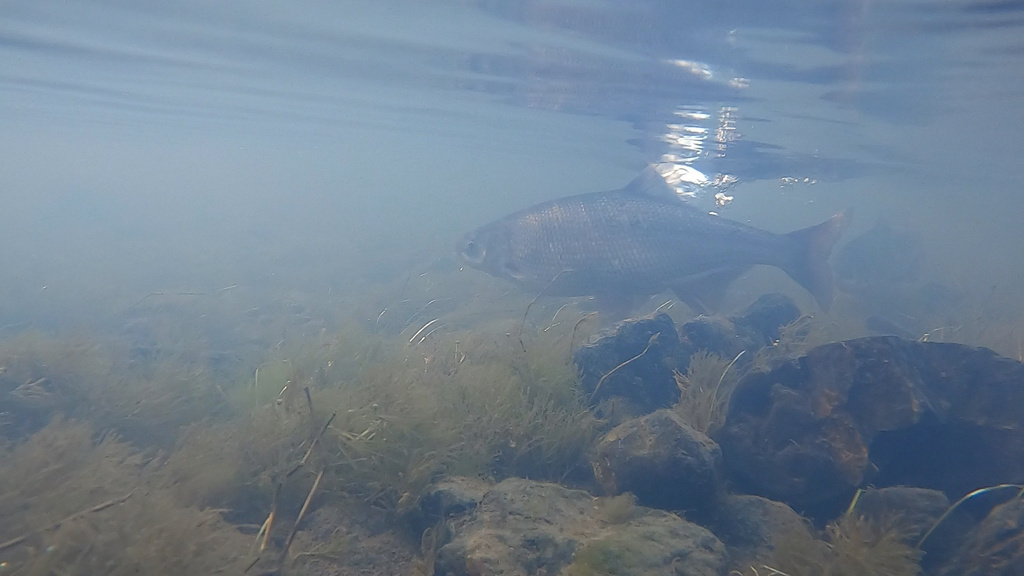
(c) Mike Heine, some rights reserved (CC BY) · licence
Family: Leuciscidae · Class: Actinopterygii · Order: Cypriniformes
Conservation status: G4T2 S2
Lavinia symmetricus mitrulus (Pit roach) is a California animal in the Leuciscidae family.
The pit roach (Lavinia symmetricus mitrulus) is a subspecies of hitch, a native California cyprinid fish. Adults typically measure 15 to 30 cm (6 to 12 inches) in total length, with a streamlined, laterally compressed body characteristic of the minnow family. The species displays a silvery coloration with darker dorsal surfaces and lighter ventral areas. Distinguished from other hitch subspecies by specific meristic counts and morphological features, the pit roach exhibits the typical deep-bodied profile of Lavinia symmetricus with a slightly subterminal mouth and moderately large scales. Historically, the pit roach was endemic to the Pit River system in northeastern California, including portions of Shasta, Lassen, and Modoc counties. The subspecies was restricted to the middle and upper reaches of the Pit River and its tributaries, occupying a relatively limited geographic range within the larger Sacramento River basin. Current distribution may be significantly reduced from historical levels due to habitat modifications and water management practices in the region. The pit roach inhabits cool, clear streams and rivers with moderate to swift currents. The species prefers areas with rocky or gravel substrates and requires well-oxygenated water typical of montane and foothill environments. Elevation ranges generally span from approximately 300 to 1,500 meters (1,000 to 5,000 feet). Adults occupy deeper pools and runs, while juveniles utilize shallow, vegetated areas along stream margins and backwaters for feeding and shelter. Pit roach are omnivorous, feeding on aquatic insects, algae, small crustaceans, and plant matter. Spawning occurs during spring and early summer when water temperatures reach optimal levels, typically from April through June. Females deposit adhesive eggs in gravel nests or redds in shallow, flowing water. The species exhibits schooling behavior, particularly during feeding and migration periods. Life span ranges from 4 to 7 years under natural conditions. The pit roach is designated as G4T2 S2, indicating the subspecies is imperiled in California with 6 to 20 occurrences or few remaining individuals. This conservation ranking reflects significant population declines and habitat loss throughout its limited range. Primary threats include water diversions, dam construction, habitat degradation from livestock grazing, and altered flow regimes in the Pit River system. Water temperature increases associated with reservoir construction and climate change pose additional challenges for this cool-water species. Competition and hybridization with introduced fish species may further impact population viability. The subspecies' restricted distribution makes it particularly vulnerable to localized environmental disturbances and water management decisions affecting the Pit River watershed. Conservation efforts focus on maintaining adequate instream flows and protecting remaining habitat quality within the species' limited range.
Classification
Class: Actinopterygii · Order: Cypriniformes · Family: Leuciscidae
Conservation status
G4T2 S2
Frequently asked questions
How is Lavinia symmetricus mitrulus classified?
Lavinia symmetricus mitrulus belongs to class Actinopterygii, order Cypriniformes, family Leuciscidae.
What family does Lavinia symmetricus mitrulus belong to?
Lavinia symmetricus mitrulus is in the Leuciscidae family.
Is Lavinia symmetricus mitrulus protected or of conservation concern?
Lavinia symmetricus mitrulus carries the following status: G4T2 S2.
What is Lavinia symmetricus mitrulus?
The pit roach (Lavinia symmetricus mitrulus) is a subspecies of hitch, a native California cyprinid fish.
Is Lavinia symmetricus mitrulus found in California?
Yes. Lavinia symmetricus mitrulus is recorded in California in The California Species Project's catalogue.
Related species
Other California species in the same genus, family, or bioregion.
Data from The California Species Project — 14,000+ California species with verified data from CNPS, CDFW, USFWS, and more.