Lavinia symmetricus ssp. 1
San Joaquin roach
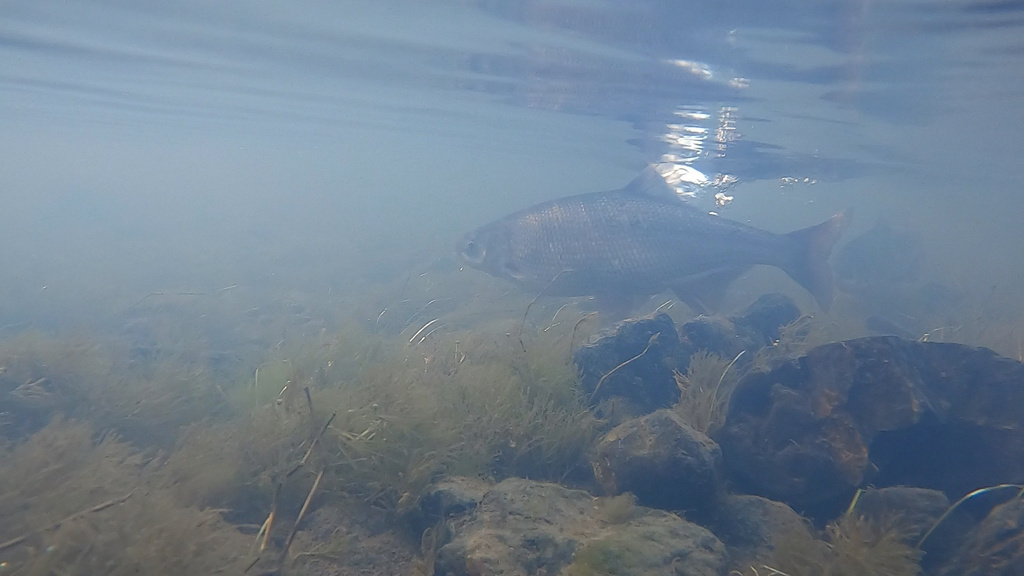
(c) Mike Heine, some rights reserved (CC BY) · licence
Family: Leuciscidae · Class: Actinopterygii · Order: Cypriniformes
Conservation status: G4T3Q S3
Lavinia symmetricus ssp. 1 (San Joaquin roach) is a California animal in the Leuciscidae family.
The San Joaquin roach is a small native cyprinid fish endemic to California's Central Valley. Adults typically measure 50 to 100 mm (2.0 to 3.9 inches) in total length, with a robust, laterally compressed body. The species displays a silvery coloration with darker dorsal surfaces and lighter ventral areas. Males during breeding season develop pronounced tubercles on the head and fins, and may exhibit orange or reddish coloration on the fins and lower body surfaces. Historically, the San Joaquin roach inhabited the entire San Joaquin River drainage system and tributaries throughout the Central Valley. The subspecies' current range is severely fragmented, limited to isolated populations in foothill streams primarily in the Sierra Nevada foothills. Populations persist in tributaries of the Stanislaus, Tuolumne, Merced, and Kings rivers, with additional remnant populations in select coastal range tributaries. The species has been extirpated from the mainstem San Joaquin River and much of its historical lowland habitat. San Joaquin roach inhabit cool, clear streams with rocky or gravel substrates and moderate to swift current velocities. The species typically occurs in pools and runs with depths ranging from 0.3 to 2.0 meters, where water temperatures remain below 24°C during summer months. Essential habitat features include riparian canopy cover, which maintains cooler water temperatures and provides terrestrial insect input. The subspecies demonstrates strong site fidelity and limited dispersal ability between habitat patches. San Joaquin roach are omnivorous, feeding on aquatic and terrestrial insects, algae, detritus, and small invertebrates. Adults primarily consume chironomid larvae, mayfly nymphs, and caddisfly larvae. Spawning occurs from March through June when water temperatures reach 15 to 20°C. Females deposit adhesive eggs in gravel nests prepared by males in shallow riffles. Clutch sizes range from 200 to 1,500 eggs depending on female size. Sexual maturity is reached at approximately one year of age, with maximum lifespan typically three to four years. The San Joaquin roach is not federally listed but carries a global rank of G4T3Q, indicating the subspecies is vulnerable to extirpation. The 'Q' qualifier reflects taxonomic uncertainty regarding subspecies designation. Primary threats include habitat fragmentation, water diversions, sedimentation from agricultural runoff, and competition with introduced species. Dams and water withdrawals have eliminated connectivity between populations and reduced stream flows critical for reproduction. Urban development and agricultural practices have degraded riparian zones, increasing water temperatures and reducing habitat quality. Climate change poses additional risks through altered precipitation patterns and increased frequency of drought conditions, further stressing remaining populations in an already water-limited system.
Classification
Class: Actinopterygii · Order: Cypriniformes · Family: Leuciscidae
Conservation status
G4T3Q S3
Frequently asked questions
How is Lavinia symmetricus ssp. 1 classified?
Lavinia symmetricus ssp. 1 belongs to class Actinopterygii, order Cypriniformes, family Leuciscidae.
What family does Lavinia symmetricus ssp. 1 belong to?
Lavinia symmetricus ssp. 1 is in the Leuciscidae family.
Is Lavinia symmetricus ssp. 1 protected or of conservation concern?
Lavinia symmetricus ssp. 1 carries the following status: G4T3Q S3.
What is Lavinia symmetricus ssp. 1?
The San Joaquin roach is a small native cyprinid fish endemic to California's Central Valley.
Is Lavinia symmetricus ssp. 1 found in California?
Yes. Lavinia symmetricus ssp. 1 is recorded in California in The California Species Project's catalogue.
Related species
Other California species in the same genus, family, or bioregion.
Data from The California Species Project — 14,000+ California species with verified data from CNPS, CDFW, USFWS, and more.