Lavinia symmetricus ssp. 2
Tomales roach
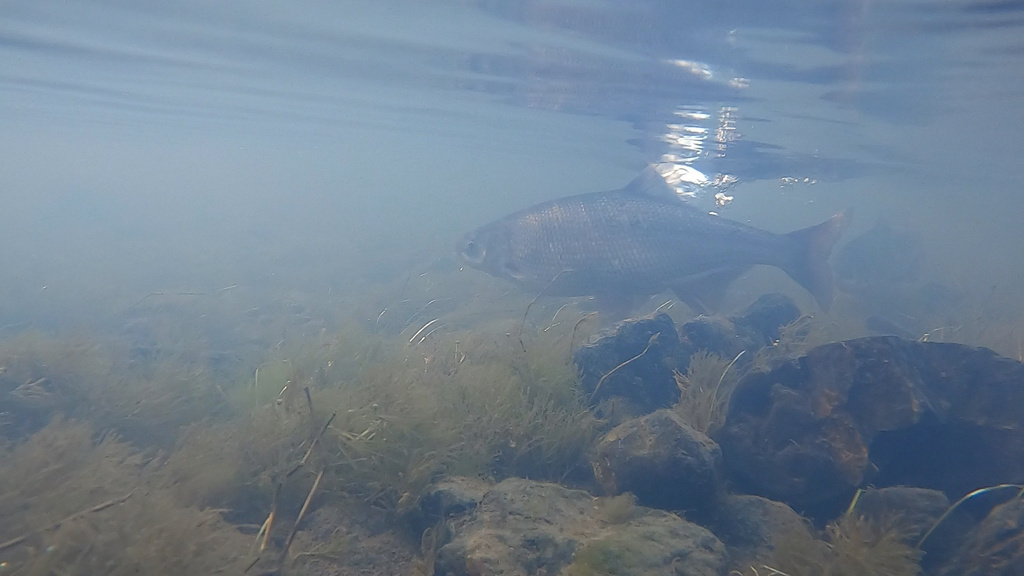
(c) Mike Heine, some rights reserved (CC BY) · licence
Family: Leuciscidae · Class: Actinopterygii · Order: Cypriniformes
Conservation status: G4T2T3 S2
Lavinia symmetricus ssp. 2 (Tomales roach) is a California animal in the Leuciscidae family.
The Tomales roach (Lavinia symmetricus ssp. 2) is a subspecies of California roach, a small freshwater fish in the family Leuciscidae. Like other California roach, this subspecies is a small, stout-bodied minnow typically measuring approximately 10 centimeters (4 inches) in total length. The body form is characteristic of the roach complex, with a robust build adapted to life in shallow, often intermittent stream systems. The Tomales roach has a highly restricted range, occurring only in tributaries of Tomales Bay in Marin County, California. This represents one of the most geographically limited distributions among California roach subspecies. The subspecies is endemic to coastal drainages that flow into Tomales Bay, a narrow inlet along the Marin County coast north of San Francisco. This subspecies inhabits small coastal streams and their tributaries within the Tomales Bay watershed. These waterways are typically characterized by seasonal flow patterns, with higher flows during winter and spring rains and reduced or intermittent flows during the dry summer months. The streams often flow through mixed hardwood forests, grasslands, and areas impacted by agricultural activities including cattle ranching, which has historically been prevalent in the Tomales Bay region. Like other California roach, the Tomales roach is adapted to the highly variable flow conditions typical of California's Mediterranean climate. The species can survive in pools during dry periods when stream flow ceases. Roach are omnivorous, feeding on aquatic insects, small crustaceans, algae, and organic detritus. Spawning typically occurs in spring when water temperatures rise and flows are adequate. The Tomales roach faces significant conservation challenges due to its extremely limited range and small population size. NatureServe has assigned it a global rank of G4T2T3, indicating the subspecies is imperiled to vulnerable, while the California state rank of S2 reflects its imperiled status within the state. According to NatureServe, habitat degradation from dams, water diversions, and cattle grazing has impacted the watersheds where this subspecies occurs, though roach populations remain locally present in some areas. The primary threats to the Tomales roach include habitat modification from livestock grazing, which can lead to streambank erosion and sedimentation, water diversions for agricultural or domestic use, and the construction of small dams or barriers that fragment habitat. Climate change poses additional challenges through altered precipitation patterns that could affect the timing and duration of stream flows. The subspecies' survival depends on maintaining adequate water quality and flow regimes in the limited tributaries where it persists. Conservation efforts would benefit from watershed protection measures, livestock management practices that reduce impacts on riparian areas, and removal of migration barriers where feasible.
Classification
Class: Actinopterygii · Order: Cypriniformes · Family: Leuciscidae
Conservation status
G4T2T3 S2
Frequently asked questions
How is Lavinia symmetricus ssp. 2 classified?
Lavinia symmetricus ssp. 2 belongs to class Actinopterygii, order Cypriniformes, family Leuciscidae.
What family does Lavinia symmetricus ssp. 2 belong to?
Lavinia symmetricus ssp. 2 is in the Leuciscidae family.
Is Lavinia symmetricus ssp. 2 protected or of conservation concern?
Lavinia symmetricus ssp. 2 carries the following status: G4T2T3 S2.
What is Lavinia symmetricus ssp. 2?
The Tomales roach (Lavinia symmetricus ssp.
Is Lavinia symmetricus ssp. 2 found in California?
Yes. Lavinia symmetricus ssp. 2 is recorded in California in The California Species Project's catalogue.
Related species
Other California species in the same genus, family, or bioregion.
Data from The California Species Project — 14,000+ California species with verified data from CNPS, CDFW, USFWS, and more.