Lavinia symmetricus subditus
Monterey roach
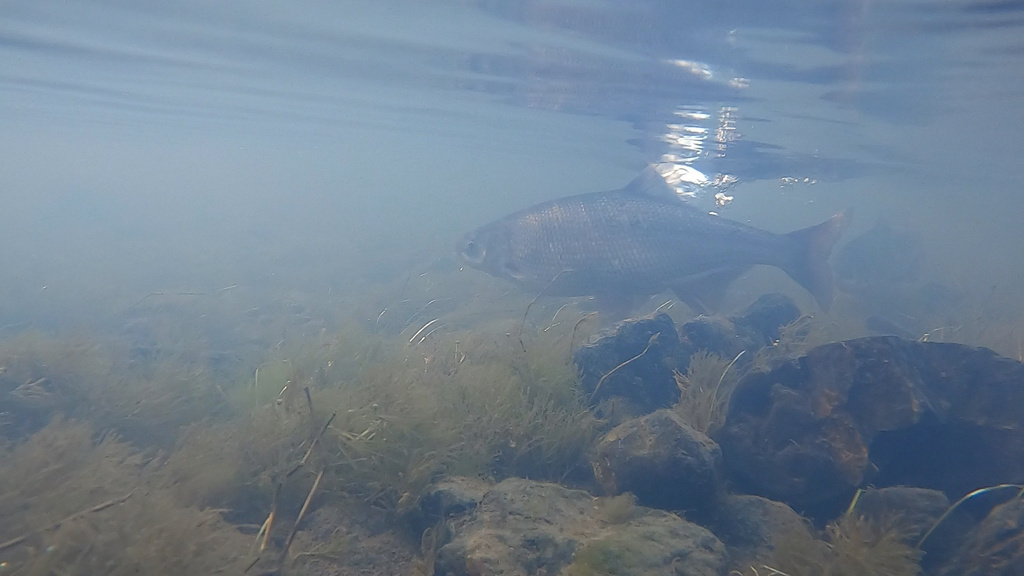
(c) Mike Heine, some rights reserved (CC BY) · licence
Family: Leuciscidae · Class: Actinopterygii · Order: Cypriniformes
Conservation status: G4T2T3 S2S3
Lavinia symmetricus subditus (Monterey roach) is a California animal in the Leuciscidae family.
The Monterey roach (Lavinia symmetricus subditus) is a subspecies of California roach endemic to coastal watersheds of central California. Adults typically reach 60 to 100 mm (2.4 to 3.9 inches) in total length, with a streamlined body adapted for life in small streams. The species exhibits a compressed, fusiform body shape with a moderately forked caudal fin. Coloration varies seasonally and with breeding condition, ranging from olive-brown to silvery on the dorsal surface with lighter sides and a pale ventral surface. During breeding season, males develop tubercles on the head and fins and may display orange or reddish coloration on the fins and lower body. Historically, the Monterey roach occurred in the Salinas River system, Carmel River, and several smaller coastal streams from Monterey County south to San Luis Obispo County. Current distribution is significantly reduced from historical range, with populations now restricted to the upper Salinas River drainage, Carmel River system, and a few tributaries including the Arroyo Seco. The subspecies has been extirpated from much of its former range in the lower portions of these watersheds and from several smaller coastal streams. Monterey roach inhabit small to medium-sized streams with clear, cool water and moderate to swift currents. The species prefers areas with gravel and cobble substrates, particularly pools and runs with overhanging vegetation that provides cover and shade. Water temperatures typically range from 10 to 20°C (50 to 68°F), and the species is sensitive to temperature increases and habitat degradation. Riparian vegetation is important for maintaining suitable water temperatures and providing terrestrial insect input. The species is omnivorous, feeding on aquatic and terrestrial insects, algae, plant material, and small invertebrates. Spawning occurs from March through June, coinciding with spring runoff and optimal water conditions. Females deposit adhesive eggs in gravel nests or redds constructed by males in shallow riffles. Clutch sizes range from 200 to 1,000 eggs depending on female size. Juveniles mature at one to two years of age, and maximum lifespan is approximately four to five years. The Monterey roach is not federally listed but is considered a species of special concern by the California Department of Fish and Wildlife due to its limited range and declining populations. The subspecies faces multiple threats including habitat degradation from agricultural practices, urban development, water diversions, and introduced species competition. Dam construction and water extraction have altered natural flow regimes and fragmented populations. Introduced predatory fish species, particularly centrarchids, pose significant predation pressure. Climate change threatens the subspecies through increased temperatures and altered precipitation patterns that may reduce suitable habitat. Current population estimates suggest fewer than 10 stable populations remain, with several showing continued decline.
Classification
Class: Actinopterygii · Order: Cypriniformes · Family: Leuciscidae
Conservation status
G4T2T3 S2S3
Frequently asked questions
How is Lavinia symmetricus subditus classified?
Lavinia symmetricus subditus belongs to class Actinopterygii, order Cypriniformes, family Leuciscidae.
What family does Lavinia symmetricus subditus belong to?
Lavinia symmetricus subditus is in the Leuciscidae family.
Is Lavinia symmetricus subditus protected or of conservation concern?
Lavinia symmetricus subditus carries the following status: G4T2T3 S2S3.
What is Lavinia symmetricus subditus?
The Monterey roach (Lavinia symmetricus subditus) is a subspecies of California roach endemic to coastal watersheds of central California.
Is Lavinia symmetricus subditus found in California?
Yes. Lavinia symmetricus subditus is recorded in California in The California Species Project's catalogue.
Related species
Other California species in the same genus, family, or bioregion.
Data from The California Species Project — 14,000+ California species with verified data from CNPS, CDFW, USFWS, and more.