Lavinia symmetricus symmetricus
Sacramento roach
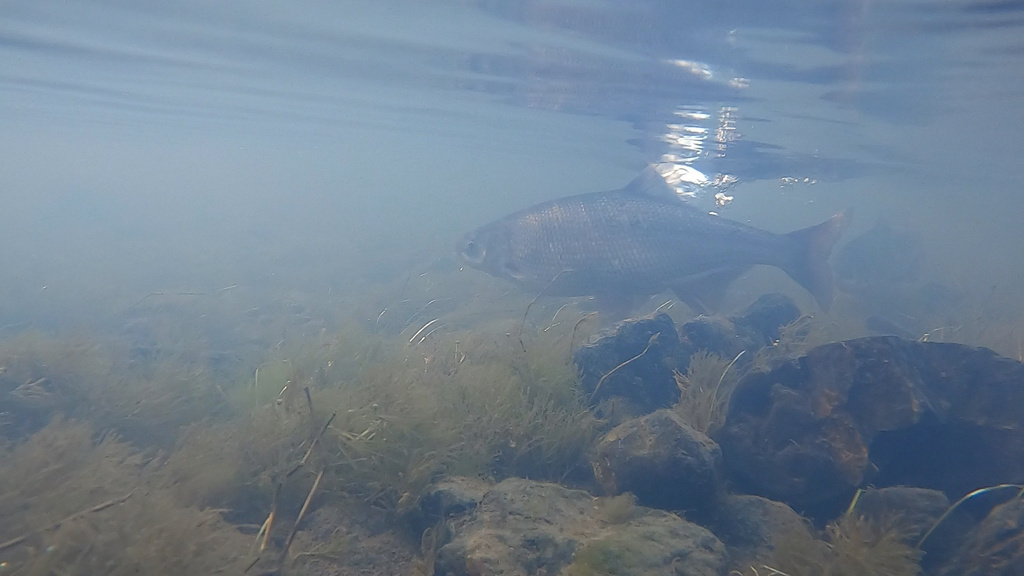
(c) Mike Heine, some rights reserved (CC BY) · licence
Family: Leuciscidae · Class: Actinopterygii · Order: Cypriniformes
Lavinia symmetricus symmetricus (Sacramento roach) is a California animal in the Leuciscidae family.
The Sacramento roach (Lavinia symmetricus symmetricus) is a small freshwater fish endemic to California's Central Valley drainage system. Adults typically measure 76 to 152 mm (3 to 6 inches) in total length, with a streamlined, laterally compressed body adapted for life in flowing waters. The species displays a silvery coloration with darker dorsal surfaces and lighter ventral areas. During breeding season, males develop pronounced tubercles on the head and fins, and both sexes may exhibit orange or reddish coloration on the fins and lower body surfaces. Historically, Sacramento roach occupied the entire Sacramento-San Joaquin River system and its tributaries, extending from the Sierra Nevada foothills to the Central Valley floor. The subspecies was once abundant throughout the Sacramento River drainage from Redding south to the Delta, including major tributaries such as the American, Feather, Yuba, and Mokelumne rivers. Current distribution has been significantly reduced, with populations now fragmented and largely confined to smaller tributaries and isolated stream segments where habitat conditions remain suitable. Sacramento roach inhabit clear, cool streams and rivers with moderate to swift currents over gravel, cobble, and rocky substrates. The species prefers pools and runs with depths ranging from 0.3 to 2 meters (1 to 6.5 feet) and temperatures below 24°C (75°F). Riparian vegetation providing overhead cover is an important habitat component. Adults are commonly found in deeper pools during summer months, while juveniles utilize shallow riffles and stream margins with emergent vegetation. This omnivorous species feeds on aquatic and terrestrial insects, algae, plant material, and small crustaceans. Sacramento roach exhibit opportunistic feeding behavior, adjusting their diet seasonally based on food availability. Spawning occurs from March through July, with peak activity during April and May when water temperatures reach 16 to 20°C (61 to 68°F). Females deposit adhesive eggs in gravel nests prepared by males in shallow riffles. Clutch sizes range from 200 to 2,000 eggs depending on female size. Sexual maturity is typically reached at age two. While not federally or state listed, Sacramento roach populations have declined substantially due to habitat modification, water diversions, and competition with introduced species. Dam construction has fragmented populations and altered natural flow regimes essential for reproduction. Agricultural and urban development has degraded riparian habitats and increased water temperatures through removal of streamside vegetation. Non-native species including largemouth bass, bluegill, and common carp have altered food webs and increased predation pressure. Water quality degradation from agricultural runoff and urban pollutants poses additional threats. Conservation efforts focus on habitat restoration, flow management, and native fish community enhancement within remaining suitable watersheds.
Classification
Class: Actinopterygii · Order: Cypriniformes · Family: Leuciscidae
Frequently asked questions
How is Lavinia symmetricus symmetricus classified?
Lavinia symmetricus symmetricus belongs to class Actinopterygii, order Cypriniformes, family Leuciscidae.
What family does Lavinia symmetricus symmetricus belong to?
Lavinia symmetricus symmetricus is in the Leuciscidae family.
What is Lavinia symmetricus symmetricus?
The Sacramento roach (Lavinia symmetricus symmetricus) is a small freshwater fish endemic to California's Central Valley drainage system.
Is Lavinia symmetricus symmetricus found in California?
Yes. Lavinia symmetricus symmetricus is recorded in California in The California Species Project's catalogue.
Related species
Other California species in the same genus, family, or bioregion.
Data from The California Species Project — 14,000+ California species with verified data from CNPS, CDFW, USFWS, and more.