Leiothlypis ruficapilla
Nashville Warbler
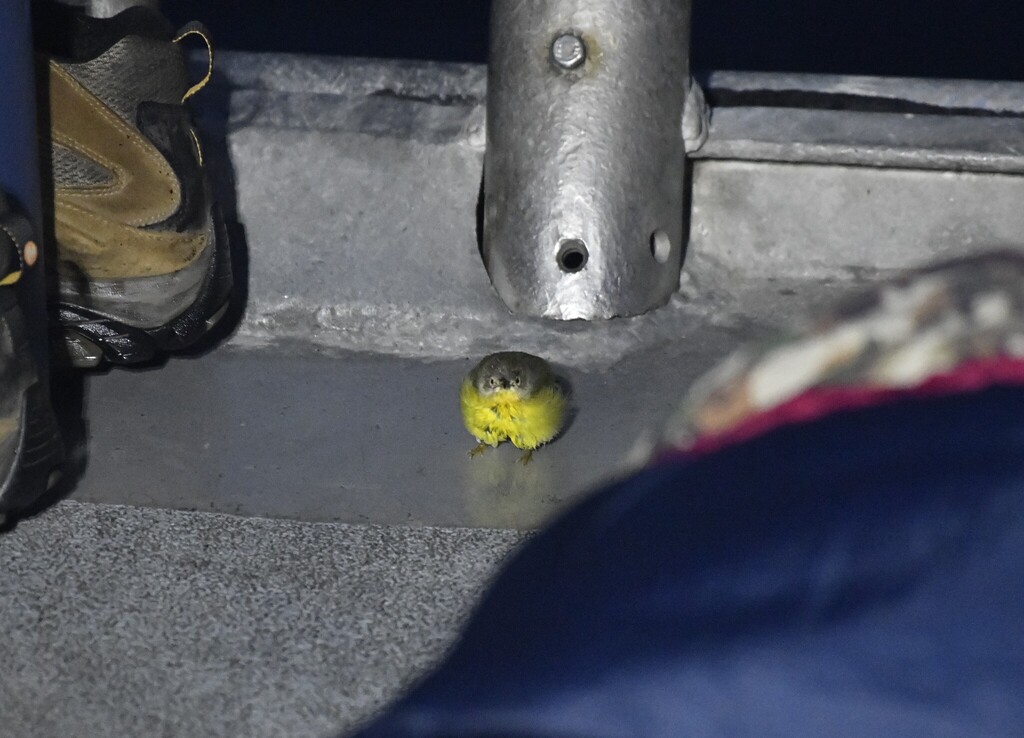
(c) Zac Peterson, some rights reserved (CC BY) · licence
Family: Parulidae · Class: Aves · Order: Passeriformes
Leiothlypis ruficapilla (Nashville Warbler) is a California animal in the Parulidae family.
The Nashville Warbler is a small songbird in the wood-warbler family (Parulidae), measuring 11 to 12 centimeters (4.3 to 4.7 inches) in length with a wingspan of 16 to 20 centimeters (6.3 to 7.9 inches). Adults weigh 8 to 10 grams (0.28 to 0.35 ounces). Breeding males display a distinctive gray head with a white eye-ring, olive-green upperparts, and bright yellow underparts extending from the throat to the undertail coverts. A partially concealed rufous crown patch, from which the species derives its scientific name ruficapilla, is visible when birds are excited or displaying. Females and non-breeding males show similar but duller plumage with reduced yellow coloration and less prominent crown patches. The species can be distinguished from similar warblers by its combination of gray head, complete white eye-ring, and lack of wing bars. Nashville Warblers breed across a broad range of northern North America, with two distinct populations. The eastern population breeds from southeastern Canada through the Great Lakes region and northern New England, while the western population breeds from British Columbia south through the western United States. In California, Nashville Warblers breed primarily in the Sierra Nevada, Cascade Range, and northern Coast Ranges. During migration and winter, the species occurs throughout California, with concentrations in riparian areas, oak woodlands, and chaparral habitats. Breeding habitat consists of young deciduous and mixed forests, particularly areas regenerating after disturbance such as logging or fire. The species favors open canopy conditions with dense understory vegetation, typically at elevations between 300 and 2,400 meters (1,000 to 7,900 feet) in California. During migration and winter, Nashville Warblers utilize a broader range of habitats including riparian woodlands, oak savannas, parks, and gardens with adequate shrub cover. Nashville Warblers are primarily insectivorous, gleaning small arthropods from foliage and bark surfaces. Their diet includes caterpillars, aphids, scale insects, flies, and spiders. During migration and winter, they supplement their diet with small fruits and nectar. Breeding occurs from May through July, with females constructing cup-shaped nests on or near the ground, typically concealed in grass tufts or low shrubs. Clutch size ranges from three to five eggs, which are incubated for 11 to 12 days. Young fledge after 11 days but remain dependent on parents for an additional two weeks. The Nashville Warbler is not federally or state listed and maintains stable populations across much of its range. According to the North American Breeding Bird Survey, populations showed slight increases from 1966 to 2019, with an annual growth rate of 0.4 percent. However, some regional declines have been documented in portions of the eastern breeding range. Primary conservation concerns include habitat loss from intensive forest management, urban development, and climate change effects on montane breeding habitats. The species benefits from forest management practices that maintain diverse age classes and adequate understory vegetation.
Classification
Class: Aves · Order: Passeriformes · Family: Parulidae
Frequently asked questions
How is Leiothlypis ruficapilla classified?
Leiothlypis ruficapilla belongs to class Aves, order Passeriformes, family Parulidae.
What family does Leiothlypis ruficapilla belong to?
Leiothlypis ruficapilla is in the Parulidae family.
What is Leiothlypis ruficapilla?
The Nashville Warbler is a small songbird in the wood-warbler family (Parulidae), measuring 11 to 12 centimeters (4.3 to 4.7 inches) in length with a wingspan of 16 to 20 centimeters (6.3 to 7.9 inches).
Is Leiothlypis ruficapilla found in California?
Yes. Leiothlypis ruficapilla is recorded in California in The California Species Project's catalogue.
Related species
Other California species in the same genus, family, or bioregion.
Data from The California Species Project — 14,000+ California species with verified data from CNPS, CDFW, USFWS, and more.