Lema daturaphila
Three-lined Potato Beetle
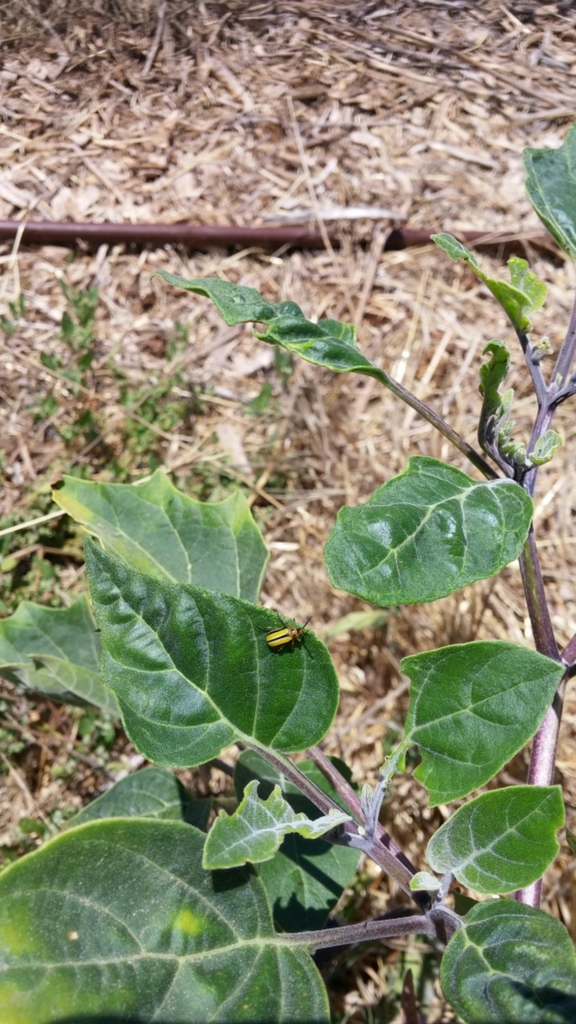
(c) sdash, some rights reserved (CC BY) · licence
Family: Chrysomelidae · Class: Insecta · Order: Coleoptera
Lema daturaphila (Three-lined Potato Beetle) is a California animal in the Chrysomelidae family.
The Three-lined Potato Beetle (Lema daturaphila) is a small leaf beetle belonging to the family Chrysomelidae, subfamily Criocerinae. Adults measure approximately 4 to 6 mm (0.16 to 0.24 inches) in length and display the characteristic elongated, cylindrical body shape typical of the genus Lema. The species exhibits three distinct longitudinal dark stripes running along the elytra, giving rise to its common name. The head and thorax are typically reddish-brown to orange, while the elytra are yellow to pale orange with the distinctive black striping pattern. Lema daturaphila occurs across western North America, with documented populations in California, Oregon, and extending into parts of the southwestern United States. In California, the species has been recorded from multiple counties across diverse regions, including occurrences in both coastal and inland areas. The distribution appears to be somewhat fragmented, with populations documented from the Central Valley to coastal ranges. According to NatureServe, the species maintains a Global Status rank of G5, indicating it is considered secure globally (NatureServe 2025). This beetle inhabits areas where its host plants are present, typically in disturbed soils, agricultural margins, and naturalized areas. The species shows a preference for open to semi-open habitats including roadsides, field edges, and areas with sparse vegetation. Elevation ranges vary across the distribution, with populations occurring from near sea level to moderate elevations in foothill regions. The species appears to tolerate a range of soil types and moisture conditions where suitable host vegetation is established. Lema daturaphila feeds primarily on plants in the nightshade family (Solanaceae), particularly species of Datura and Solanum. Adults and larvae consume leaf tissue, with larvae typically feeding on the undersides of leaves. The species follows a typical chrysomelid life cycle, with adults emerging in spring and early summer to mate and oviposit on host plants. Females deposit small clusters of yellow to orange eggs on leaf surfaces. Larvae develop through several instars before pupating in the soil. The species typically completes one generation per year in most of its range, though multiple generations may occur in warmer regions with extended growing seasons. Currently, Lema daturaphila does not hold federal or state conservation listing status and is not considered at risk. The G5 global ranking suggests stable populations across the species' range. Primary threats appear minimal, though habitat modification and agricultural practices may affect local populations. The species' association with weedy and cultivated Solanaceae may actually benefit populations in some areas, as these plants often colonize disturbed habitats. No specific conservation measures are currently implemented for this species, and monitoring efforts focus primarily on documenting distribution and host plant associations rather than population trends.
Classification
Class: Insecta · Order: Coleoptera · Family: Chrysomelidae
Frequently asked questions
How is Lema daturaphila classified?
Lema daturaphila belongs to class Insecta, order Coleoptera, family Chrysomelidae.
What family does Lema daturaphila belong to?
Lema daturaphila is in the Chrysomelidae family.
What is Lema daturaphila?
The Three-lined Potato Beetle (Lema daturaphila) is a small leaf beetle belonging to the family Chrysomelidae, subfamily Criocerinae.
Is Lema daturaphila found in California?
Yes. Lema daturaphila is recorded in California in The California Species Project's catalogue.
Related species
Other California species in the same genus, family, or bioregion.
Data from The California Species Project — 14,000+ California species with verified data from CNPS, CDFW, USFWS, and more.