Lemmiscus curtatus
Sagebrush Vole
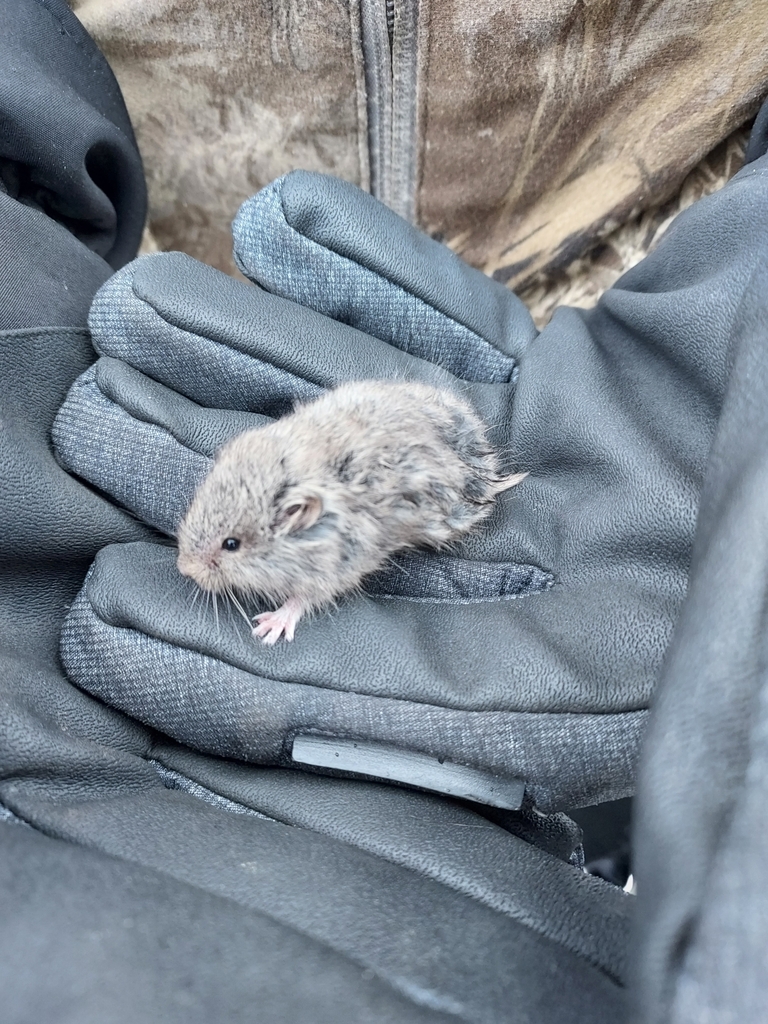
(c) amy pavelchek, some rights reserved (CC BY) · licence
Family: Cricetidae · Class: Mammalia · Order: Rodentia
Lemmiscus curtatus (Sagebrush Vole) is a California animal in the Cricetidae family.
The Sagebrush Vole is a small rodent endemic to the western United States, with limited populations extending into extreme northeastern California. Adults measure 88 to 140 mm (3.5 to 5.5 inches) in total length, including a short tail of 16 to 31 mm (0.6 to 1.2 inches). Body mass ranges from 17 to 39 grams (0.6 to 1.4 ounces). The dorsal pelage is pale grayish-brown to ashy gray, blending seamlessly with the surrounding sagebrush habitat. The ventral surface is whitish to pale gray. The ears are small and nearly concealed by fur, and the eyes are relatively small compared to other voles. The tail is distinctly short and sparsely haired, distinguishing this species from other sympatric rodents. In California, the Sagebrush Vole occurs only in Modoc County in the extreme northeastern portion of the state, representing the southern edge of its range. The species' broader distribution encompasses portions of Washington, Oregon, Idaho, Nevada, Utah, Montana, Wyoming, and Colorado. Historical records suggest the California population is disjunct from core populations in the Great Basin and Columbia Plateau regions. Sagebrush Voles inhabit shrub-steppe communities dominated by big sagebrush (Artemisia tridentata) at elevations ranging from 1,200 to 2,100 meters (4,000 to 7,000 feet). The species shows strong habitat fidelity to areas with dense sagebrush cover, typically requiring shrub canopy coverage exceeding 20 percent. Suitable habitat includes well-drained soils with scattered grasses and forbs beneath the shrub layer. The species constructs extensive runway systems beneath and between sagebrush plants, creating a network of trails used for foraging and predator avoidance. Sagebrush Voles are primarily herbivorous, feeding almost exclusively on green portions of sagebrush leaves and stems. During winter months when fresh growth is limited, they consume bark from sagebrush stems and cached plant material. Breeding occurs from April through September, with females producing two to three litters annually. Litter size ranges from two to eight young, with an average of four to five offspring. Gestation period is approximately 21 days, and young reach sexual maturity at six to eight weeks of age. The species is active year-round and exhibits both diurnal and nocturnal activity patterns. The Sagebrush Vole is not federally listed under the Endangered Species Act, nor does it receive state protection in California. However, the species faces significant habitat loss throughout its range due to conversion of sagebrush habitats for agriculture, livestock grazing, and urban development. Fire suppression practices have altered natural disturbance regimes, leading to encroachment by juniper and other woody species that reduce suitable sagebrush habitat. Climate change poses additional threats through increased frequency and intensity of wildfires and shifts in precipitation patterns. In California, the extremely limited range makes the population particularly vulnerable to local extirpation from habitat degradation or stochastic events.
Classification
Class: Mammalia · Order: Rodentia · Family: Cricetidae
Frequently asked questions
How is Lemmiscus curtatus classified?
Lemmiscus curtatus belongs to class Mammalia, order Rodentia, family Cricetidae.
What family does Lemmiscus curtatus belong to?
Lemmiscus curtatus is in the Cricetidae family.
What is Lemmiscus curtatus?
The Sagebrush Vole is a small rodent endemic to the western United States, with limited populations extending into extreme northeastern California.
Is Lemmiscus curtatus found in California?
Yes. Lemmiscus curtatus is recorded in California in The California Species Project's catalogue.
Related species
Other California species in the same genus, family, or bioregion.
Data from The California Species Project — 14,000+ California species with verified data from CNPS, CDFW, USFWS, and more.