Lepidochelys olivacea
Olive (=Pacific) ridley sea turtle
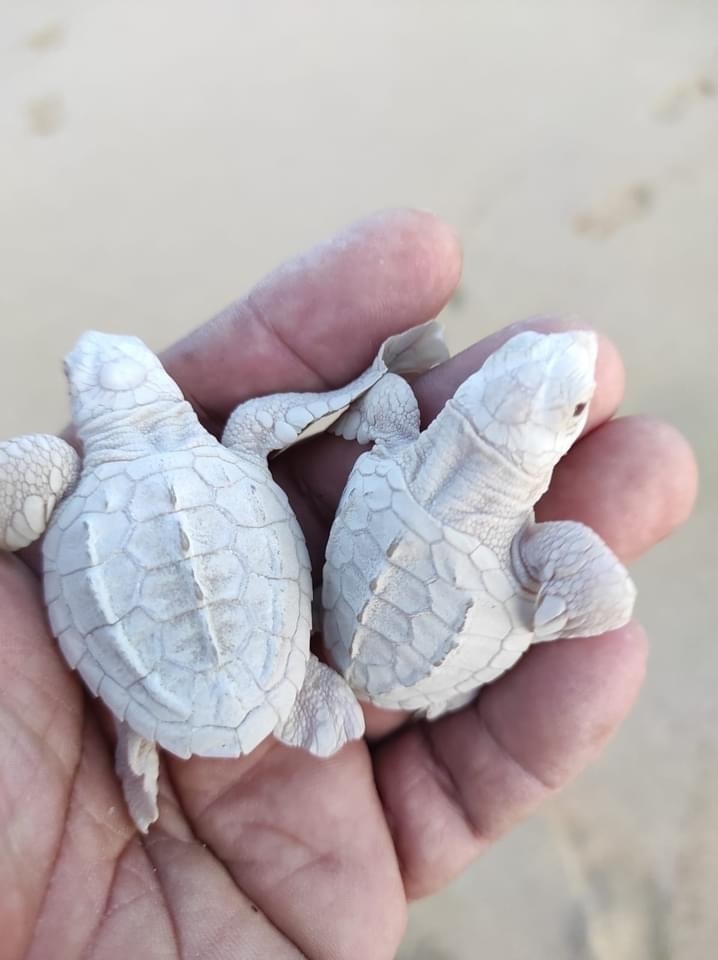
(c) Bill Levine, some rights reserved (CC BY) · licence
Family: Cheloniidae · Class: Reptilia · Order: Testudines
Conservation status: Threatened
Lepidochelys olivacea (Olive (=Pacific) ridley sea turtle) is a California animal in the Cheloniidae family.
The olive ridley sea turtle is the smallest of the sea turtle species, with adults measuring 55 to 75 centimeters (22 to 30 inches) in carapace length and weighing 35 to 50 kilograms (77 to 110 pounds). The carapace is typically olive-gray to olive-green in coloration, giving the species its common name. The heart-shaped carapace is relatively high and features five to nine pairs of costal scutes, with six to eight pairs being most common. The plastron is greenish-white to yellow. Adults have a relatively large head with a slightly hooked beak, and the flippers are paddle-shaped with one or two claws on each front flipper. The olive ridley sea turtle has the most extensive distribution of any sea turtle species, occurring in warm waters of the Pacific, Atlantic, and Indian Oceans. In the eastern Pacific, the species ranges from southern California to northern Chile. In California waters, olive ridleys are occasional visitors, primarily occurring in offshore waters during warmer months. According to the California Department of Fish and Wildlife, the species is not currently tracked by the California Natural Diversity Database, indicating irregular occurrence in state waters. Olive ridleys inhabit primarily pelagic environments in warm oceanic waters, typically in areas where water temperatures exceed 20°C (68°F). They frequent convergence zones, upwelling areas, and areas with high productivity where prey is concentrated. While primarily oceanic, adults approach coastal waters for nesting. The species shows strong fidelity to specific nesting beaches, with the largest aggregations occurring on beaches in Costa Rica, Mexico, and India. This species exhibits distinctive reproductive behaviors among sea turtles through synchronized mass nesting events called arribadas, where thousands of females simultaneously come ashore to nest. These events typically occur during the last quarter and new moon phases. Females nest two to three times per season, depositing 50 to 150 spherical eggs in each clutch. Incubation lasts 45 to 60 days depending on temperature. Olive ridleys are omnivorous, feeding on jellyfish, shrimp, crabs, bryozoans, tunicates, mollusks, and fish. Juveniles also consume algae and seagrass. The U.S. Fish and Wildlife Service and National Marine Fisheries Service listed the olive ridley sea turtle as threatened under the Endangered Species Act in 1978, except for the breeding populations on the Pacific coast of Mexico, which are listed as endangered. Primary threats include incidental capture in fishing operations, coastal development, egg collection, and pollution. Climate change poses additional risks through rising sea levels, increased storm intensity, and temperature-dependent sex determination in hatchlings. International conservation efforts focus on protecting nesting beaches, reducing fisheries interactions through turtle excluder devices, and monitoring population trends across the species' range.
Classification
Class: Reptilia · Order: Testudines · Family: Cheloniidae
Conservation status
Threatened
Frequently asked questions
How is Lepidochelys olivacea classified?
Lepidochelys olivacea belongs to class Reptilia, order Testudines, family Cheloniidae.
What family does Lepidochelys olivacea belong to?
Lepidochelys olivacea is in the Cheloniidae family.
Is Lepidochelys olivacea protected or of conservation concern?
Lepidochelys olivacea carries the following status: Threatened.
What is Lepidochelys olivacea?
The olive ridley sea turtle is the smallest of the sea turtle species, with adults measuring 55 to 75 centimeters (22 to 30 inches) in carapace length and weighing 35 to 50 kilograms (77 to 110 pounds).
Is Lepidochelys olivacea found in California?
Yes. Lepidochelys olivacea is recorded in California in The California Species Project's catalogue.
Related species
Other California species in the same genus, family, or bioregion.
Data from The California Species Project — 14,000+ California species with verified data from CNPS, CDFW, USFWS, and more.