Lepidomeda mollispinis pratensis
Big Spring spinedace
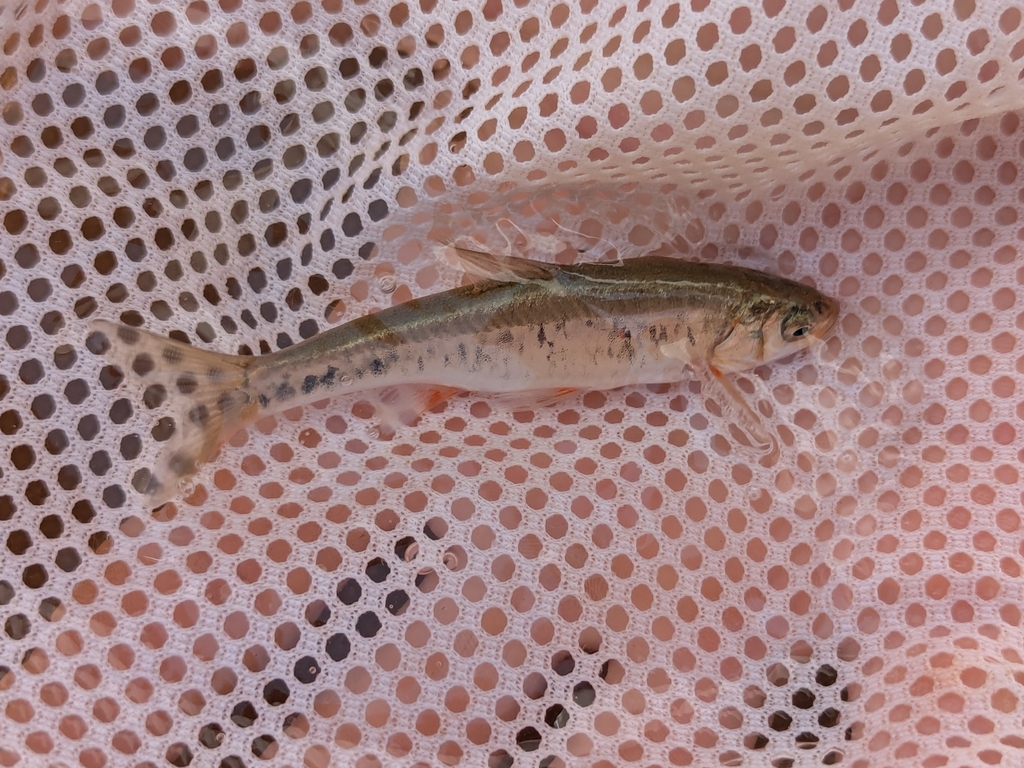
(c) colorful-corvid, some rights reserved (CC BY) · licence
Family: Leuciscidae · Class: Actinopterygii · Order: Cypriniformes
Conservation status: Threatened
Lepidomeda mollispinis pratensis (Big Spring spinedace) is a California animal in the Leuciscidae family.
The Big Spring spinedace is a small freshwater fish endemic to southeastern Nevada. Adults typically measure 50 to 75 mm (2.0 to 3.0 inches) in total length, with a streamlined, fusiform body adapted for life in flowing water. The species exhibits typical cyprinid characteristics including a single dorsal fin, paired fins, and a moderately compressed body profile. Coloration is generally olive to brown dorsally, fading to silver or white ventrally, with subtle variations based on habitat conditions and breeding status. Historically, the Big Spring spinedace occurred throughout the Meadow Valley Wash system in southeastern Nevada. Currently, the species is restricted to a single population occupying approximately 8 kilometers of the Condor Canyon reach of Meadow Valley Wash (USFWS Recovery Plan 1994). This dramatic range reduction represents one of the most severe geographic contractions documented for any North American cyprinid. The species' distribution is centered in Lincoln County, Nevada, where it persists in isolated spring-fed pools and connecting stream reaches. Big Spring spinedace inhabit clear, cool spring-fed waters with temperatures typically ranging from 15 to 25°C (59 to 77°F). The species requires well-oxygenated water with moderate flow velocities and substrates of gravel, cobble, or bedrock. Preferred microhabitats include shallow riffles and pools with adequate cover provided by undercut banks, overhanging vegetation, or rocky crevices. Water depth preferences range from 0.3 to 1.5 meters, with the species showing strong fidelity to specific habitat patches. Diet consists primarily of aquatic invertebrates including dipteran larvae, mayfly nymphs, caddisfly larvae, and small crustaceans. Feeding occurs primarily during daylight hours through visual predation on drifting invertebrates. Reproductive biology follows typical cyprinid patterns, with spawning occurring from April through June when water temperatures reach optimal ranges. Females deposit adhesive eggs in gravel substrates, with clutch sizes typically ranging from 200 to 500 eggs depending on female size and condition. The U.S. Fish and Wildlife Service listed the Big Spring spinedace as threatened on March 28, 1985, with a recovery plan finalized on January 20, 1994 (USFWS 2007). Primary threats include habitat modification, water diversions, groundwater pumping, and introduction of non-native species. The species' extremely limited range makes it particularly vulnerable to catastrophic events or continued habitat degradation. Recovery efforts focus on habitat restoration between Condor Canyon and Panaca Spring to allow population expansion into historical range (USFWS Recovery Plan 1994). Population monitoring indicates uncertain trends, with the species' conservation status remaining precarious due to its restricted distribution and ongoing habitat pressures. Recovery cost estimates totaled $196,000 over an anticipated 13-year timeline, though recovery objectives have not yet been fully achieved.
Classification
Class: Actinopterygii · Order: Cypriniformes · Family: Leuciscidae
Conservation status
Threatened
Frequently asked questions
How is Lepidomeda mollispinis pratensis classified?
Lepidomeda mollispinis pratensis belongs to class Actinopterygii, order Cypriniformes, family Leuciscidae.
What family does Lepidomeda mollispinis pratensis belong to?
Lepidomeda mollispinis pratensis is in the Leuciscidae family.
Is Lepidomeda mollispinis pratensis protected or of conservation concern?
Lepidomeda mollispinis pratensis carries the following status: Threatened.
What is Lepidomeda mollispinis pratensis?
The Big Spring spinedace is a small freshwater fish endemic to southeastern Nevada.
Is Lepidomeda mollispinis pratensis found in California?
Yes. Lepidomeda mollispinis pratensis is recorded in California in The California Species Project's catalogue.
Related species
Other California species in the same genus, family, or bioregion.
Data from The California Species Project — 14,000+ California species with verified data from CNPS, CDFW, USFWS, and more.