Lepidurus packardi
Vernal pool tadpole shrimp
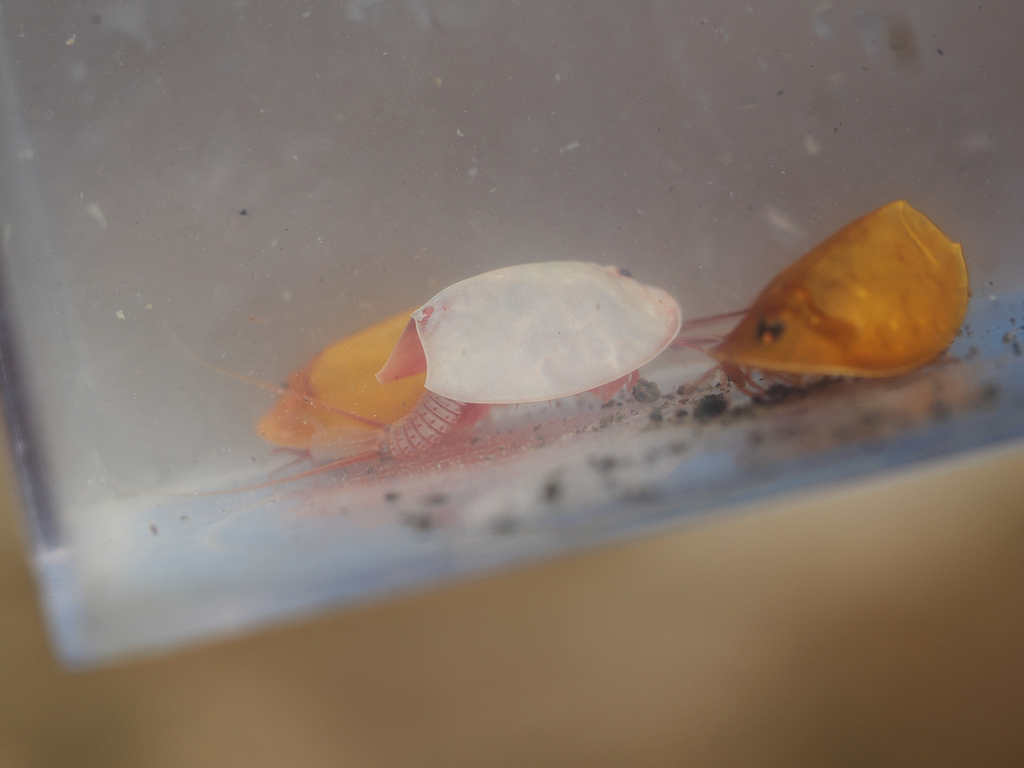
(c) Ken-ichi Ueda, some rights reserved (CC BY) · licence
Family: Triopsidae · Class: Branchiopoda · Order: Notostraca
Conservation status: Endangered · G3 S3
Lepidurus packardi (Vernal pool tadpole shrimp) is a California animal in the Triopsidae family.
The vernal pool tadpole shrimp is a small freshwater branchiopod crustacean endemic to temporary aquatic habitats in California and southern Oregon. Adults measure 20 to 35 millimeters (0.8 to 1.4 inches) in length and possess a distinctive large, flattened carapace that arches like a shield over the dorsal surface. The carapace is typically brownish to olive in coloration and covers most of the body, leaving the segmented abdomen and paired caudal filaments extending posteriorly. The species has numerous pairs of phyllopodous swimming legs that beat rhythmically for locomotion and feeding. Historically, the vernal pool tadpole shrimp occurred throughout the Central Valley of California from the Oregon border south to the San Joaquin Valley. According to USFWS, the species currently maintains a patchy distribution from Shasta County southward to northwestern Tulare County (USFWS 2024). Extant populations are documented in the Sacramento Valley, San Francisco Bay Area, Central Coast ranges, and northern San Joaquin Valley. The species has been extirpated from much of its former range due to habitat destruction. Vernal pool tadpole shrimp inhabit seasonal wetlands that fill with winter rains and dry completely by late spring or early summer. These temporary pools occur in grassland, oak woodland, and chaparral vegetation types, typically on clay hardpan soils or volcanic substrates that create impermeable layers. Pools range from small depressions less than one meter in diameter to larger complexes covering several acres. Water depth varies from a few centimeters to over one meter during peak filling. The species exhibits a univoltine life cycle adapted to the ephemeral nature of vernal pools. Drought-resistant cysts remain dormant in pool sediments during dry periods, sometimes for multiple years. When pools fill with sufficient water depth and duration, cysts hatch into nauplii larvae that develop through multiple molts to reach maturity. Adults are omnivorous filter feeders, consuming algae, bacteria, detritus, and small invertebrates. Reproduction occurs through both sexual reproduction and parthenogenesis, with females depositing cysts in pool sediments before pools desiccate. The U.S. Fish and Wildlife Service listed the vernal pool tadpole shrimp as endangered in 1994 under the Endangered Species Act. The primary threat is habitat loss from urban development, agricultural conversion, and infrastructure projects. Over 90% of California's historical vernal pool habitat has been destroyed (USFWS 2024). Additional threats include altered hydrology from roads and development, livestock grazing impacts, invasive plant species, and pesticide contamination from adjacent agricultural areas. Climate change poses emerging risks through altered precipitation patterns and extended drought periods that may prevent successful reproduction. Conservation efforts focus on habitat preservation through land acquisition, conservation easements, and habitat conservation plans that protect remaining vernal pool complexes while allowing compatible land uses.
Classification
Class: Branchiopoda · Order: Notostraca · Family: Triopsidae
Conservation status
Endangered · G3 S3
Frequently asked questions
How is Lepidurus packardi classified?
Lepidurus packardi belongs to class Branchiopoda, order Notostraca, family Triopsidae.
What family does Lepidurus packardi belong to?
Lepidurus packardi is in the Triopsidae family.
Is Lepidurus packardi protected or of conservation concern?
Lepidurus packardi carries the following status: Endangered · G3 S3.
What is Lepidurus packardi?
The vernal pool tadpole shrimp is a small freshwater branchiopod crustacean endemic to temporary aquatic habitats in California and southern Oregon.
Is Lepidurus packardi found in California?
Yes. Lepidurus packardi is recorded in California in The California Species Project's catalogue.
More California species
This species has no close relatives in our California data — here are other species to explore.
Data from The California Species Project — 14,000+ California species with verified data from CNPS, CDFW, USFWS, and more.