Lepomis gibbosus
Pumpkinseed
no rights reserved · CC0
Family: Centrarchidae · Class: Actinopterygii · Order: Perciformes
Lepomis gibbosus (Pumpkinseed) is a California animal in the Centrarchidae family.
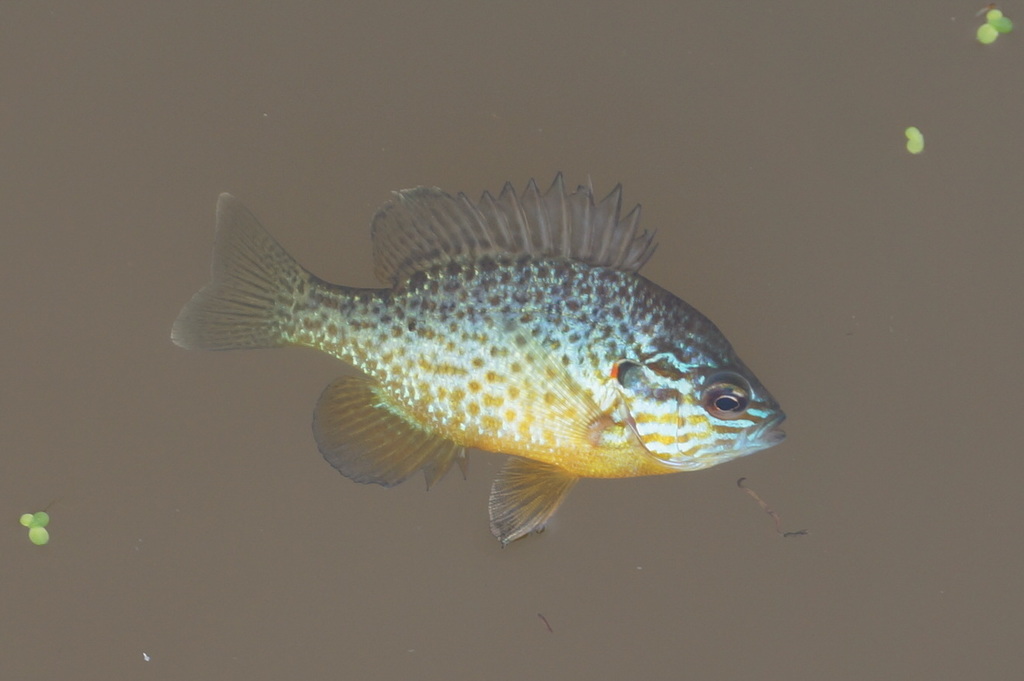
The pumpkinseed is a small, colorful freshwater fish native to eastern North America and a member of the sunfish family Centrarchidae. Adults typically measure 10 to 20 cm (4 to 8 inches) in length, with exceptional individuals reaching 25 cm (10 inches). The body is deep and laterally compressed with a rounded profile. The species exhibits distinctive coloration with olive-green to bluish-green backs, yellow-orange sides, and bright orange or yellow bellies. Males develop more intense coloration during breeding season, with orange and blue streaking on the head and gill covers. The most diagnostic feature is a distinctive red or orange spot on the posterior margin of the opercular flap, which distinguishes it from other sunfish species. Historically native to eastern North America from southeastern Canada to the Great Lakes region and Atlantic coastal drainages, pumpkinseed have been widely introduced throughout western North America, including California. The species was first introduced to California waters in the late 1800s and early 1900s, primarily for recreational fishing purposes. According to the California Department of Fish and Wildlife, pumpkinseed are now established in numerous water bodies throughout the state, including the Sacramento-San Joaquin Delta, Clear Lake, and various reservoirs and ponds from the Central Valley to Southern California. Pumpkinseed inhabit warm, shallow waters with abundant aquatic vegetation and soft substrates. They prefer lakes, ponds, slow-moving streams, and backwater areas with temperatures ranging from 20 to 28°C (68 to 82°F). The species thrives in waters with dense stands of submerged and emergent vegetation, which provide cover and foraging opportunities. Optimal habitat includes areas with sandy or muddy bottoms and depths typically less than 3 meters (10 feet), though they may occur in deeper waters. Pumpkinseed are omnivorous, feeding primarily on aquatic invertebrates, small crustaceans, insect larvae, snails, and aquatic worms. Adults also consume small fish and fish eggs. The species exhibits opportunistic feeding behavior, using their small mouths to pick food items from vegetation and substrates. Spawning occurs from late spring through early summer when water temperatures reach 15 to 20°C (59 to 68°F). Males construct circular nests in shallow water by fanning away sediment with their tails. Females deposit 600 to 3,000 eggs in these nests, which males guard until fry become free-swimming after approximately one week. Pumpkinseed are not federally or state listed for protection in California, as they are considered an established non-native species. While not threatened, their introduction has raised ecological concerns regarding competition with native fish species and potential impacts on aquatic ecosystems. The species' adaptability and reproductive success have allowed populations to establish and persist in California's modified aquatic habitats, particularly in areas where native fish communities have been altered by human activities.
Classification
Class: Actinopterygii · Order: Perciformes · Family: Centrarchidae
Frequently asked questions
How is Lepomis gibbosus classified?
Lepomis gibbosus belongs to class Actinopterygii, order Perciformes, family Centrarchidae.
What family does Lepomis gibbosus belong to?
Lepomis gibbosus is in the Centrarchidae family.
What is Lepomis gibbosus?
The pumpkinseed is a small, colorful freshwater fish native to eastern North America and a member of the sunfish family Centrarchidae.
Is Lepomis gibbosus found in California?
Yes. Lepomis gibbosus is recorded in California in The California Species Project's catalogue.
Related species
Other California species in the same genus, family, or bioregion.
Data from The California Species Project — 14,000+ California species with verified data from CNPS, CDFW, USFWS, and more.