Leptonycteris yerbabuenae
Lesser long-nosed bat
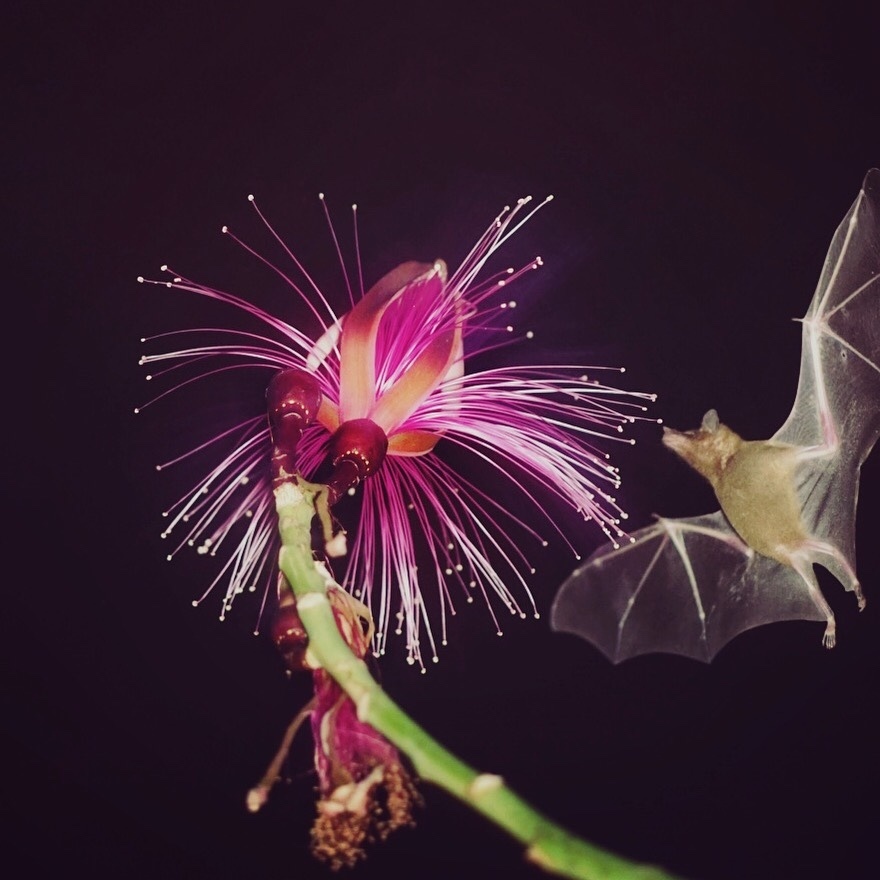
(c) Xochitl Castaño, some rights reserved (CC BY) · licence
Family: Phyllostomidae · Class: Mammalia · Order: Chiroptera
Conservation status: Delisted · G3 S1
Leptonycteris yerbabuenae (Lesser long-nosed bat) is a California animal in the Phyllostomidae family.
The lesser long-nosed bat (Leptonycteris yerbabuenae) is a medium-sized nectar-feeding bat with distinctive morphological adaptations for plant pollination. Adults measure 75 to 85 mm (3.0 to 3.3 inches) in head and body length, with a wingspan of 350 to 380 mm (14 to 15 inches). Body mass ranges from 18 to 25 grams (0.6 to 0.9 ounces). The species lacks a tail, distinguishing it from most North American bats. The rostrum is elongated and narrow, housing a long, extensible tongue adapted for nectar extraction. Dorsal fur is grayish-brown to yellowish-brown, while ventral fur is lighter in coloration. The ears are triangular and relatively small, measuring approximately 15 mm in length. The species' range extends from southern Arizona and extreme southwestern New Mexico through western Mexico to Guatemala and El Salvador. In California, the lesser long-nosed bat historically occurred in Imperial and Riverside counties in the Sonoran Desert region. However, current occurrence in California is uncertain, with no confirmed recent records. The species follows well-defined migratory corridors between roosting sites in Mexico and foraging areas in the southwestern United States. Lesser long-nosed bats inhabit arid and semi-arid regions dominated by Sonoran Desert vegetation. They utilize caves, mine tunnels, and abandoned buildings as roosting sites, typically selecting locations with stable temperatures between 20 to 30 degrees Celsius (68 to 86 degrees Fahrenheit). Maternity colonies form in warm roosts with high humidity levels. Foraging habitats include desert scrubland, riparian areas, and cultivated agave fields, generally below 2,000 meters (6,560 feet) elevation. This species exhibits highly specialized feeding behavior as a nectar and pollen consumer. The diet consists primarily of nectar from columnar cacti including saguaro, organ pipe, and cardon, as well as century plants (Agave species). Patagium pollen adheres to facial fur during feeding, facilitating cross-pollination of these plants. Lesser long-nosed bats are considered keystone pollinators in Sonoran Desert ecosystems. Reproduction follows a seasonal pattern, with mating occurring in fall and winter. Females give birth to single pups in spring after a gestation period of approximately six months. The species demonstrates pronounced migratory behavior, traveling up to 1,500 kilometers between seasonal ranges. The U.S. Fish and Wildlife Service originally listed this species as endangered in 1988 under the synonym Leptonycteris sanborni, as noted by the California Department of Fish and Wildlife. Following significant population recovery and threat reduction, the species was removed from the federal Endangered Species List in 2018, marking a successful conservation achievement. Recovery efforts focused on protecting roosting sites, maintaining migratory corridors, and habitat conservation in both the United States and Mexico. Current population estimates indicate stable or increasing trends throughout most of the species' range, though long-term monitoring continues to track population status and migration patterns.
Classification
Class: Mammalia · Order: Chiroptera · Family: Phyllostomidae
Conservation status
Delisted · G3 S1
Frequently asked questions
How is Leptonycteris yerbabuenae classified?
Leptonycteris yerbabuenae belongs to class Mammalia, order Chiroptera, family Phyllostomidae.
What family does Leptonycteris yerbabuenae belong to?
Leptonycteris yerbabuenae is in the Phyllostomidae family.
Is Leptonycteris yerbabuenae protected or of conservation concern?
Leptonycteris yerbabuenae carries the following status: Delisted · G3 S1.
What is Leptonycteris yerbabuenae?
The lesser long-nosed bat (Leptonycteris yerbabuenae) is a medium-sized nectar-feeding bat with distinctive morphological adaptations for plant pollination.
Is Leptonycteris yerbabuenae found in California?
Yes. Leptonycteris yerbabuenae is recorded in California in The California Species Project's catalogue.
Related species
Other California species in the same genus, family, or bioregion.
Data from The California Species Project — 14,000+ California species with verified data from CNPS, CDFW, USFWS, and more.