Leptuca crenulata
Mexican Fiddler Crab
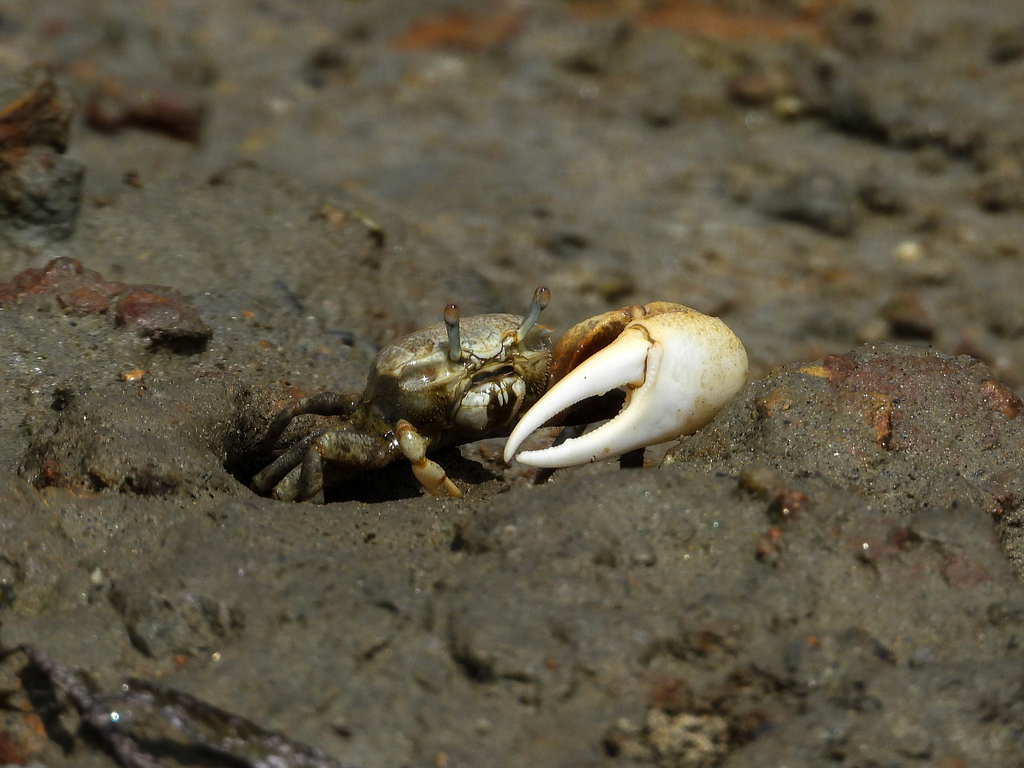
(c) James M. Maley, some rights reserved (CC BY) · licence
Family: Ocypodidae · Class: Malacostraca · Order: Decapoda
Leptuca crenulata (Mexican Fiddler Crab) is a California animal in the Ocypodidae family.
The Mexican fiddler crab (Leptuca crenulata) is a small semi-terrestrial decapod crustacean in the family Ocypodidae. Adults typically measure 15-25 mm (0.6-1.0 inches) in carapace width. Like other fiddler crabs, males exhibit pronounced sexual dimorphism, possessing one greatly enlarged claw (cheliped) that can reach up to 40% of their body weight, while females have two small, symmetrical claws. The carapace is typically brownish-gray to olive in coloration, often with darker mottling that provides camouflage against muddy substrates. Males display the enlarged claw in bright colors during breeding season, typically orange to reddish hues with white or yellow markings. The species occurs along the Pacific coast from Baja California, Mexico, northward to southern California. In California, populations are documented in coastal lagoons, estuaries, and salt marshes from San Diego County north to approximately Ventura County. Historical records suggest the species may have had a broader distribution, but current populations appear concentrated in the southern portion of this range. The species reaches its northern distributional limit in California. Mexican fiddler crabs inhabit intertidal mudflats, salt marshes, and mangrove swamps where fresh and saltwater mix. They construct burrows in soft sediments, typically 10-30 cm deep, which serve as refuge during high tides and temperature extremes. The species tolerates a wide range of salinities but shows preference for areas with moderate salinity fluctuations. Burrows are often clustered in areas with suitable substrate composition and appropriate tidal exposure. This species exhibits typical fiddler crab behavior, with males performing elaborate courtship displays using their enlarged claw to attract females during breeding season. They are primarily active during low tide, emerging from burrows to feed on organic matter, detritus, algae, and small invertebrates filtered from sediment. Feeding occurs through a specialized process where sediment is processed through mouthparts and organic material extracted. Reproduction typically occurs during warmer months, with females carrying eggs beneath their abdomen for approximately two weeks before larvae are released into the water column. Larvae undergo several planktonic stages before settling and metamorphosing into juvenile crabs. According to NatureServe, Leptuca crenulata has a global conservation status of G5 (secure), indicating stable populations range-wide as of their last assessment in 2008. However, no specific federal or state conservation status has been assigned in California. The species faces potential threats from coastal development, habitat modification, pollution, and sea level rise affecting intertidal habitats. Urbanization of coastal areas has reduced available habitat in some portions of the California range. Climate change may alter salinity patterns and tidal regimes that the species depends upon for reproduction and feeding.
Classification
Class: Malacostraca · Order: Decapoda · Family: Ocypodidae
Frequently asked questions
How is Leptuca crenulata classified?
Leptuca crenulata belongs to class Malacostraca, order Decapoda, family Ocypodidae.
What family does Leptuca crenulata belong to?
Leptuca crenulata is in the Ocypodidae family.
What is Leptuca crenulata?
The Mexican fiddler crab (Leptuca crenulata) is a small semi-terrestrial decapod crustacean in the family Ocypodidae.
Is Leptuca crenulata found in California?
Yes. Leptuca crenulata is recorded in California in The California Species Project's catalogue.
More California species
This species has no close relatives in our California data — here are other species to explore.
Data from The California Species Project — 14,000+ California species with verified data from CNPS, CDFW, USFWS, and more.