Lepturobosca chrysocoma
Yellow Velvet Beetle
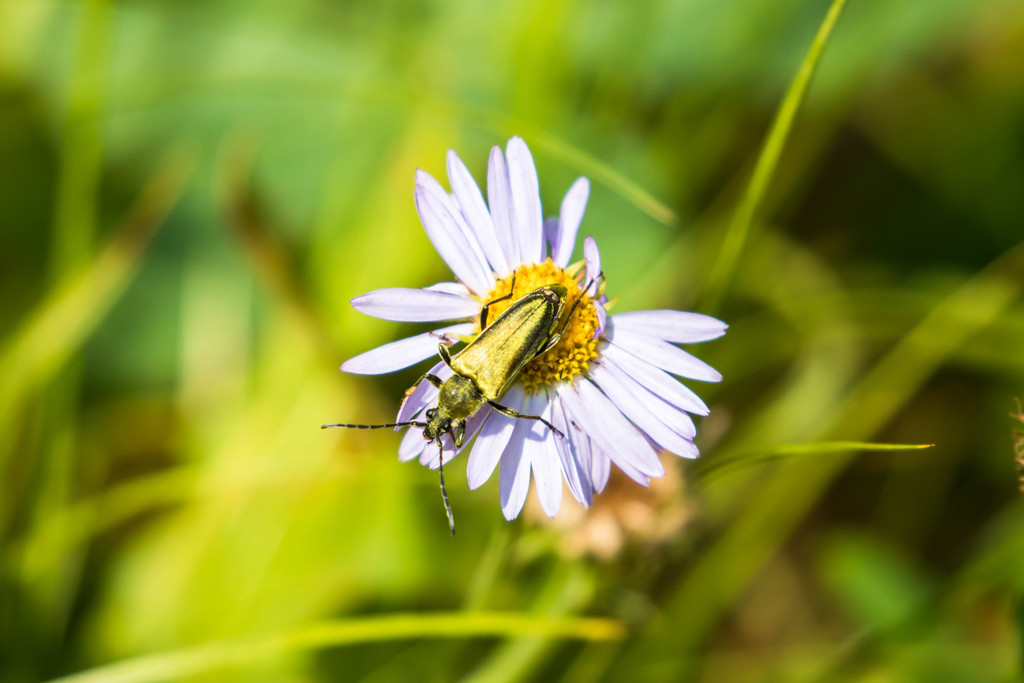
(c) Melissa McMasters, some rights reserved (CC BY) · licence
Family: Cerambycidae · Class: Insecta · Order: Coleoptera
Lepturobosca chrysocoma (Yellow Velvet Beetle) is a California animal in the Cerambycidae family.
The Yellow Velvet Beetle (Lepturobosca chrysocoma) is a member of the longhorn beetle family Cerambycidae. This species belongs to the order Coleoptera within the class Insecta, representing one of the many specialized wood-boring beetles found in North America. Detailed morphological descriptions of this species are not well documented in current scientific literature. As with other members of the Cerambycidae family, adults likely possess elongated antennae and a cylindrical body form typical of longhorn beetles. The common name "Yellow Velvet Beetle" suggests the presence of yellowish coloration and possibly a velvet-like texture to the body surface, though specific measurements and distinguishing features have not been comprehensively recorded. The geographic distribution of Lepturobosca chrysocoma remains poorly documented. Current taxonomic databases and field guides provide limited information about the specific range of this species within California or other western states. The genus Lepturobosca contains several North American species, but detailed distributional data for L. chrysocoma specifically requires additional field survey work. Habitat preferences for this species have not been thoroughly studied or published in accessible scientific literature. Based on the general ecology of related Cerambycidae species, adults may be associated with specific woody plant hosts where larvae develop within dead or dying wood. However, the particular vegetation communities, elevation ranges, and microhabitat requirements for L. chrysocoma remain undetermined through formal ecological studies. Life history and behavioral information for the Yellow Velvet Beetle is largely unavailable in current entomological literature. Typical cerambycid beetles undergo complete metamorphosis, with larvae boring through wood or other plant tissues before pupating and emerging as adults. Adult activity periods, mating behaviors, larval development duration, and host plant relationships specific to this species have not been documented in detail. Without targeted research, fundamental aspects of the species' ecology remain unknown. The conservation status of Lepturobosca chrysocoma has not been formally assessed at federal or state levels. No listing status has been assigned by the U.S. Fish and Wildlife Service or California Department of Fish and Wildlife as of December 2025. The absence of comprehensive biological data makes it difficult to evaluate population trends, threats, or conservation needs for this species. Many specialized beetles face habitat loss due to forest management practices, urban development, and climate change, but specific impacts on L. chrysocoma populations are undocumented. Scientific documentation for this species remains extremely limited despite searches of federal wildlife databases and taxonomic resources. The information presented here represents the current state of knowledge based on available sources. Detailed biological studies, distribution mapping, and ecological research are needed to develop a comprehensive understanding of this species' natural history, habitat requirements, and conservation status. Field biologists and entomologists working in areas where this species may occur are encouraged to document observations and contribute to expanding knowledge of its biology and distribution.
Classification
Class: Insecta · Order: Coleoptera · Family: Cerambycidae
Frequently asked questions
How is Lepturobosca chrysocoma classified?
Lepturobosca chrysocoma belongs to class Insecta, order Coleoptera, family Cerambycidae.
What family does Lepturobosca chrysocoma belong to?
Lepturobosca chrysocoma is in the Cerambycidae family.
What is Lepturobosca chrysocoma?
The Yellow Velvet Beetle (Lepturobosca chrysocoma) is a member of the longhorn beetle family Cerambycidae.
Is Lepturobosca chrysocoma found in California?
Yes. Lepturobosca chrysocoma is recorded in California in The California Species Project's catalogue.
Related species
Other California species in the same genus, family, or bioregion.
Data from The California Species Project — 14,000+ California species with verified data from CNPS, CDFW, USFWS, and more.