Lepus americanus klamathensis
Oregon Snowshoe Hare
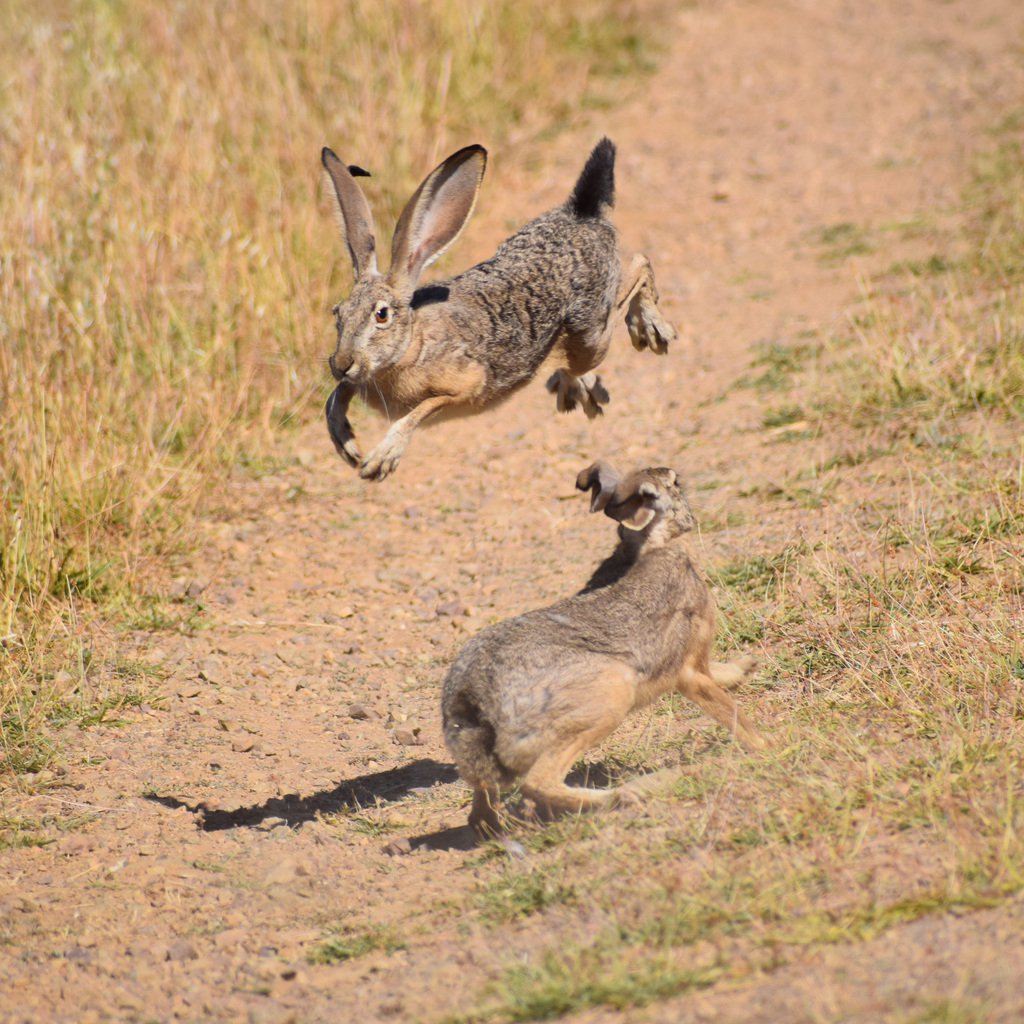
no rights reserved · CC0
Family: Leporidae · Class: Mammalia · Order: Lagomorpha
Conservation status: G5T3T4Q S2
Lepus americanus klamathensis (Oregon Snowshoe Hare) is a California animal in the Leporidae family.
The Oregon snowshoe hare (Lepus americanus klamathensis) is a subspecies of the widespread snowshoe hare, distinguished by its seasonal pelage changes and large hind feet adapted for snow travel. Adults typically measure 36 to 52 centimeters (14 to 20 inches) in body length and weigh 1.4 to 1.8 kilograms (3 to 4 pounds). The species exhibits dramatic seasonal color changes, with brown summer pelage transforming to white winter coat, providing camouflage against snow. The hind feet are notably large, measuring up to 15 centimeters (6 inches) in length, and become densely furred in winter to function as natural snowshoes. This subspecies occurs in the Klamath Mountains region of southern Oregon and northern California, representing the southern extent of snowshoe hare distribution along the Pacific Coast. The Oregon snowshoe hare occupies montane coniferous forests within this geographically limited range, which includes portions of the Cascade Range and Klamath-Siskiyou Mountains. The subspecies is separated from other snowshoe hare populations by considerable geographic gaps, contributing to its genetic distinctiveness. Oregon snowshoe hares inhabit dense coniferous forests dominated by Douglas fir, true firs, and associated species at elevations typically ranging from 1,200 to 2,100 meters (4,000 to 7,000 feet). They require dense horizontal cover provided by shrubs, small trees, and understory vegetation, with optimal stem densities ranging from 4,600 to 33,210 stems per hectare. Downed logs, windfalls, and dense thickets provide essential cover for escape from predators and protection from severe weather. The species shows strong preference for forest edges and openings with regenerating vegetation that provides both cover and browse. Snowshoe hares are primarily crepuscular and nocturnal, feeding on a diverse array of vegetation including grasses, forbs, and woody browse during summer, shifting to twigs, bark, and evergreen needles during winter months. Home ranges typically span 5 to 10 hectares, though size varies with habitat quality and population density. Breeding occurs from March through August, with females producing 2 to 4 litters annually containing 1 to 7 young. The species serves as primary prey for Canada lynx and supports various other predators including coyotes, bobcats, and raptors. The Oregon snowshoe hare is ranked G5T3T4Q S2, indicating the global species is secure but this subspecies is vulnerable to imperiled globally and imperiled in California. The 'Q' designation reflects some taxonomic uncertainty. Primary threats include habitat fragmentation from logging and development, climate change affecting snow conditions essential for winter camouflage, and potential genetic isolation due to small population size and geographic separation from other subspecies. Fire management and forest succession patterns significantly influence habitat availability, as the subspecies depends on early to mid-successional forest stages that provide dense understory cover. Conservation efforts focus on maintaining connected forest habitats and monitoring population trends in this geographically restricted subspecies.
Classification
Class: Mammalia · Order: Lagomorpha · Family: Leporidae
Conservation status
G5T3T4Q S2
Frequently asked questions
How is Lepus americanus klamathensis classified?
Lepus americanus klamathensis belongs to class Mammalia, order Lagomorpha, family Leporidae.
What family does Lepus americanus klamathensis belong to?
Lepus americanus klamathensis is in the Leporidae family.
Is Lepus americanus klamathensis protected or of conservation concern?
Lepus americanus klamathensis carries the following status: G5T3T4Q S2.
What is Lepus americanus klamathensis?
The Oregon snowshoe hare (Lepus americanus klamathensis) is a subspecies of the widespread snowshoe hare, distinguished by its seasonal pelage changes and large hind feet adapted for snow travel.
Is Lepus americanus klamathensis found in California?
Yes. Lepus americanus klamathensis is recorded in California in The California Species Project's catalogue.
Related species
Other California species in the same genus, family, or bioregion.
Data from The California Species Project — 14,000+ California species with verified data from CNPS, CDFW, USFWS, and more.