Lepus americanus ssp. klamathensis
Oregon snowshoe hare
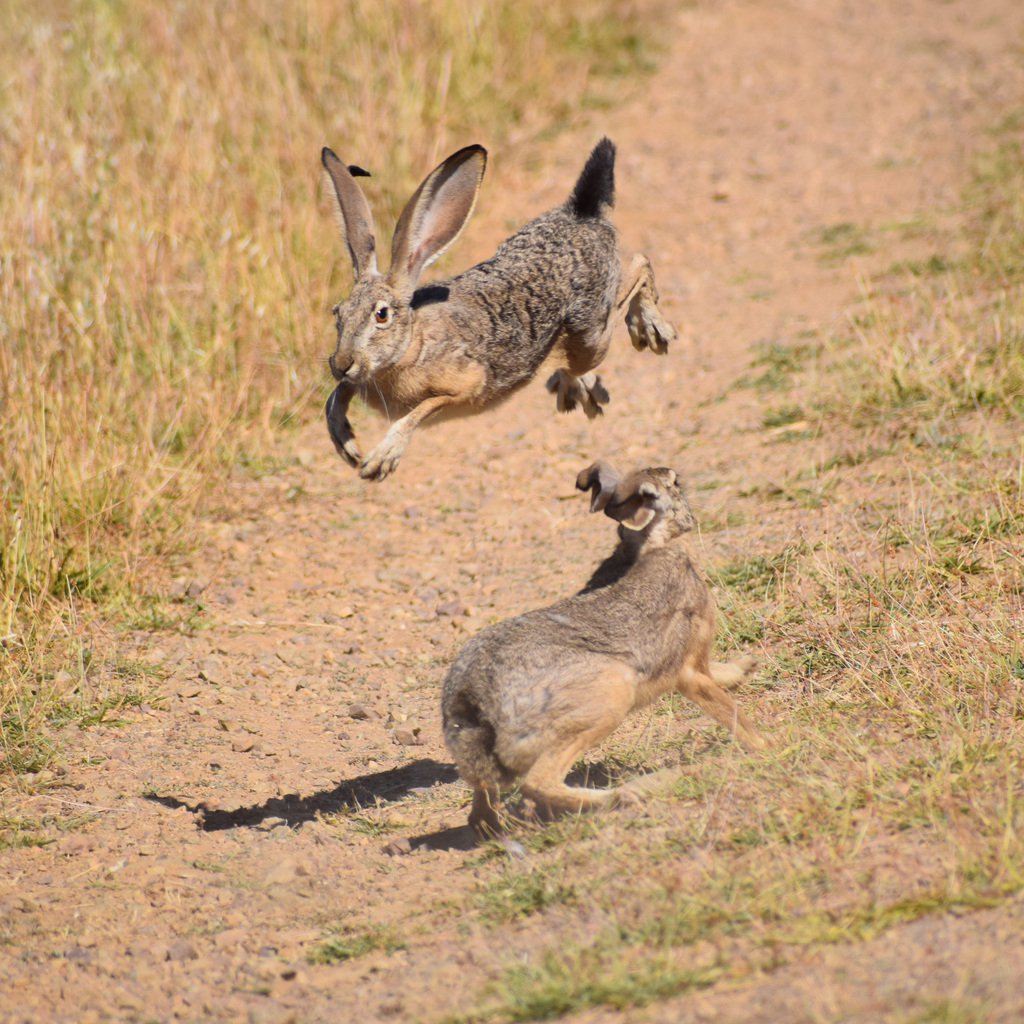
no rights reserved · CC0
Family: Leporidae · Class: Mammalia · Order: Lagomorpha
Conservation status: G5T3T4Q S2
Lepus americanus ssp. klamathensis (Oregon snowshoe hare) is a California animal in the Leporidae family.
The Oregon snowshoe hare (Lepus americanus ssp. klamathensis) is a subspecies of snowshoe hare distinguished by its seasonal coat color changes and distinctive large hind feet. Adults measure 362 to 520 mm (14.3 to 20.5 inches) in total length, with hind feet ranging from 117 to 147 mm (4.6 to 5.8 inches) in length. Body weight typically ranges from 1.3 to 1.8 kg (2.9 to 4.0 pounds). The species exhibits dramatic seasonal pelage changes: summer coats are brown to russet with black-tipped guard hairs, while winter coats are predominantly white except for black ear tips. The oversized hind feet, which give the species its common name, are heavily furred and function as natural snowshoes for movement across snow. In California, the Oregon snowshoe hare occurs only in the extreme northeastern portion of the state, primarily in Modoc and northern Lassen counties. The subspecies' range extends northward into Oregon and eastward into Nevada. This represents the southernmost extent of snowshoe hare distribution on the Pacific Coast. Historical records indicate a more extensive California range, but current populations are restricted to high-elevation areas of the Warner Mountains and adjacent ranges. The subspecies inhabits montane coniferous forests and adjacent riparian areas at elevations between 1,520 and 2,440 meters (5,000 to 8,000 feet). Preferred habitat consists of dense stands of lodgepole pine, white fir, and aspen with thick understory vegetation providing cover from predators. During winter months, individuals utilize areas with sufficient snow depth to access elevated browse and maintain runway systems beneath snow cover. Oregon snowshoe hares are primarily crepuscular, most active during dawn and dusk periods. The diet consists of herbaceous plants, bark, and twigs, with seasonal variation in food sources. Summer diet includes grasses, forbs, and leaves of shrubs and trees, while winter feeding focuses on bark and twigs of aspen, willow, and coniferous species. Breeding occurs from March through August, with females producing one to four litters annually. Gestation lasts approximately 36 days, with litter sizes ranging from one to seven young, though typically two to four. Leverets are born fully furred with open eyes and are capable of independent movement within hours of birth. The Oregon snowshoe hare holds a state rank of S2 in California, indicating it is imperiled due to rarity and vulnerability to extirpation. The subspecies faces threats from habitat loss due to logging, fire suppression altering forest structure, climate change affecting snow cover duration, and recreational activities in sensitive areas. Population monitoring is limited, but available data suggest declining numbers in California. The subspecies' restricted range and specific habitat requirements make it particularly vulnerable to environmental changes. Conservation efforts focus on maintaining suitable forest structure and monitoring population trends in remaining habitat areas.
Classification
Class: Mammalia · Order: Lagomorpha · Family: Leporidae
Conservation status
G5T3T4Q S2
Frequently asked questions
How is Lepus americanus ssp. klamathensis classified?
Lepus americanus ssp. klamathensis belongs to class Mammalia, order Lagomorpha, family Leporidae.
What family does Lepus americanus ssp. klamathensis belong to?
Lepus americanus ssp. klamathensis is in the Leporidae family.
Is Lepus americanus ssp. klamathensis protected or of conservation concern?
Lepus americanus ssp. klamathensis carries the following status: G5T3T4Q S2.
What is Lepus americanus ssp. klamathensis?
The Oregon snowshoe hare (Lepus americanus ssp.
Is Lepus americanus ssp. klamathensis found in California?
Yes. Lepus americanus ssp. klamathensis is recorded in California in The California Species Project's catalogue.
Related species
Other California species in the same genus, family, or bioregion.
Data from The California Species Project — 14,000+ California species with verified data from CNPS, CDFW, USFWS, and more.