Lepus americanus tahoensis
Sierra Nevada Snowshoe Hare
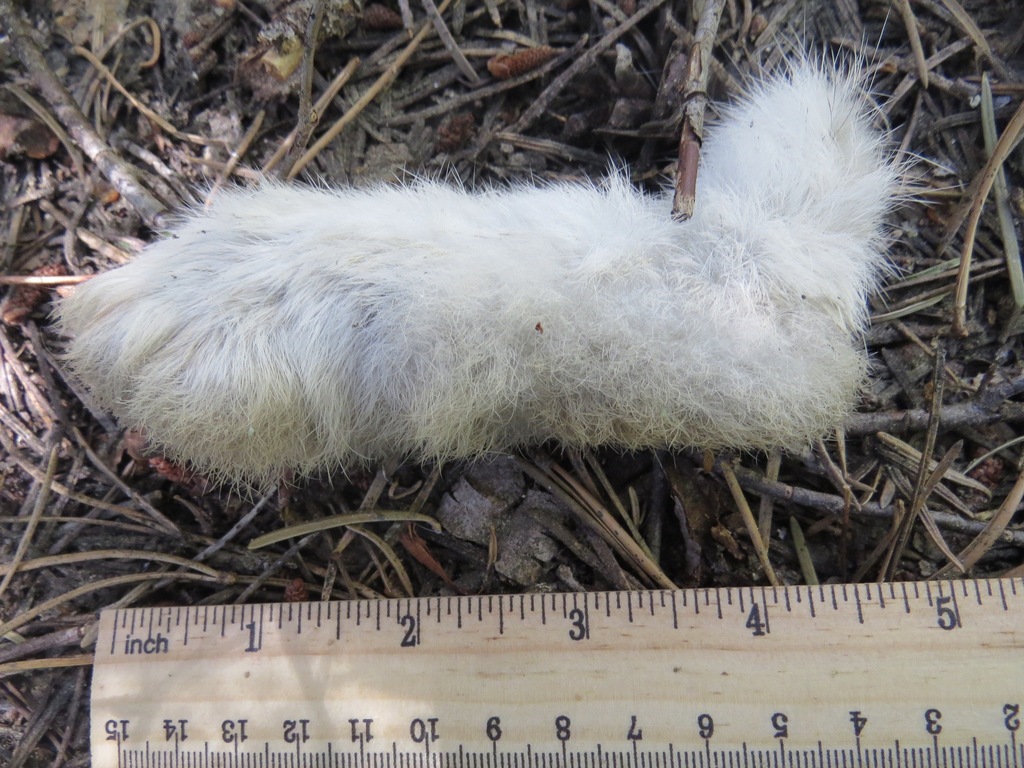
(c) Garth Harwood, some rights reserved (CC BY) · licence
Family: Leporidae · Class: Mammalia · Order: Lagomorpha
Conservation status: G5T3T4Q S2
Lepus americanus tahoensis (Sierra Nevada Snowshoe Hare) is a California animal in the Leporidae family.
The Sierra Nevada snowshoe hare is a medium-sized lagomorph subspecies of the widely distributed snowshoe hare (Lepus americanus). Adults typically measure 36 to 52 centimeters (14 to 20 inches) in body length with hind feet ranging from 12 to 15 centimeters (4.7 to 5.9 inches) long. The species exhibits pronounced seasonal pelage changes, displaying brown summer coats that transition to white winter pelage for camouflage in snow. Large hind feet act as natural snowshoes, allowing efficient movement across snow-covered terrain. The ears are relatively short compared to other hare species, measuring 6 to 10 centimeters (2.4 to 3.9 inches) in length. This subspecies occurs exclusively in the Sierra Nevada Mountains of California and Nevada, representing the southernmost population of snowshoe hares in North America (USFWS). The range extends from the Lake Tahoe region south through the central Sierra Nevada, with populations documented in alpine and subalpine zones. Current distribution appears fragmented compared to historical range, with populations restricted to higher elevation areas. Sierra Nevada snowshoe hares inhabit boreal and subalpine forest ecosystems, typically at elevations ranging from 1,970 to 3,415 meters (6,463 to 11,204 feet). Primary habitat consists of dense coniferous forests dominated by red fir (Abies magnifica), lodgepole pine (Pinus contorta), and mixed conifer stands. The species requires horizontal cover density of 4,600 to 33,210 stems per hectare, with optimal habitat providing dense understory vegetation for concealment and foraging (USFWS 2025). Snow conditions significantly influence habitat suitability, as deep snow facilitates access to elevated browse and provides protection from predators. Home range sizes average 5 to 10 hectares, varying with habitat quality and population density. The species exhibits primarily crepuscular and nocturnal activity patterns. Diet consists mainly of herbaceous plants during summer months, shifting to woody browse including willow, aspen, and conifer needles during winter. Breeding occurs from March through August, with females producing one to four litters annually containing two to four young per litter. Gestation period lasts approximately 37 days. Population densities fluctuate cyclically, typical of northern snowshoe hare populations, though southern populations like L. a. tahoensis may exhibit less pronounced cycles. The Sierra Nevada snowshoe hare currently holds a Global/State Rank of G5T3T4Q S2, indicating the subspecies is vulnerable to moderately vulnerable globally and imperiled in California. Primary threats include habitat fragmentation from development and logging, climate change impacts on snow pack duration and depth, and increased wildfire frequency. Warming temperatures may reduce suitable habitat by shifting the snow line to higher elevations, potentially isolating populations. The subspecies faces additional pressure from recreational activities in alpine areas and competition with introduced species. Conservation efforts focus on habitat protection within existing wilderness areas and monitoring population trends to assess climate change impacts on this cold-adapted subspecies.
Classification
Class: Mammalia · Order: Lagomorpha · Family: Leporidae
Conservation status
G5T3T4Q S2
Frequently asked questions
How is Lepus americanus tahoensis classified?
Lepus americanus tahoensis belongs to class Mammalia, order Lagomorpha, family Leporidae.
What family does Lepus americanus tahoensis belong to?
Lepus americanus tahoensis is in the Leporidae family.
Is Lepus americanus tahoensis protected or of conservation concern?
Lepus americanus tahoensis carries the following status: G5T3T4Q S2.
What is Lepus americanus tahoensis?
The Sierra Nevada snowshoe hare is a medium-sized lagomorph subspecies of the widely distributed snowshoe hare (Lepus americanus).
Is Lepus americanus tahoensis found in California?
Yes. Lepus americanus tahoensis is recorded in California in The California Species Project's catalogue.
Related species
Other California species in the same genus, family, or bioregion.
Data from The California Species Project — 14,000+ California species with verified data from CNPS, CDFW, USFWS, and more.