Lerodea eufala
Eufala Skipper
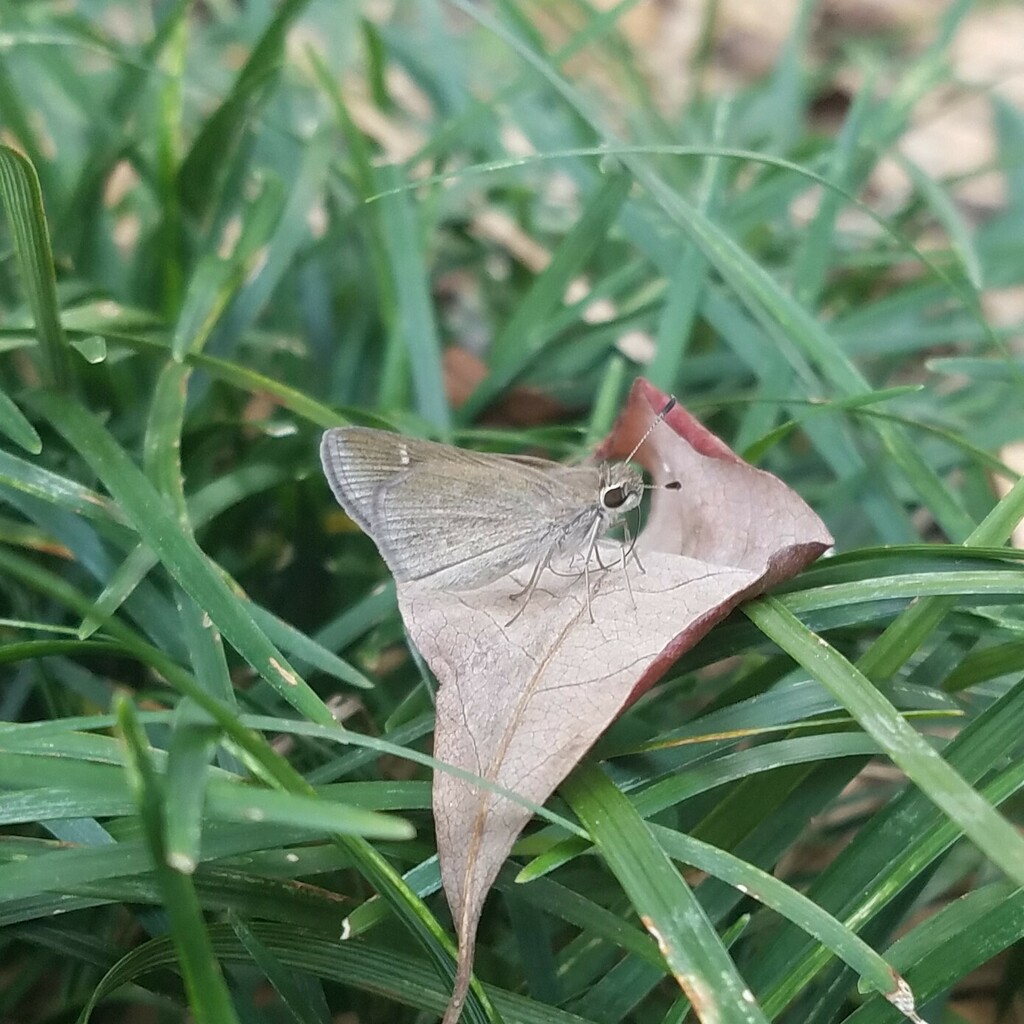
(c) Leila Dasher, some rights reserved (CC BY) · licence
Family: Hesperiidae · Class: Insecta · Order: Lepidoptera
Lerodea eufala (Eufala Skipper) is a California animal in the Hesperiidae family.
The Eufala Skipper is a small butterfly with a wingspan of 25 to 32 mm (1.0 to 1.3 inches). Males display orange-brown forewings with darker borders and a distinctive dark stigma (scent patch) along the leading edge. Females are darker brown with lighter spots on the forewings. Both sexes have pale yellow-brown hindwings with faint darker markings. The antennae are short with club-shaped tips, and the body is robust and covered in fine scales. At rest, the wings are held at angles typical of skippers, with forewings raised and hindwings horizontal. The Eufala Skipper maintains a broad distribution across the Americas, resident from coastal Georgia south through Florida and west across the southern United States to southern California, extending south through Mexico and Central America to Patagonia. The species expands its range northward during summer months, reaching central California, North Dakota, southern Wisconsin, northern Michigan, and Washington, D.C. In California, the species is most commonly observed in the southern counties and Central Valley, with seasonal movements extending into the San Francisco Bay Area and Sacramento Valley. This species inhabits open grasslands, agricultural areas, roadsides, vacant lots, and disturbed sites where host grasses are abundant. Eufala Skippers show strong preferences for areas with mixed grass species and some bare ground for basking. The species tolerates a wide range of elevations from sea level to approximately 1,500 meters (4,900 feet) in suitable habitat. Urban and suburban environments with maintained grass areas, including parks, golf courses, and residential lawns, also support populations. Eufala Skippers utilize various grass species as larval hosts, including Johnson grass (Sorghum halepense), Bermuda grass (Cynodon dactylon), and sugarcane (Saccharum officinarum). Adults are active year-round in southern regions, with multiple overlapping generations. Males establish territories in sunny areas and engage in rapid, erratic flight patterns while patrolling for females. Females deposit single white eggs on grass blades, and larvae feed within silken shelters they construct by folding leaf edges. The species exhibits rapid development, with generation time as short as 30 days under optimal conditions. Adults feed on flower nectar from various sources including lantana, pentas, and native wildflowers. The Eufala Skipper is not federally or state listed and appears to maintain stable populations throughout its range. The species benefits from human-modified landscapes that provide abundant grass hosts, particularly in agricultural and suburban settings. Climate change may facilitate continued northward range expansion, as warmer temperatures allow for successful overwintering at higher latitudes. Primary threats are minimal but may include habitat loss from intensive development and pesticide applications in agricultural areas. The species' adaptability to disturbed habitats and use of common grass species suggest continued population stability across most of its range.
Classification
Class: Insecta · Order: Lepidoptera · Family: Hesperiidae
Frequently asked questions
How is Lerodea eufala classified?
Lerodea eufala belongs to class Insecta, order Lepidoptera, family Hesperiidae.
What family does Lerodea eufala belong to?
Lerodea eufala is in the Hesperiidae family.
What is Lerodea eufala?
The Eufala Skipper is a small butterfly with a wingspan of 25 to 32 mm (1.0 to 1.3 inches).
Is Lerodea eufala found in California?
Yes. Lerodea eufala is recorded in California in The California Species Project's catalogue.
Related species
Other California species in the same genus, family, or bioregion.
Data from The California Species Project — 14,000+ California species with verified data from CNPS, CDFW, USFWS, and more.