Letispe metanemaria
Metanemaria Moth
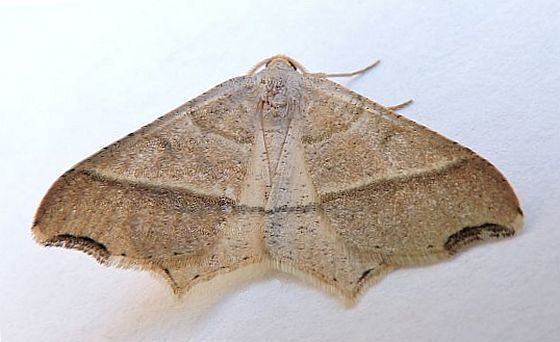
(c) jimeckert49, some rights reserved (CC BY) · licence
Family: Geometridae · Class: Insecta · Order: Lepidoptera
Letispe metanemaria (Metanemaria Moth) is a California animal in the Geometridae family.
The Metanemaria Moth (Letispe metanemaria) is a small geometrid moth in the subfamily Ennominae, tribe Macariini. Also known as the Baccharis Inchworm Moth, this species has a wingspan of approximately 29 mm (1.1 inches) (BugGuide). The moth displays typical geometrid characteristics with relatively broad wings and slender body structure. Letispe metanemaria occurs across the southwestern United States, ranging from Arizona and Utah west to California and Oregon (BugGuide). The species is documented from multiple California counties, with records from Kern County, where specimens have been collected along Indian Wells Canyon Road. Historical records indicate the species was originally described by Hulst in 1887, with several taxonomic revisions placing it in various genera including Semiothisa, Macaria, and Elpiste before its current placement in Letispe. The species inhabits areas where its larval host plants occur. According to BugGuide, larvae feed on Baccharis species, which are shrubs in the sunflower family commonly found in chaparral, desert scrub, and riparian habitats throughout the southwestern United States. These host plants typically grow in open, sunny locations and can tolerate various soil conditions from sea level to moderate elevations. Adults exhibit extended flight periods, flying from March to November in the southern portions of their range, with year-round activity documented in southern Arizona (BugGuide). This extended activity period suggests multiple generations per year in warmer climates. Like other geometrid moths, larvae are likely inchworms that move in a characteristic looping motion. The species' association with Baccharis suggests adults may be active when these shrubs are flowering, potentially utilizing nectar sources. The conservation status of Letispe metanemaria has not been formally assessed at federal or state levels. However, the species appears on Arkansas's Species of Greatest Conservation Need list, indicating regional conservation concerns (BugGuide). According to the Arkansas Comprehensive Wildlife Conservation Strategy, species are included on this list because they are rare, experiencing population declines, or lack sufficient data to determine their conservation status. While this listing applies specifically to Arkansas populations, it suggests the species may face conservation challenges across portions of its range. The species appears to have a relatively restricted distribution compared to more widespread geometrids, and its dependence on specific Baccharis host plants could make it vulnerable to habitat loss or degradation. Urban development, agricultural conversion, and invasive plant species may pose threats to both the moth and its host plants. Current population trends and specific conservation needs remain poorly documented, highlighting the need for additional research on this species' distribution, abundance, and ecological requirements across its western range.
Classification
Class: Insecta · Order: Lepidoptera · Family: Geometridae
Frequently asked questions
How is Letispe metanemaria classified?
Letispe metanemaria belongs to class Insecta, order Lepidoptera, family Geometridae.
What family does Letispe metanemaria belong to?
Letispe metanemaria is in the Geometridae family.
What is Letispe metanemaria?
The Metanemaria Moth (Letispe metanemaria) is a small geometrid moth in the subfamily Ennominae, tribe Macariini.
Is Letispe metanemaria found in California?
Yes. Letispe metanemaria is recorded in California in The California Species Project's catalogue.
Related species
Other California species in the same genus, family, or bioregion.
Data from The California Species Project — 14,000+ California species with verified data from CNPS, CDFW, USFWS, and more.