Leucania februalis
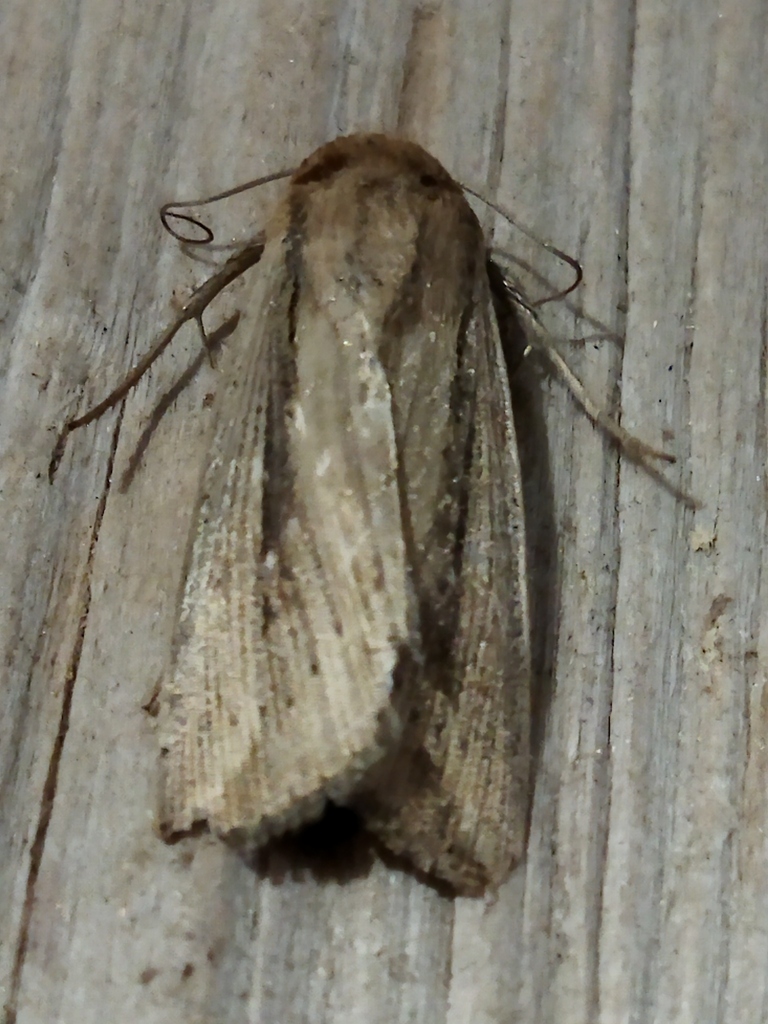
(c) SteveM4560, some rights reserved (CC BY) · licence
Family: Noctuidae · Class: Insecta · Order: Lepidoptera
Leucania februalis is a California animal in the Noctuidae family.
Leucania februalis is a moth species in the family Noctuidae, commonly known as owlet moths or cutworm moths. This species belongs to the genus Leucania, which comprises numerous grass-feeding moths found throughout North America. The taxonomic classification places it within the order Lepidoptera, making it part of the second-largest order in the animal kingdom. Adult Leucania februalis moths typically display the characteristic features of noctuids, with forewings that are generally brownish or grayish in coloration with subtle patterning. The hindwings are typically paler than the forewings, often whitish or light gray. Like other members of the genus Leucania, the wingspan likely ranges from 25 to 35 millimeters (1.0 to 1.4 inches). The antennae are thread-like in both sexes, and the body is robust and covered with scales typical of lepidopterans. The distribution and range of Leucania februalis in California requires further documentation, as comprehensive distributional data for this species is limited in available databases. The genus Leucania is widely distributed across North America, with various species occupying diverse habitats from coastal regions to inland valleys and mountainous areas. Many Leucania species show broad ecological tolerance and can be found across multiple vegetation zones. Leucanids typically inhabit grasslands, meadows, agricultural areas, and other open habitats where their larval host plants occur. The genus is closely associated with graminoid plants, particularly grasses and sedges. Adult moths are generally nocturnal and are attracted to artificial lights. They may be found in areas ranging from sea level to moderate elevations, depending on the distribution of suitable host vegetation. The larval stage of Leucania februalis likely feeds on grasses and possibly other monocotyledonous plants, following the feeding patterns typical of the genus. Larvae are generally ground-dwelling and feed on the stems and roots of their host plants, often remaining hidden during daylight hours. The life cycle follows the typical lepidopteran pattern of egg, larva, pupa, and adult stages. Flight periods for Leucania species vary by geographic location and elevation, but many species have one or two generations per year. Adults are primarily active during nighttime hours when they engage in mating behaviors and nectar feeding. The conservation status of Leucania februalis has not been formally evaluated by federal or state agencies. The species does not appear on current federal endangered species lists or California state listing documents as of December 2025. Without comprehensive population surveys or status assessments, the conservation needs of this species remain unclear. Many noctuid moths face pressures from habitat modification, pesticide use in agricultural settings, and light pollution, which can disrupt natural behavioral patterns. The relatively cryptic nature of many moth species means that population trends may go undetected without targeted monitoring efforts.
Classification
Class: Insecta · Order: Lepidoptera · Family: Noctuidae
Frequently asked questions
How is Leucania februalis classified?
Leucania februalis belongs to class Insecta, order Lepidoptera, family Noctuidae.
What family does Leucania februalis belong to?
Leucania februalis is in the Noctuidae family.
What is Leucania februalis?
Leucania februalis is a moth species in the family Noctuidae, commonly known as owlet moths or cutworm moths.
Is Leucania februalis found in California?
Yes. Leucania februalis is recorded in California in The California Species Project's catalogue.
Related species
Other California species in the same genus, family, or bioregion.
Data from The California Species Project — 14,000+ California species with verified data from CNPS, CDFW, USFWS, and more.