Leucospis affinis
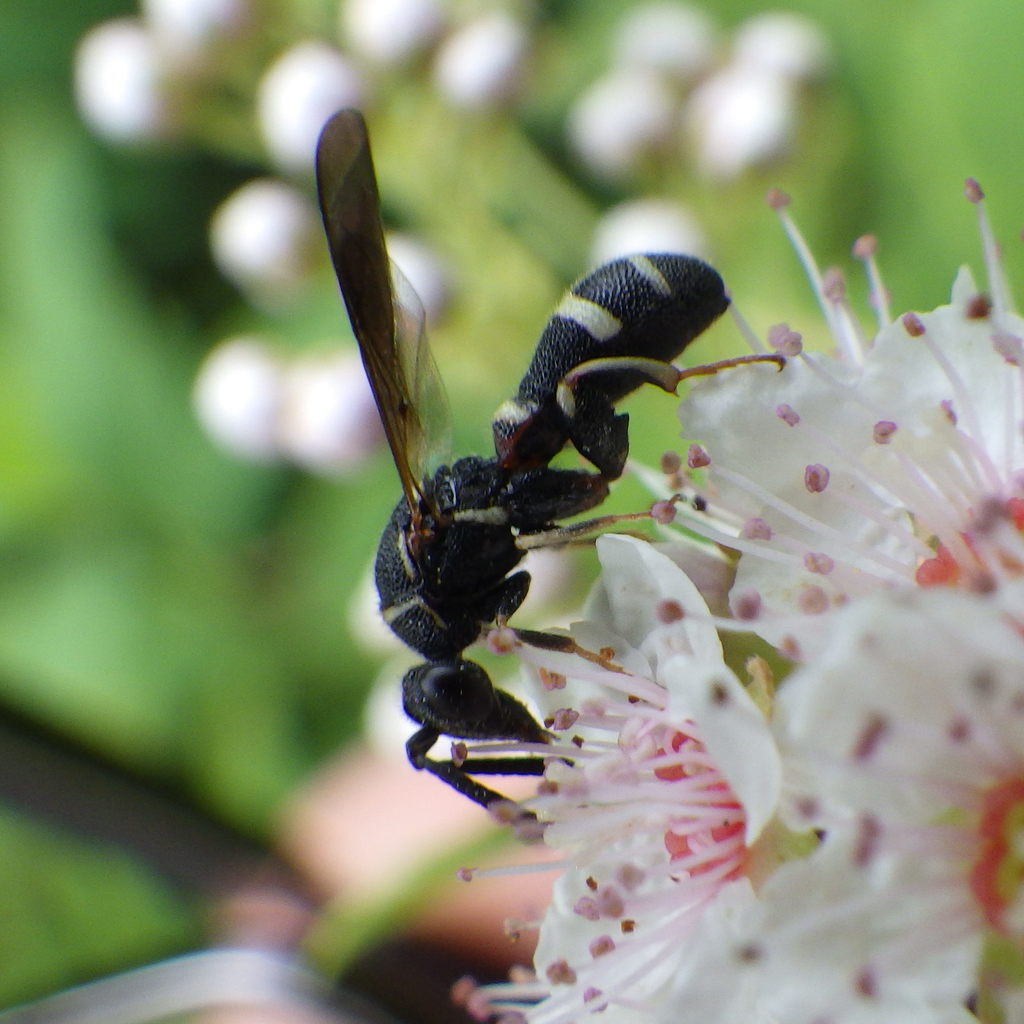
(c) Ben Armstrong, some rights reserved (CC BY) · licence
Family: Leucospidae · Class: Insecta · Order: Hymenoptera
Leucospis affinis is a California animal in the Leucospidae family.
Leucospis affinis is a parasitic wasp in the family Leucospidae, a group of specialized chalcid wasps known for their distinctive metallic appearance and enlarged hind femora. Members of this family are characterized by their robust build, typically measuring 8 to 15 millimeters in length, with a metallic green or blue-black coloration. The enlarged hind legs are a defining feature of Leucospidae, with the femora often swollen and sometimes toothed or serrated along the ventral margin. The distribution and range of L. affinis in North America appears to be poorly documented in current scientific literature. According to NatureServe, the species has a global conservation rank of G5 (Secure), indicating it is common and widespread at the global scale, though specific regional distribution data for California or the western United States is not readily available in accessible databases. Like other members of Leucospidae, L. affinis likely inhabits areas where its host species are present. Leucospid wasps are typically found in environments supporting solitary bees and wasps, including woodland edges, gardens, and areas with exposed soil or dead wood where cavity-nesting hymenoptera establish their nests. The specific habitat preferences of L. affinis have not been well documented in the available literature. Leucospis affinis functions as an external parasitoid of other hymenopteran larvae, particularly those of solitary bees and wasps in the families Megachilidae and Sphecidae. Female leucospid wasps possess a long, curved ovipositor that allows them to penetrate the nest cells of their hosts, even through thick partitions of mud or plant material. The female inserts her ovipositor through the nest wall and deposits eggs directly onto or near the host larva. The developing leucospid larva then feeds externally on the host, eventually killing it. This reproductive strategy makes leucospids important biological control agents of various solitary bee and wasp populations. Adult leucospid wasps are active during warm months and are often observed visiting flowers for nectar, particularly those of umbelliferous plants and other small-flowered species. Males may engage in territorial behavior around flowering plants or host nesting sites. The lifecycle is typically univoltine, with one generation per year in temperate regions. The conservation status of L. affinis reflects the general stability of this species group. As parasitoids, leucospid populations are intrinsically linked to the abundance and diversity of their host species. Threats to solitary bee and wasp populations, including habitat loss, pesticide use, and changes in nesting site availability, could indirectly affect leucospid populations. However, the broad host range and adaptability typical of many leucospid species likely contribute to their overall stability. Specific conservation measures for L. affinis have not been identified, suggesting the species does not face immediate threats requiring active management intervention.
Classification
Class: Insecta · Order: Hymenoptera · Family: Leucospidae
Frequently asked questions
How is Leucospis affinis classified?
Leucospis affinis belongs to class Insecta, order Hymenoptera, family Leucospidae.
What family does Leucospis affinis belong to?
Leucospis affinis is in the Leucospidae family.
What is Leucospis affinis?
Leucospis affinis is a parasitic wasp in the family Leucospidae, a group of specialized chalcid wasps known for their distinctive metallic appearance and enlarged hind femora.
Is Leucospis affinis found in California?
Yes. Leucospis affinis is recorded in California in The California Species Project's catalogue.
More California species
This species has no close relatives in our California data — here are other species to explore.
Data from The California Species Project — 14,000+ California species with verified data from CNPS, CDFW, USFWS, and more.