Leukoma staminea
Pacific Littleneck Clam
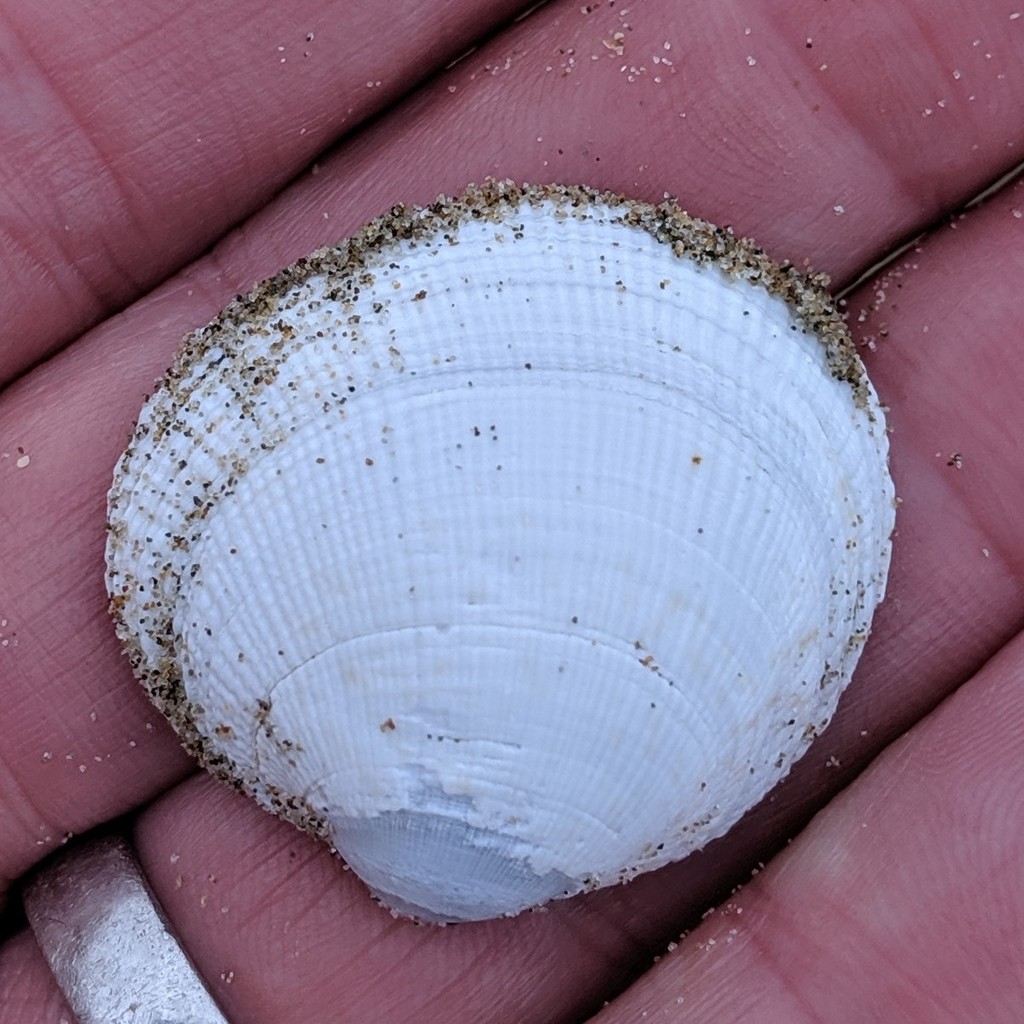
(c) Justin, some rights reserved (CC BY) · licence
Family: Veneridae · Class: Bivalvia · Order: Veneroida
Leukoma staminea (Pacific Littleneck Clam) is a California animal in the Veneridae family.
The Pacific littleneck clam (Leukoma staminea) is a small to medium-sized marine bivalve mollusk native to the northeastern Pacific Ocean. Adults typically measure 38 to 64 millimeters (1.5 to 2.5 inches) in length, with a maximum recorded size of approximately 76 millimeters (3 inches). The shell is ovate to rounded, moderately inflated, and exhibits a distinctive sculpture of fine concentric ridges crossed by radiating ribs that create a characteristic lattice pattern. Shell coloration varies from white to gray, brown, or purple, often with darker radiating bands or mottled patterns. Pacific littleneck clams range from southeastern Alaska to Baja California, Mexico, with populations occurring along the entire California coast. In California waters, the species is widely distributed from rocky intertidal zones to depths of approximately 35 meters (115 feet). The species is particularly abundant in protected bays, estuaries, and nearshore environments along the central and northern California coast. This species inhabits sandy and muddy substrates in intertidal and shallow subtidal zones, typically burying 5 to 15 centimeters (2 to 6 inches) below the surface. Pacific littleneck clams prefer areas with moderate wave exposure and good water circulation. They are commonly found in eelgrass beds, tidal flats, and shallow bay environments where salinity levels range from brackish to full marine conditions. The species tolerates a wide range of sediment types but shows preference for mixed sand-mud substrates with adequate organic content. Pacific littleneck clams are filter feeders, extracting plankton, detritus, and dissolved organic matter from seawater through their siphons. The species exhibits seasonal reproductive patterns, with spawning typically occurring from March through September, peaking during spring and early summer months. Females can produce up to 400,000 eggs per spawning event. Free-swimming larvae spend 2 to 4 weeks in the water column before settling and metamorphosing into juvenile clams. Sexual maturity is reached at approximately 2 to 3 years of age, and individuals can live up to 14 years. The Pacific littleneck clam supports both recreational and commercial fisheries throughout its range. In California, the species is subject to recreational harvest regulations including minimum size limits and seasonal restrictions. Commercial harvesting occurs through aquaculture operations and wild collection, with significant production in northern California bays. The species has been successfully introduced to the East Coast, where it now supports established fisheries. Population trends for Pacific littleneck clams in California appear stable, though localized declines have been documented in some heavily harvested areas. Primary management concerns include overharvest in accessible locations, habitat degradation from coastal development, and water quality impacts from urban runoff and pollution. Climate change may affect the species through ocean acidification, which can impact shell formation, and changing temperature regimes that influence reproductive success and larval survival. The California Department of Fish and Wildlife monitors populations and regulates harvest to ensure sustainable management of this economically important species.
Classification
Class: Bivalvia · Order: Veneroida · Family: Veneridae
Frequently asked questions
How is Leukoma staminea classified?
Leukoma staminea belongs to class Bivalvia, order Veneroida, family Veneridae.
What family does Leukoma staminea belong to?
Leukoma staminea is in the Veneridae family.
What is Leukoma staminea?
The Pacific littleneck clam (Leukoma staminea) is a small to medium-sized marine bivalve mollusk native to the northeastern Pacific Ocean.
Is Leukoma staminea found in California?
Yes. Leukoma staminea is recorded in California in The California Species Project's catalogue.
Related species
Other California species in the same genus, family, or bioregion.
Data from The California Species Project — 14,000+ California species with verified data from CNPS, CDFW, USFWS, and more.