Leuronychus pacificus
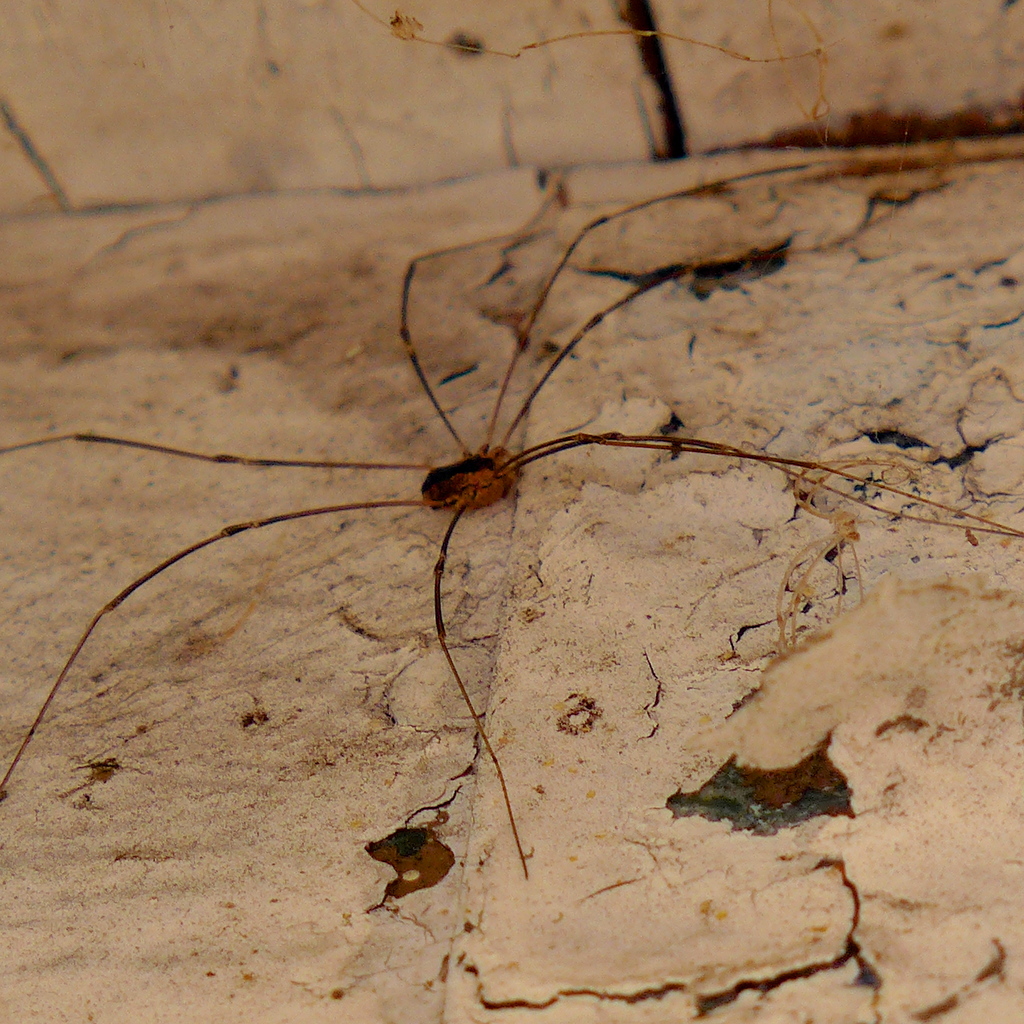
(c) John Hibbard, some rights reserved (CC BY) · licence
Family: Sclerosomatidae · Class: Arachnida · Order: Opiliones
Leuronychus pacificus is a California animal in the Sclerosomatidae family.
Leuronychus pacificus is a harvestman (daddy longlegs) in the family Sclerosomatidae, subfamily Leiobuninae. This arachnid belongs to the order Opiliones, which comprises over 6,000 described species worldwide. Members of the genus Leuronychus are characterized by the typical harvestman body plan, consisting of a compact, oval cephalothorax (prosoma) fused with the abdomen (opisthosoma) and eight extremely long, slender legs that can span several times the body length. The specific distribution and range of L. pacificus have not been well documented in available scientific literature. Based on the species epithet 'pacificus,' this harvestman likely occurs along or near the Pacific coast, though detailed range maps and locality records remain unpublished. The species appears in the U.S. Fish and Wildlife Service taxonomic database, suggesting it occurs within areas of federal interest or jurisdiction. Habitat requirements for L. pacificus are not specifically documented. Most Sclerosomatidae family members typically inhabit moist environments such as leaf litter, under logs, in caves, or among vegetation where humidity levels remain relatively high. These arachnids are generally found in areas that provide shelter during daylight hours, as most harvestman species are nocturnal. Like other members of Opiliones, L. pacificus likely exhibits typical harvestman behavior and ecology. These arachnids are omnivorous scavengers that feed on small insects, decaying organic matter, fungi, and plant material. Unlike spiders, harvestmen do not produce silk or venom, instead using their long legs for sensory perception and their pedipalps and chelicerae for food manipulation. Reproduction typically involves direct sperm transfer, with females depositing eggs in moist soil or crevices. Most temperate harvestman species have annual life cycles. The conservation status of L. pacificus is not established. The species lacks federal or state listing status, and population data are unavailable. The limited scientific documentation suggests this may be a poorly studied species rather than necessarily rare, though definitive assessment requires additional taxonomic and ecological research. Scientific documentation for this species remains extremely limited. The information presented here is based on taxonomic databases and general knowledge of related Sclerosomatidae family members. Detailed studies of L. pacificus biology, distribution, ecology, and conservation needs are lacking. We welcome contributions of verified scientific data, photographs, or field observations to enhance this species account.
Classification
Class: Arachnida · Order: Opiliones · Family: Sclerosomatidae
Frequently asked questions
How is Leuronychus pacificus classified?
Leuronychus pacificus belongs to class Arachnida, order Opiliones, family Sclerosomatidae.
What family does Leuronychus pacificus belong to?
Leuronychus pacificus is in the Sclerosomatidae family.
What is Leuronychus pacificus?
Leuronychus pacificus is a harvestman (daddy longlegs) in the family Sclerosomatidae, subfamily Leiobuninae.
Is Leuronychus pacificus found in California?
Yes. Leuronychus pacificus is recorded in California in The California Species Project's catalogue.
Related species
Other California species in the same genus, family, or bioregion.
Data from The California Species Project — 14,000+ California species with verified data from CNPS, CDFW, USFWS, and more.