Libellula saturata
Flame Skimmer
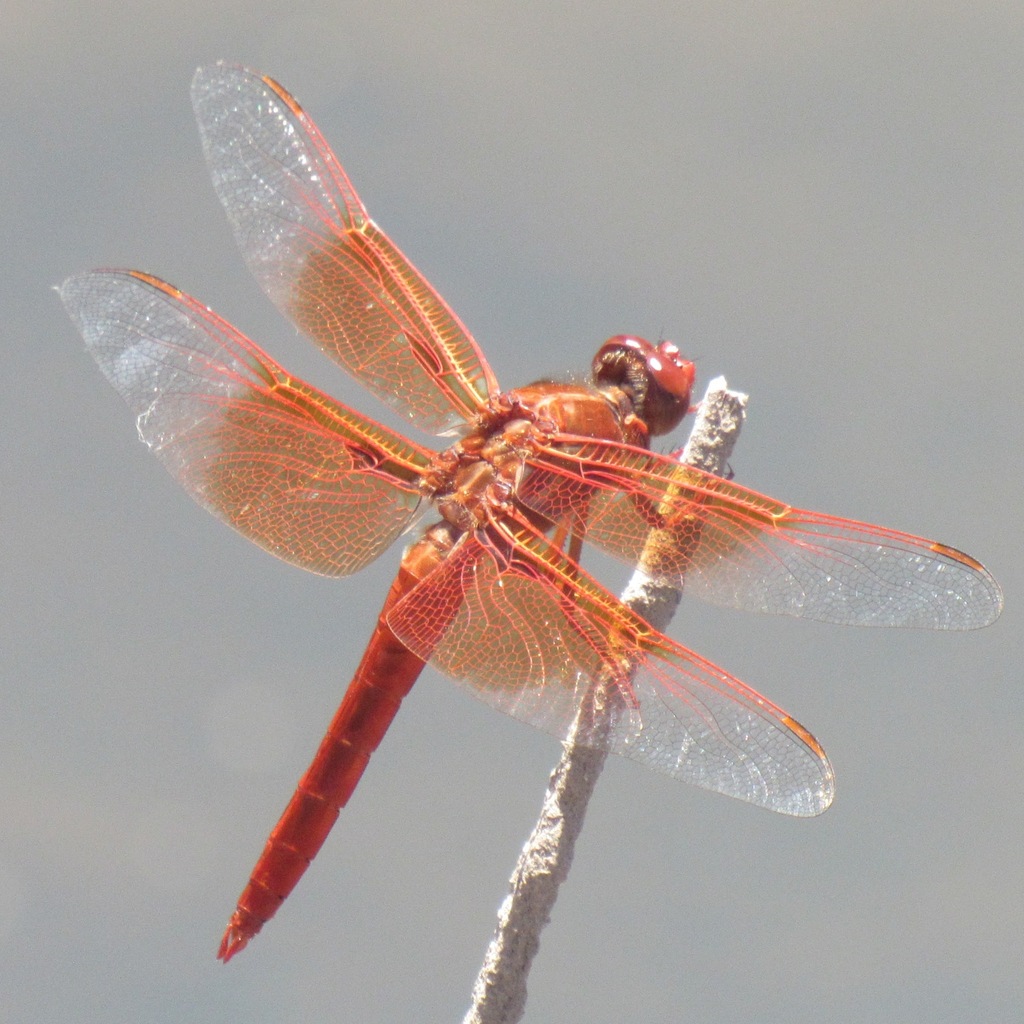
(c) Justin, some rights reserved (CC BY) · licence
Family: Libellulidae · Class: Insecta · Order: Odonata
Libellula saturata (Flame Skimmer) is a California animal in the Libellulidae family.
The Flame Skimmer is a large dragonfly in the skimmer family Libellulidae, distinguished by the males' vibrant orange-red coloration. Adult males display bright flame-orange wings and body, while females and juveniles are yellowish-brown with darker markings. The species measures approximately 55-60 mm (2.2-2.4 inches) in body length with a wingspan reaching 85-95 mm (3.3-3.7 inches). Males develop their characteristic red coloration as they mature, with the abdomen becoming increasingly saturated orange-red. Libellula saturata occurs throughout much of western North America, ranging from British Columbia south to Baja California and east to Colorado and New Mexico. In California, the species is widely distributed from sea level to moderate elevations, occurring in both coastal and interior regions. The Flame Skimmer has been documented at locations including the San Luis National Wildlife Refuge Complex in the San Joaquin Valley and Ash Meadows National Wildlife Refuge, indicating its presence across diverse California ecosystems. This species inhabits a variety of aquatic environments, showing preference for still or slow-moving waters including ponds, lakes, marshes, and slow streams. Flame Skimmers are commonly found around warm, shallow waters with emergent vegetation, particularly in areas with cattails, tules, and other aquatic plants. They frequent both natural wetlands and artificial water bodies such as irrigation ditches and stock ponds. The species tolerates a range of water conditions from fresh to slightly brackish environments. Flame Skimmers are aggressive aerial predators, feeding primarily on flying insects including mosquitoes, midges, flies, and smaller dragonflies. Males are highly territorial, establishing perches on prominent vegetation or structures near water where they can survey their territory and intercept intruders. Mating occurs during warm months, typically from late spring through early fall. After mating, females deposit eggs by dipping their abdomens into the water surface, often while the male guards nearby. Larvae are aquatic, developing in the benthos where they feed on aquatic invertebrates, small fish, and tadpoles. The larval stage typically lasts one to two years before emergence. The Flame Skimmer is not federally or state listed and appears to maintain stable populations across its range. The species benefits from its adaptability to various aquatic habitats and tolerance of human-modified environments. However, like many dragonflies, populations may be locally affected by habitat loss, water pollution, and drought conditions that reduce suitable breeding sites. Wetland conservation efforts and maintenance of water quality in agricultural and urban areas help support Flame Skimmer populations. The species serves as an indicator of aquatic ecosystem health and plays an important role in controlling pest insect populations.
Classification
Class: Insecta · Order: Odonata · Family: Libellulidae
Frequently asked questions
How is Libellula saturata classified?
Libellula saturata belongs to class Insecta, order Odonata, family Libellulidae.
What family does Libellula saturata belong to?
Libellula saturata is in the Libellulidae family.
What is Libellula saturata?
The Flame Skimmer is a large dragonfly in the skimmer family Libellulidae, distinguished by the males' vibrant orange-red coloration.
Is Libellula saturata found in California?
Yes. Libellula saturata is recorded in California in The California Species Project's catalogue.
Related species
Other California species in the same genus, family, or bioregion.
Data from The California Species Project — 14,000+ California species with verified data from CNPS, CDFW, USFWS, and more.