Libytheana carinenta
American Snout
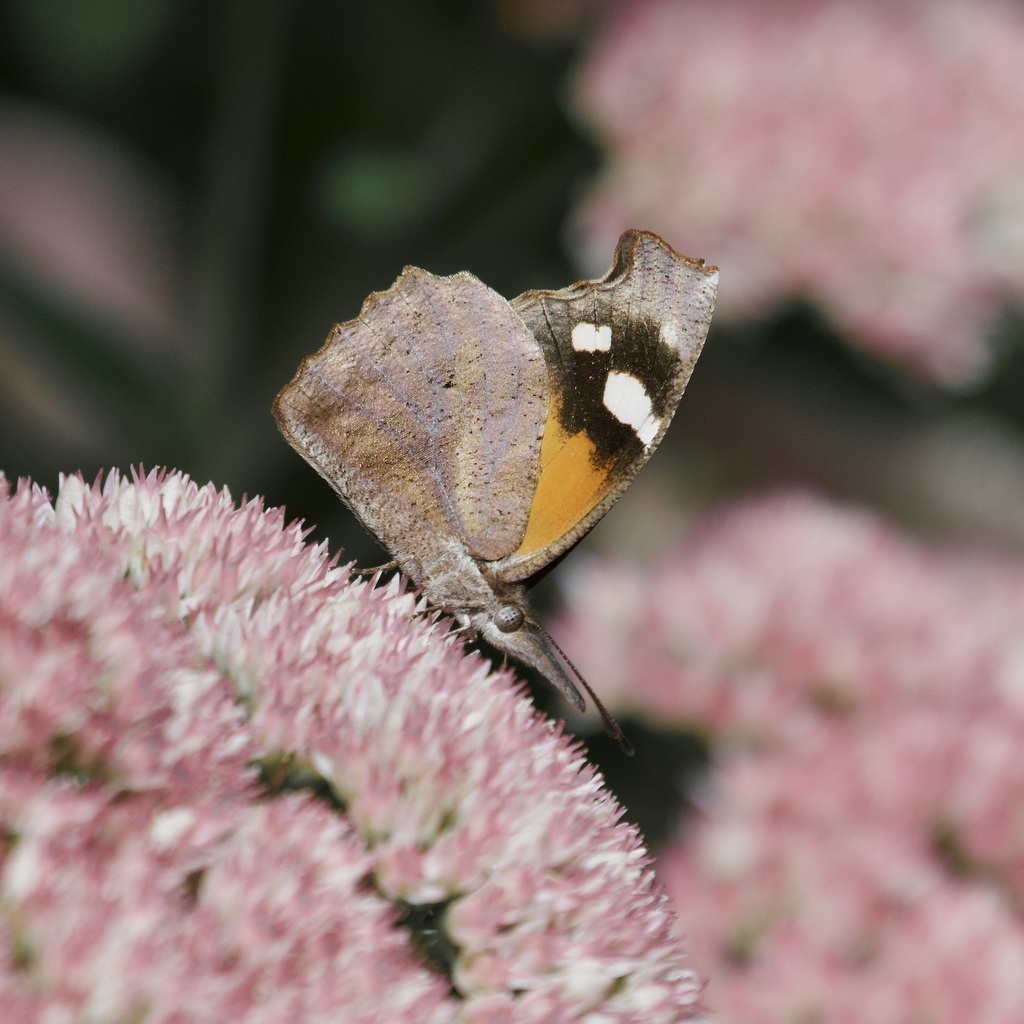
(c) Michael Nerrie, some rights reserved (CC BY) · licence
Family: Nymphalidae · Class: Insecta · Order: Lepidoptera
Libytheana carinenta (American Snout) is a California animal in the Nymphalidae family.
The American snout (Libytheana carinenta) is a distinctive medium-sized butterfly in the family Nymphalidae, subfamily Libytheinae. Adults measure 32-45 mm (1.3-1.8 inches) in wingspan. The species is immediately recognizable by its elongated labial palpi, which project forward like a prominent snout, giving the butterfly its common name. The forewings are orange-brown with irregular white and dark brown patches, while the hindwings are predominantly brown with orange scaling near the body. The underside is mottled brown and gray, providing effective camouflage when the butterfly rests with wings closed against tree bark. Males are typically smaller and more vibrant in coloration than females. The American snout ranges from Argentina north through Mexico and the West Indies to the southern United States, with populations that migrate to central California, southern Nevada, Colorado, and most of the eastern United States. In California, the species is most commonly encountered in the southern and central regions during migration events. The butterfly's range has expanded northward in recent decades, likely due to climate change and the spread of its host plants. American snouts inhabit areas where hackberry trees (Celtis species) are present, including riparian corridors, urban parks, woodland edges, and desert washes. The species occurs from sea level to approximately 1,500 meters (4,900 feet) elevation. Adults prefer open areas with scattered trees and shrubs, particularly where hackberry grows along streams or in disturbed habitats. During migration, individuals may be found in habitats far from hackberry trees. The species exhibits dramatic population fluctuations, with numbers varying dramatically based on environmental conditions. Females lay pale green eggs singly on young hackberry leaves. Larvae are green with yellow stripes and feed exclusively on hackberry foliage. The caterpillars pupate in brown chrysalids attached to host plant stems or nearby surfaces. American snouts can produce multiple generations per year in favorable conditions, with generation time ranging from 30-45 days. Adults are strong fliers capable of long-distance migration, sometimes forming massive swarms containing millions of individuals when conditions trigger emigration from breeding areas. The butterfly exhibits irregular irruptive behavior, with populations remaining low for years before exploding in response to favorable rainfall and hackberry growth. These eruptions can result in massive migrations visible on weather radar. Adults feed on nectar from various flowers including dogbane, goldenrod, and lantana, as well as rotting fruit and dung. Males engage in hilltopping behavior, congregating on elevated terrain to locate mates. The American snout has no special conservation status and is considered stable across its range. Population fluctuations are natural and tied to environmental cycles rather than conservation threats. The species benefits from hackberry plantings in urban areas and may be expanding its range as climate patterns shift. Primary factors affecting populations include drought conditions that limit hackberry growth and urban development that removes host plants from riparian areas.
Classification
Class: Insecta · Order: Lepidoptera · Family: Nymphalidae
Frequently asked questions
How is Libytheana carinenta classified?
Libytheana carinenta belongs to class Insecta, order Lepidoptera, family Nymphalidae.
What family does Libytheana carinenta belong to?
Libytheana carinenta is in the Nymphalidae family.
What is Libytheana carinenta?
The American snout (Libytheana carinenta) is a distinctive medium-sized butterfly in the family Nymphalidae, subfamily Libytheinae.
Is Libytheana carinenta found in California?
Yes. Libytheana carinenta is recorded in California in The California Species Project's catalogue.
Related species
Other California species in the same genus, family, or bioregion.
Data from The California Species Project — 14,000+ California species with verified data from CNPS, CDFW, USFWS, and more.