Lichnanthe ursina
Bumblebee Scarab Beetle
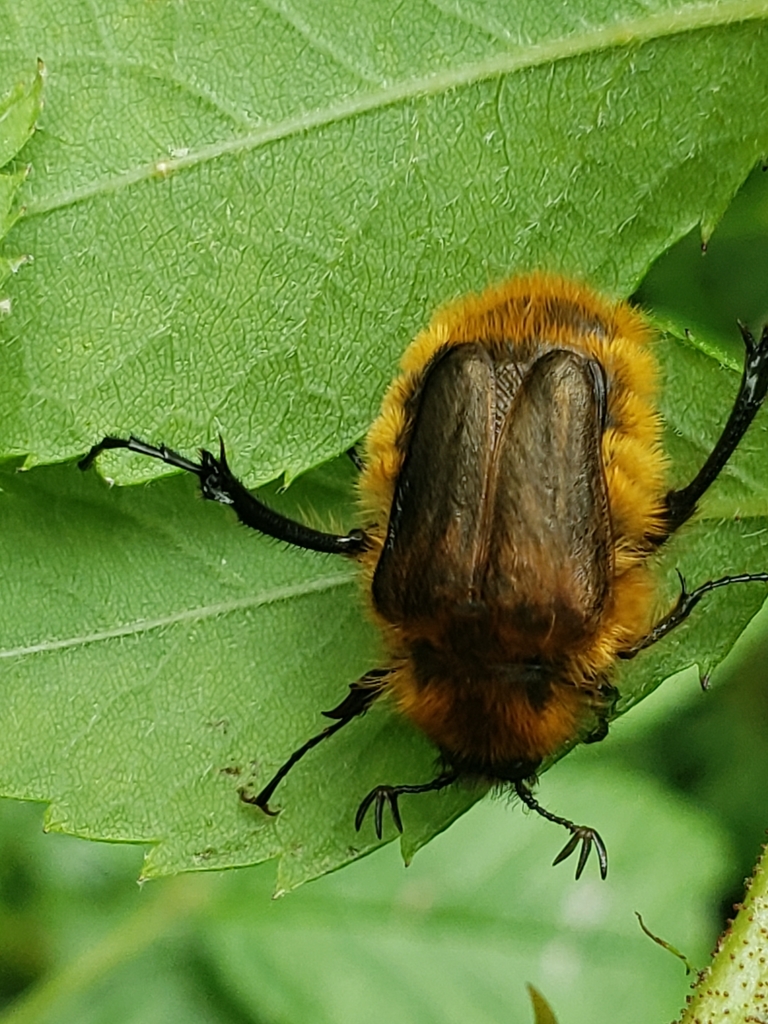
(c) Mark Richman, some rights reserved (CC BY) · licence
Family: Glaphyridae · Class: Insecta · Order: Coleoptera
Conservation status: G2 S2
Lichnanthe ursina (Bumblebee Scarab Beetle) is a California animal in the Glaphyridae family.
The Bumblebee Scarab Beetle (Lichnanthe ursina) is a medium-sized beetle in the family Glaphyridae, subfamily Cetoniinae. Adults measure approximately 12-15 mm in length and are characterized by their distinctive bumblebee-like appearance with dense, golden-brown to yellowish setae covering the body. The elytra are shortened, exposing the pygidium, and the antennae are lamellate with characteristic club-shaped tips. The clypeus is laterally emarginate ahead of the eyes, making the antennal bases visible from above. This species exhibits the typical scarab beetle body form with robust legs adapted for digging and five-segmented tarsi. Lichnanthe ursina is endemic to California, with a highly restricted distribution. The species occurs primarily in the Sierra Nevada foothills and adjacent valleys, with documented populations in scattered locations throughout the central Sierra Nevada region. Historical records suggest the species may have once occupied a broader range, but current populations are fragmented and localized to specific habitat patches. This beetle inhabits oak woodland and chaparral environments, typically at elevations ranging from 300 to 1,500 meters. Adults are associated with areas containing sandy or well-drained soils where they can burrow for overwintering. The species shows a preference for habitats with a mix of native grasslands and oak savanna, often in areas with disturbed or partially vegetated ground suitable for soil excavation. Riparian corridors and stream restoration sites have also yielded specimens, suggesting some tolerance for habitat modification. Adult Bumblebee Scarab Beetles are active during the warmer months, typically emerging in late spring through early fall. They are diurnal and are often observed feeding on flowers, particularly favoring native wildflowers and shrubs in their oak woodland habitat. Adults may overwinter by burrowing into sandy soils, as suggested by specimens collected with sand particles adhering to their bodies. The species' life cycle likely follows the typical scarab pattern with larvae developing in soil, feeding on organic matter and plant roots, though specific developmental details remain poorly documented. Adults are strong fliers and may disperse between suitable habitat patches, though their flight capabilities relative to habitat fragmentation are not well studied. Lichnanthe ursina holds a Global and State rank of G2 S2, indicating it is imperiled both globally and within California due to rarity and vulnerability to extirpation. This species is included on the California Department of Fish and Wildlife's Special Animals List. The species faces significant conservation challenges from habitat loss and fragmentation throughout its limited range. Urban development, agricultural conversion, and altered fire regimes in oak woodland ecosystems threaten remaining populations. The U.S. Fish and Wildlife Service recognizes this species as a focus taxon, though it currently lacks formal federal protection status as of December 2025. Climate change may pose additional threats by altering the temperature and precipitation patterns that maintain suitable soil conditions and associated plant communities. Conservation efforts would benefit from habitat protection and restoration of oak woodland ecosystems, particularly maintaining the soil characteristics and native plant communities essential for this species' survival.
Classification
Class: Insecta · Order: Coleoptera · Family: Glaphyridae
Conservation status
G2 S2
Frequently asked questions
How is Lichnanthe ursina classified?
Lichnanthe ursina belongs to class Insecta, order Coleoptera, family Glaphyridae.
What family does Lichnanthe ursina belong to?
Lichnanthe ursina is in the Glaphyridae family.
Is Lichnanthe ursina protected or of conservation concern?
Lichnanthe ursina carries the following status: G2 S2.
What is Lichnanthe ursina?
The Bumblebee Scarab Beetle (Lichnanthe ursina) is a medium-sized beetle in the family Glaphyridae, subfamily Cetoniinae.
Is Lichnanthe ursina found in California?
Yes. Lichnanthe ursina is recorded in California in The California Species Project's catalogue.
Related species
Other California species in the same genus, family, or bioregion.
Data from The California Species Project — 14,000+ California species with verified data from CNPS, CDFW, USFWS, and more.