Ligia occidentalis
Western Sea Slater
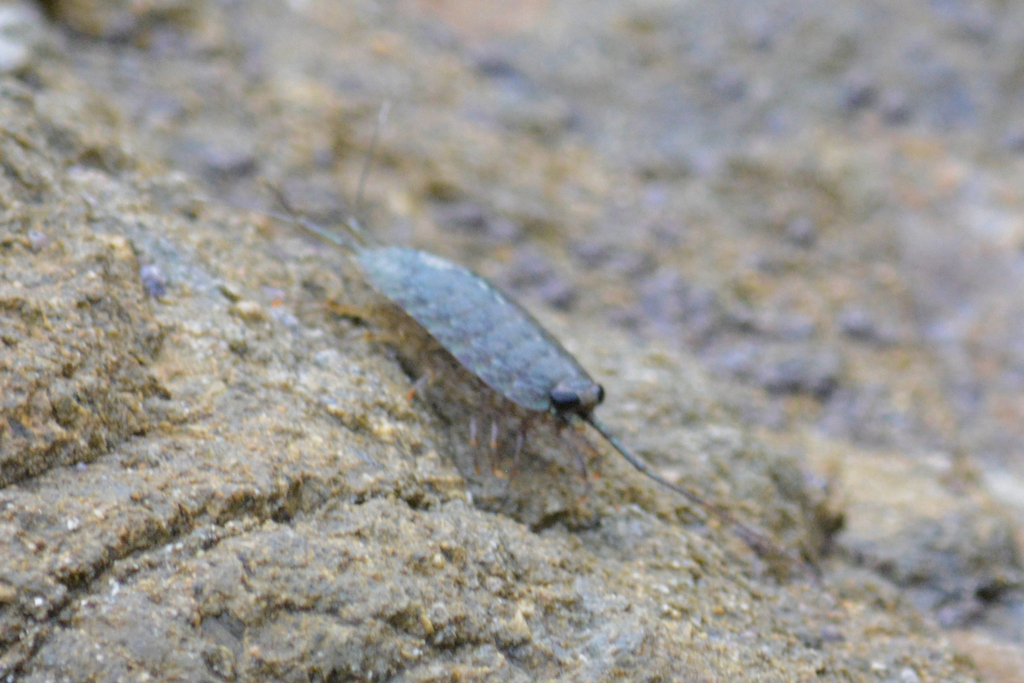
(c) Cory Butterfield, some rights reserved (CC BY) · licence
Family: Ligiidae · Class: Malacostraca · Order: Isopoda
Ligia occidentalis (Western Sea Slater) is a California animal in the Ligiidae family.
The Western Sea Slater is a terrestrial isopod crustacean in the family Ligiidae. Adults typically measure 15-25 mm (0.6-1.0 inches) in length and exhibit a flattened, elongated body with seven pairs of legs characteristic of isopods. The dorsal surface ranges from gray to dark brown, often with mottled patterns that provide camouflage against rocky substrates. Two prominent antennae extend from the head, with the outer pair being notably longer than the inner pair. The segmented body tapers toward the posterior end, and the species can be distinguished from similar coastal isopods by its relatively large size and robust build. Ligia occidentalis occurs along the Pacific coast from British Columbia south to Baja California, Mexico. In California, the species is found along the entire coastline, inhabiting rocky intertidal zones and supratidal areas. Populations are particularly abundant along the central and northern California coast, where suitable rocky habitat is extensive. The species' range extends from the high intertidal zone to areas well above the high tide line that remain moistened by sea spray. Western Sea Slaters inhabit the splash zone and supralittoral fringe of rocky coastlines, occupying crevices, under rocks, and among algal mats. According to the USFWS wetland classification system, this habitat is rarely submerged but kept moist by sea spray, and is frequently invaded from the landward side by semimarine genera such as Ligia. The species prefers areas with complex rock structure that provides numerous hiding places and maintains appropriate moisture levels. They are most active during high humidity conditions, particularly at night or during foggy weather. Western Sea Slaters are primarily detritivorous, feeding on decaying organic matter including algae, dead marine organisms, and terrestrial plant material washed into their habitat. They play an important ecological role as decomposers in the supratidal ecosystem. The species exhibits negative phototaxis, avoiding bright light and seeking shelter during daylight hours. Reproduction involves direct development without a larval stage, with females carrying eggs in a ventral brood pouch. Mating typically occurs during warmer months, and juveniles resemble miniature adults upon hatching. The Western Sea Slater currently has no federal or state listing status and appears to maintain stable populations throughout its range. The species benefits from its position in a relatively undisturbed habitat zone that experiences less direct human impact than lower intertidal areas. However, coastal development, pollution, and climate change-induced sea level rise pose potential long-term threats to suitable habitat. Oil spills represent a particular concern, as these organisms are vulnerable to hydrocarbon contamination in their splash-zone environment. Rocky intertidal monitoring programs along the California coast include crustaceans like Ligia as indicator species for ecosystem health, though specific population trend data for this species is limited.
Classification
Class: Malacostraca · Order: Isopoda · Family: Ligiidae
Frequently asked questions
How is Ligia occidentalis classified?
Ligia occidentalis belongs to class Malacostraca, order Isopoda, family Ligiidae.
What family does Ligia occidentalis belong to?
Ligia occidentalis is in the Ligiidae family.
What is Ligia occidentalis?
The Western Sea Slater is a terrestrial isopod crustacean in the family Ligiidae.
Is Ligia occidentalis found in California?
Yes. Ligia occidentalis is recorded in California in The California Species Project's catalogue.
Related species
Other California species in the same genus, family, or bioregion.
Data from The California Species Project — 14,000+ California species with verified data from CNPS, CDFW, USFWS, and more.