Ligia pallasii
Sleepy Seaslater
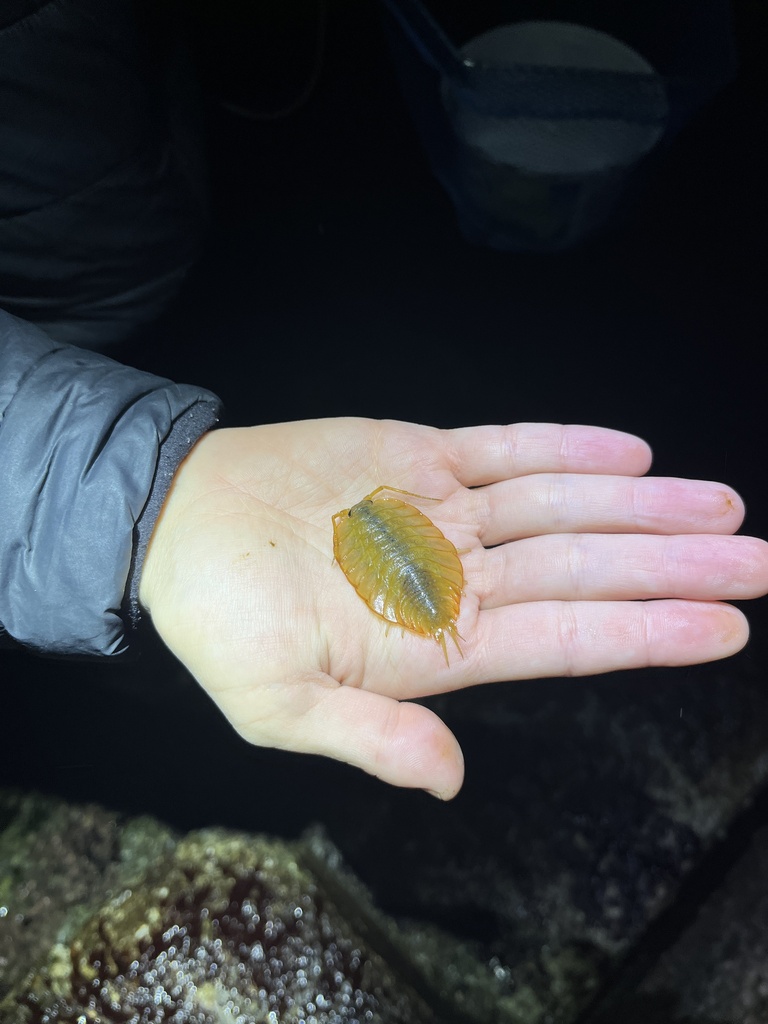
(c) Samuelle Simard-Provençal, some rights reserved (CC BY) · licence
Family: Ligiidae · Class: Malacostraca · Order: Isopoda
Ligia pallasii (Sleepy Seaslater) is a California animal in the Ligiidae family.
The sleepy seaslater is a terrestrial isopod crustacean in the family Ligiidae, commonly found along the Pacific Coast. Adults typically measure 15 to 25 mm (0.6 to 1.0 inches) in length, with a flattened, oval-shaped body characteristic of terrestrial isopods. The dorsal surface is typically gray to brownish-gray with darker mottled patterns, providing camouflage against rocky substrates. Like other Ligia species, the sleepy seaslater possesses seven pairs of walking legs, prominent antennae, and distinctive uropods (tail appendages) that extend beyond the body. Historically, Ligia pallasii was documented along the Pacific Coast from California northward. However, current taxonomic and distribution status requires clarification, as NatureServe Explorer lists this species as "GX - Presumed Extinct" as of recent assessments. The species was associated with rocky intertidal and supratidal zones, particularly areas subject to wave spray and periodic wetting. The species inhabited the splash zone and upper intertidal areas of rocky coastlines, occupying crevices, under rocks, and among algal mats. This habitat zone experiences regular wetting from wave spray and high tides but remains above the permanent tide line. Seaslaters require environments with high humidity and access to both terrestrial and marine conditions, as they obtain moisture and nutrients from both sources. Like other Ligia species, the sleepy seaslater was likely omnivorous, feeding on decaying organic matter including seaweed, dead animals, and bacterial films. These isopods are primarily nocturnal, emerging at night to forage while remaining hidden in rock crevices during daylight hours to avoid desiccation. Reproduction involves direct development, with females carrying eggs in a brood pouch until juvenile isopods emerge as miniature adults. The conservation status of Ligia pallasii presents taxonomic uncertainty. NatureServe currently classifies the species as "Presumed Extinct," though this designation may reflect taxonomic confusion rather than actual extinction. The genus Ligia along the Pacific Coast has undergone significant taxonomic revision, with several species being synonymized or reclassified. Coastal development, pollution, and climate change effects on intertidal zones represent potential threats to seaslater populations generally. Further research is needed to clarify the current taxonomic status and distribution of what has been called Ligia pallasii. Some populations previously identified as this species may represent other Ligia taxa or require reclassification based on modern molecular techniques. The apparent absence of recent reliable records suggests either genuine rarity, misidentification in historical collections, or taxonomic synonymy with other described species. Conservation assessment is complicated by these taxonomic uncertainties and the limited documentation of seaslater populations along the Pacific Coast.
Classification
Class: Malacostraca · Order: Isopoda · Family: Ligiidae
Frequently asked questions
How is Ligia pallasii classified?
Ligia pallasii belongs to class Malacostraca, order Isopoda, family Ligiidae.
What family does Ligia pallasii belong to?
Ligia pallasii is in the Ligiidae family.
What is Ligia pallasii?
The sleepy seaslater is a terrestrial isopod crustacean in the family Ligiidae, commonly found along the Pacific Coast.
Is Ligia pallasii found in California?
Yes. Ligia pallasii is recorded in California in The California Species Project's catalogue.
Related species
Other California species in the same genus, family, or bioregion.
Data from The California Species Project — 14,000+ California species with verified data from CNPS, CDFW, USFWS, and more.