Ligurotettix coquilletti
Desert Clicker Grasshopper
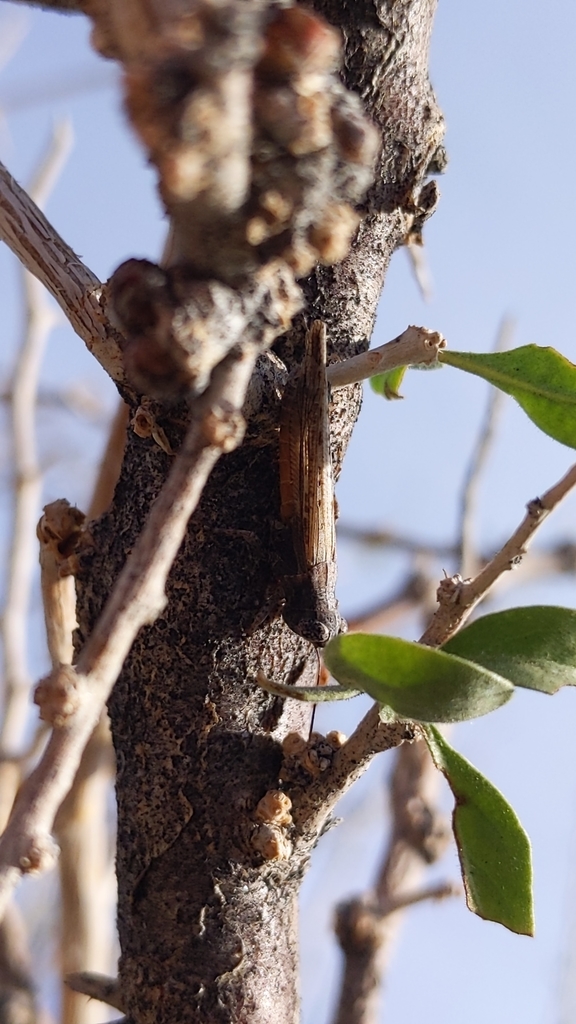
(c) velodrome, some rights reserved (CC BY) · licence
Family: Acrididae · Class: Insecta · Order: Orthoptera
Ligurotettix coquilletti (Desert Clicker Grasshopper) is a California animal in the Acrididae family.
The Desert Clicker Grasshopper (Ligurotettix coquilletti) is a small, slender grasshopper in the family Acrididae. Males measure 16 to 23 mm (0.6 to 0.9 inches) in length, while females are larger at 21 to 30 mm (0.8 to 1.2 inches). The species exhibits uniformly grayish to brownish coloration with long wings that extend beyond the abdomen. This cryptic coloration provides effective camouflage against desert substrates and vegetation. The grasshopper's slender build and elongated antennae are characteristic of the subfamily Gomphocerinae, commonly known as slant-faced grasshoppers. The Desert Clicker Grasshopper occurs across the southwestern United States and northwestern Mexico. The species was first described from Los Angeles County, California in 1897, with additional type localities documented in Phoenix, Arizona and Lyon County, Nevada (BugGuide). Its range extends throughout the Sonoran and Mojave deserts, including portions of California, Arizona, Nevada, and Baja California. Historical records indicate populations once occurred in areas now heavily urbanized, particularly in the Los Angeles basin. This species inhabits arid desert environments, showing a strong association with creosote bush (Larrea tridentata) scrublands, which has earned it the alternate common name of Creosote Bush Grasshopper (BugGuide). The grasshopper occurs in areas characterized by sparse vegetation, sandy or gravelly soils, and low annual precipitation. Elevation ranges from below sea level in desert valleys to approximately 1,200 meters (4,000 feet) in desert mountain foothills. The species demonstrates adaptation to extreme temperature fluctuations and low moisture conditions typical of desert environments. Desert Clicker Grasshoppers are primarily herbivorous, feeding on desert shrubs and grasses. Their diet includes creosote bush foliage, though they also consume other drought-tolerant plants available in their habitat. The species exhibits seasonal activity patterns, with adults most active during warmer months when temperatures and food availability are optimal. Like other members of the genus Ligurotettix, males produce distinctive clicking sounds through stridulation, using specialized structures on their wings and legs for acoustic communication during courtship and territorial displays. The conservation status of the Desert Clicker Grasshopper has not been formally assessed by state or federal agencies. No specific population estimates or trend data are available in current literature. However, habitat loss due to urban development, particularly in Southern California, likely impacts local populations. The species' dependence on intact desert ecosystems makes it potentially vulnerable to continued urbanization, agricultural conversion, and climate change effects on desert precipitation patterns. The fragmented nature of remaining suitable habitat in developed areas of its range may pose long-term conservation challenges. Current knowledge of this species' detailed ecology and population status remains limited, indicating a need for targeted research to better understand its conservation requirements.
Classification
Class: Insecta · Order: Orthoptera · Family: Acrididae
Frequently asked questions
How is Ligurotettix coquilletti classified?
Ligurotettix coquilletti belongs to class Insecta, order Orthoptera, family Acrididae.
What family does Ligurotettix coquilletti belong to?
Ligurotettix coquilletti is in the Acrididae family.
What is Ligurotettix coquilletti?
The Desert Clicker Grasshopper (Ligurotettix coquilletti) is a small, slender grasshopper in the family Acrididae.
Is Ligurotettix coquilletti found in California?
Yes. Ligurotettix coquilletti is recorded in California in The California Species Project's catalogue.
Related species
Other California species in the same genus, family, or bioregion.
Data from The California Species Project — 14,000+ California species with verified data from CNPS, CDFW, USFWS, and more.