Limacia mcdonaldi
McDonald's Dorid
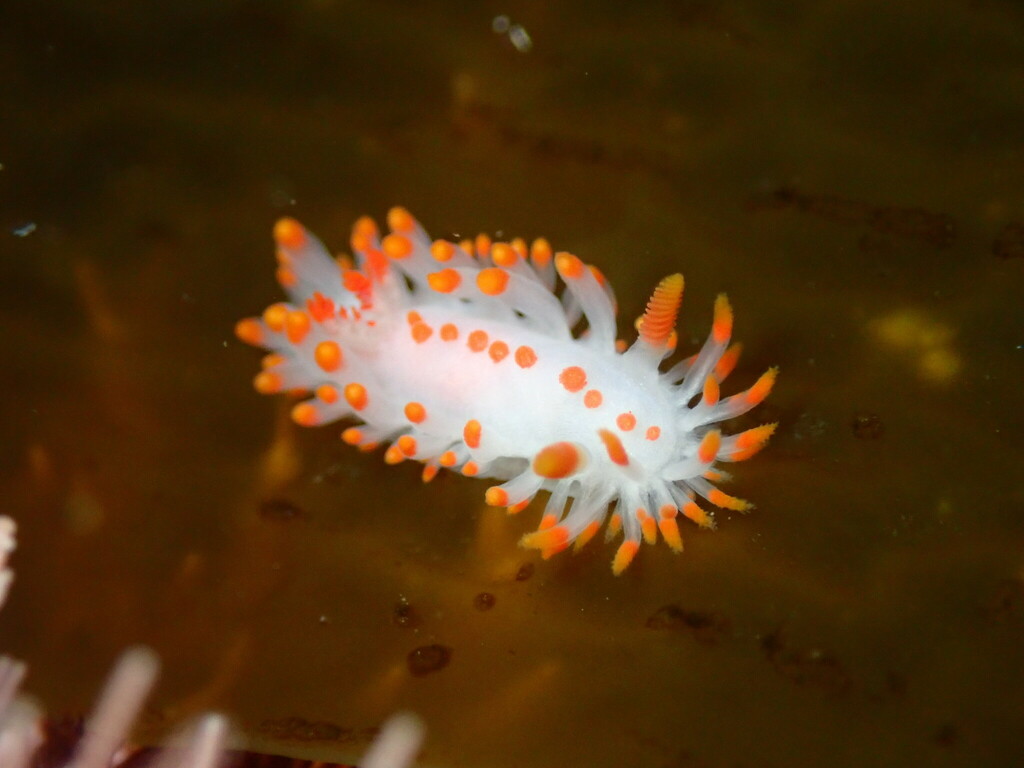
(c) Cricket Raspet, some rights reserved (CC BY) · licence
Family: Polyceridae · Class: Gastropoda · Order: Nudibranchia
Limacia mcdonaldi (McDonald's Dorid) is a California animal in the Polyceridae family.
McDonald's dorid (Limacia mcdonaldi) is a small nudibranch in the family Polyceridae endemic to the Pacific coast of California. Adults reach 26 mm (1.0 inch) in length, making this a relatively large species within the genus Limacia. The body is white with distinctive orange-red coloration on the tips of cerata, the finger-like projections extending from the dorsal surface. The striking color pattern provides visual identification in the field, with the bright orange-red tips contrasting against the white body and translucent cerata. This species is native to the coast of California, with confirmed populations along the Southern California coastline. The geographic range extends along the eastern Pacific Ocean, where it inhabits shallow marine environments. McDonald's dorid appears to have a relatively restricted distribution compared to other nudibranch species in the region. McDonald's dorid occupies intertidal and shallow subtidal rocky habitats typical of many polycerid nudibranchs. These environments provide the hard substrates necessary for both the species and its prey organisms. The species is found in areas with adequate water circulation and the specific prey species required for its specialized diet. Like other members of the family Polyceridae, McDonald's dorid is a carnivorous predator specializing in bryozoans (moss animals). These nudibranchs use their radula, a rasping feeding structure, to scrape bryozoan colonies from rocky surfaces. The species exhibits the typical nudibranch reproductive strategy of being simultaneous hermaphrodites, with individuals capable of both producing and fertilizing eggs. Spawning likely occurs during warmer months when food resources are most abundant, though specific reproductive timing has not been well documented. As with many marine invertebrates, McDonald's dorid faces potential threats from ocean acidification, coastal development, and pollution in its Southern California range. The species' apparently restricted geographic distribution may make populations vulnerable to localized disturbances. Climate change impacts on ocean chemistry and temperature could affect both the species directly and its bryozoan prey base. Water quality degradation from urban runoff and marine pollution represents additional concerns for shallow-water marine species in the heavily populated Southern California coastal region. McDonald's dorid was scientifically described relatively recently, reflecting the ongoing discovery of marine biodiversity along the California coast. The species was named in honor of Dr. Gary McDonald, a renowned nudibranch researcher who has contributed significantly to understanding Pacific coast sea slug diversity. This naming convention follows the tradition of recognizing scientists who have advanced knowledge of particular taxonomic groups. Scientific documentation for this species remains limited beyond basic taxonomic and morphological descriptions. Research into population dynamics, detailed ecological requirements, and conservation status would benefit from additional field studies. The information presented here is based on available taxonomic literature and observational data from citizen science platforms.
Classification
Class: Gastropoda · Order: Nudibranchia · Family: Polyceridae
Frequently asked questions
How is Limacia mcdonaldi classified?
Limacia mcdonaldi belongs to class Gastropoda, order Nudibranchia, family Polyceridae.
What family does Limacia mcdonaldi belong to?
Limacia mcdonaldi is in the Polyceridae family.
What is Limacia mcdonaldi?
McDonald's dorid (Limacia mcdonaldi) is a small nudibranch in the family Polyceridae endemic to the Pacific coast of California.
Is Limacia mcdonaldi found in California?
Yes. Limacia mcdonaldi is recorded in California in The California Species Project's catalogue.
Related species
Other California species in the same genus, family, or bioregion.
Data from The California Species Project — 14,000+ California species with verified data from CNPS, CDFW, USFWS, and more.