Limenitis archippus
Viceroy
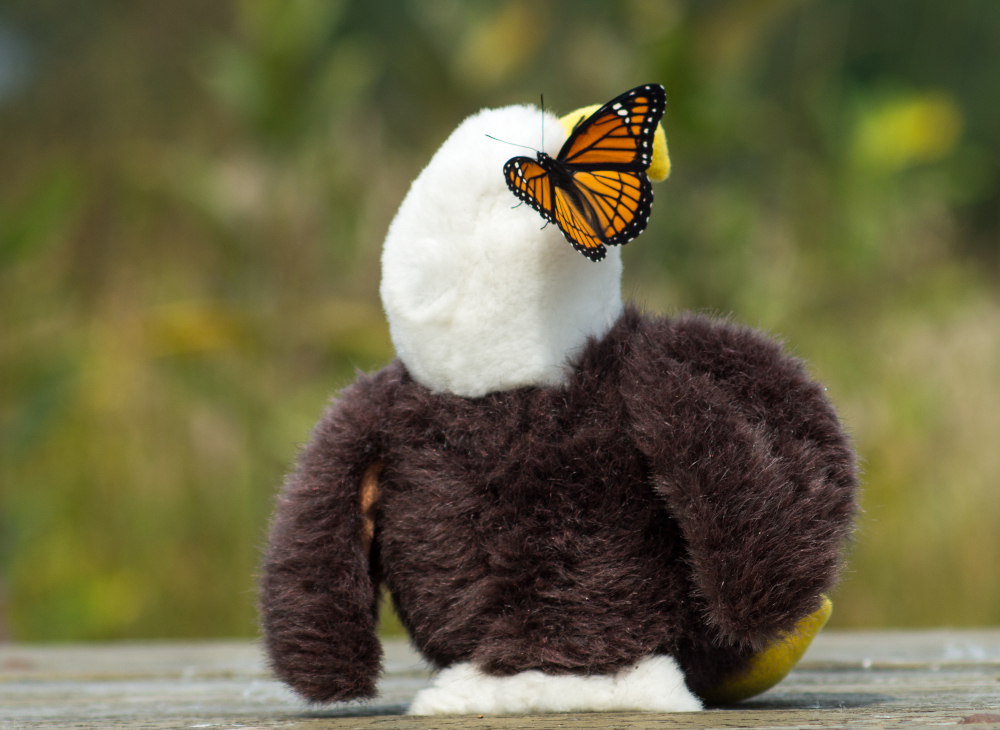
(c) psweet, some rights reserved (CC BY-SA) · licence
Family: Nymphalidae · Class: Insecta · Order: Lepidoptera
Limenitis archippus (Viceroy) is a California animal in the Nymphalidae family.
The Viceroy is a medium-sized butterfly with a wingspan ranging from 53 to 81 mm (2.1 to 3.2 inches). Adults display orange wings with black veining and borders, closely mimicking the monarch butterfly but distinguished by a distinctive black line across the hindwings. The dorsal wing surfaces are bright orange-brown with black borders and veins, while the ventral surfaces are paler orange with white spots along the wing margins. Males and females appear similar, though females are typically slightly larger. The caterpillars are mottled brown and white with prominent spines and reach approximately 35 mm (1.4 inches) when fully grown. The Viceroy ranges from the Northwest Territories south along the eastern edges of the Cascade and Sierra Nevada mountains to central Mexico, extending east through all the eastern United States. In California, populations occur primarily in the northern and central regions where suitable host plants are present. The species is more common in riparian corridors and mountainous areas along the Sierra Nevada foothills, with scattered populations in coastal ranges where willows are abundant. This species inhabits riparian woodlands, wetland edges, meadows, and areas adjacent to streams and ponds where host plants grow. Viceroys prefer open to semi-open habitats with scattered trees and shrubs, typically at elevations from sea level to 2,100 meters (6,900 feet). Adults are commonly found in areas with abundant nectar sources including flowering shrubs, wildflowers, and rotting fruit. Viceroys feed exclusively on trees in the willow family (Salicaceae) during their larval stage, including willows (Salix species) and poplars and cottonwoods (Populus species). Adults nectar on various flowers including asters, goldenrod, Joe-Pye weed, and milkweeds, and also feed on dung, carrion, and rotting fruit. The species produces two to three broods annually in most regions, with adults flying from late May through September. Females lay single eggs on the tips of host plant leaves. First and second instar larvae create shelters by rolling leaves, while later instars feed openly on foliage. The species overwinters as partially grown caterpillars in hibernacula constructed from rolled leaves. The Viceroy exhibits Batesian mimicry, resembling the toxic monarch butterfly to deter predators, though recent research suggests Viceroys may also contain defensive compounds making this a case of Müllerian mimicry. Flight is characterized by a distinctive gliding pattern with wings held in a shallow V-shape. The Viceroy is not federally or state listed and appears stable across most of its range. However, local populations may face pressure from habitat loss due to riparian development, water diversions affecting host plant communities, and pesticide applications. Climate change may affect the species by altering precipitation patterns that influence host plant distribution, particularly in arid regions of the western range. Conservation efforts focus on maintaining riparian habitats and limiting pesticide use in sensitive areas.
Classification
Class: Insecta · Order: Lepidoptera · Family: Nymphalidae
Frequently asked questions
How is Limenitis archippus classified?
Limenitis archippus belongs to class Insecta, order Lepidoptera, family Nymphalidae.
What family does Limenitis archippus belong to?
Limenitis archippus is in the Nymphalidae family.
What is Limenitis archippus?
The Viceroy is a medium-sized butterfly with a wingspan ranging from 53 to 81 mm (2.1 to 3.2 inches).
Is Limenitis archippus found in California?
Yes. Limenitis archippus is recorded in California in The California Species Project's catalogue.
Related species
Other California species in the same genus, family, or bioregion.
Data from The California Species Project — 14,000+ California species with verified data from CNPS, CDFW, USFWS, and more.