Limnephilus atercus
Fort Dick Limnephilus Caddisfly
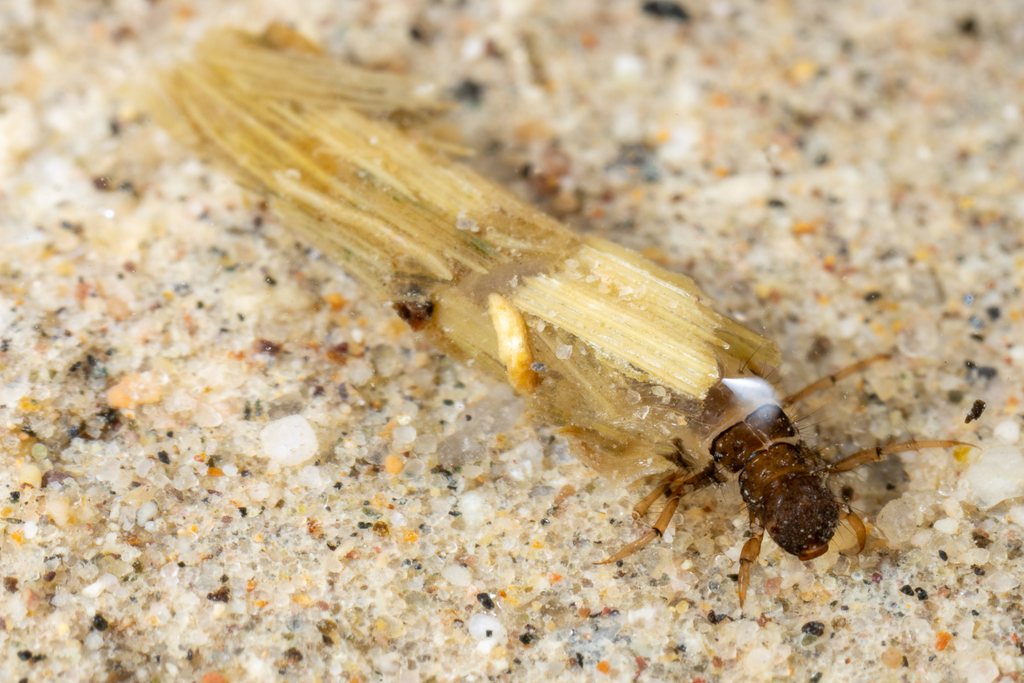
(c) Michael Eisen, some rights reserved (CC BY) · licence
Family: Limnephilidae · Class: Insecta · Order: Trichoptera
Conservation status: G3G4 S1S2
Limnephilus atercus (Fort Dick Limnephilus Caddisfly) is a California animal in the Limnephilidae family.
The Fort Dick Limnephilus Caddisfly (Limnephilus atercus) is an aquatic insect belonging to the order Trichoptera and family Limnephilidae. Adult caddisflies typically measure 10-15 mm in body length with a wingspan of 20-30 mm, though specific morphological descriptions for this species remain limited in the scientific literature. Like other members of the genus Limnephilus, adults likely exhibit the characteristic tent-like wing posture when at rest and possess long, thread-like antennae. This species occurs in California and Nevada, with its common name referencing Fort Dick, a small unincorporated community in Del Norte County, California, near the Oregon border. The species' distribution appears to be highly restricted, as indicated by its Global/State conservation rank of G3G4 S1S2, suggesting it is vulnerable to imperiled globally but critically imperiled to imperiled within California. Like other caddisflies in the family Limnephilidae, L. atercus likely inhabits freshwater environments including streams, ponds, or wetlands. The larval stages are aquatic and construct protective cases from available materials such as plant fragments, sand grains, or small stones. Adult caddisflies are typically found near aquatic habitats where they mate and oviposit. Specific habitat requirements and elevation ranges for this species have not been well documented in available literature. The life cycle follows the typical holometabolous development of caddisflies, with egg, larval, pupal, and adult stages. Larvae are generally omnivorous, feeding on algae, detritus, and small invertebrates within their aquatic environment. Adults are typically short-lived, focusing primarily on reproduction. Mating likely occurs through pheromone communication, with females depositing eggs in or near water bodies. Seasonal activity patterns and specific breeding timing for L. atercus have not been thoroughly studied. The species' conservation status reflects significant concern for its long-term persistence. With a state rank of S1S2, indicating it is critically imperiled to imperiled in California, L. atercus faces substantial conservation challenges. The restricted distribution suggested by its Global rank of G3G4 makes it vulnerable to habitat degradation, water quality changes, and climate impacts. Threats to caddisfly populations typically include water pollution, habitat modification, altered flow regimes, and temperature changes affecting aquatic ecosystems. Detailed ecological studies and population assessments are needed to better understand this species' biology, habitat requirements, and conservation needs. The limited scientific documentation available emphasizes the importance of protecting known habitat areas and conducting further research to inform effective conservation strategies for this rare caddisfly species.
Classification
Class: Insecta · Order: Trichoptera · Family: Limnephilidae
Conservation status
G3G4 S1S2
Frequently asked questions
How is Limnephilus atercus classified?
Limnephilus atercus belongs to class Insecta, order Trichoptera, family Limnephilidae.
What family does Limnephilus atercus belong to?
Limnephilus atercus is in the Limnephilidae family.
Is Limnephilus atercus protected or of conservation concern?
Limnephilus atercus carries the following status: G3G4 S1S2.
What is Limnephilus atercus?
The Fort Dick Limnephilus Caddisfly (Limnephilus atercus) is an aquatic insect belonging to the order Trichoptera and family Limnephilidae.
Is Limnephilus atercus found in California?
Yes. Limnephilus atercus is recorded in California in The California Species Project's catalogue.
Related species
Other California species in the same genus, family, or bioregion.
Data from The California Species Project — 14,000+ California species with verified data from CNPS, CDFW, USFWS, and more.