Limnodromus griseus
Short-billed Dowitcher
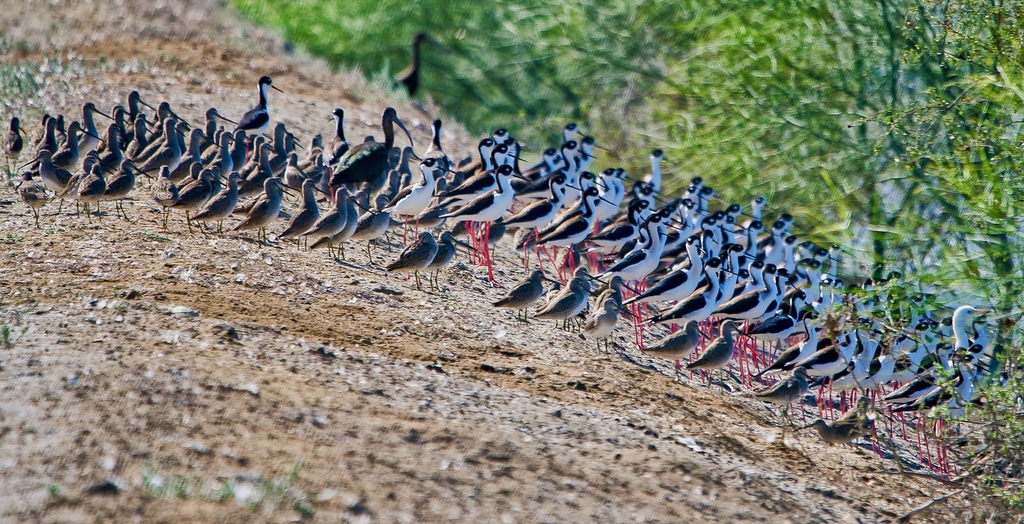
(c) Bill Levine, some rights reserved (CC BY) · licence
Family: Scolopacidae · Class: Aves · Order: Charadriiformes
Limnodromus griseus (Short-billed Dowitcher) is a California animal in the Scolopacidae family.
The Short-billed Dowitcher is a medium-sized shorebird measuring 23 to 25 cm (9 to 10 inches) in length with a wingspan of 46 to 56 cm (18 to 22 inches). Adults weigh between 82 to 155 grams. The species exhibits sexual dimorphism, with females averaging larger than males and possessing longer bills. In breeding plumage, adults display rich rufous underparts with dark barring, gray-brown upperparts with rufous and buff markings, and a distinctive white rump patch visible in flight. The bill is straight to slightly upturned, dark-tipped, and shorter relative to body size compared to the closely related Long-billed Dowitcher. Non-breeding adults show gray upperparts and white underparts with gray breast streaking. Juveniles are distinguished by their bright rufous cap and nape contrasting with gray cheeks. Short-billed Dowitchers breed across boreal regions of Alaska and western Canada, primarily in muskegs and wetlands from sea level to 900 meters elevation. During migration and winter, the species occurs along both Pacific and Atlantic coasts of North America. In California, Short-billed Dowitchers are regular migrants and winter visitors along the entire coast from March through May and July through October, with peak numbers occurring during August and September. Small numbers may overwinter, particularly in southern California coastal areas. The species inhabits shallow coastal environments including mudflats, salt marshes, lagoons, and estuarine areas. During migration, they utilize freshwater habitats such as flooded agricultural fields, sewage ponds, and shallow lake margins. Optimal foraging areas contain soft substrates that allow deep probing for invertebrate prey. Salinity tolerance ranges from fresh water to full marine conditions. Short-billed Dowitchers employ a distinctive rapid, sewing machine-like probing technique while feeding, often submerging their entire bill and head. Their diet consists primarily of marine worms, mollusks, crustaceans, and insect larvae. During the breeding season, they consume dipteran larvae, beetles, and other terrestrial arthropods. Breeding occurs from late May through July in northern wetlands, where pairs construct ground nests in sedge or grass tussocks. Females typically lay four olive-buff eggs with brown markings. Both sexes incubate for 21 days, though males assume primary responsibility for chick-rearing after hatching. The Short-billed Dowitcher is not federally listed and maintains stable continental populations estimated at 500,000 to 1 million individuals according to Partners in Flight. However, the species faces threats from habitat loss due to coastal development, wetland drainage, and climate change impacts on Arctic breeding grounds. Rising sea levels threaten critical stopover and wintering habitats along the Pacific Coast. In California, disturbance at roosting sites and reduced invertebrate prey availability due to pollution represent ongoing concerns. The species benefits from protected areas including National Wildlife Refuges and state-managed wetlands that provide essential habitat during migration and winter periods.
Classification
Class: Aves · Order: Charadriiformes · Family: Scolopacidae
Frequently asked questions
How is Limnodromus griseus classified?
Limnodromus griseus belongs to class Aves, order Charadriiformes, family Scolopacidae.
What family does Limnodromus griseus belong to?
Limnodromus griseus is in the Scolopacidae family.
What is Limnodromus griseus?
The Short-billed Dowitcher is a medium-sized shorebird measuring 23 to 25 cm (9 to 10 inches) in length with a wingspan of 46 to 56 cm (18 to 22 inches).
Is Limnodromus griseus found in California?
Yes. Limnodromus griseus is recorded in California in The California Species Project's catalogue.
Related species
Other California species in the same genus, family, or bioregion.
Data from The California Species Project — 14,000+ California species with verified data from CNPS, CDFW, USFWS, and more.