Linderiella occidentalis
California Linderiella
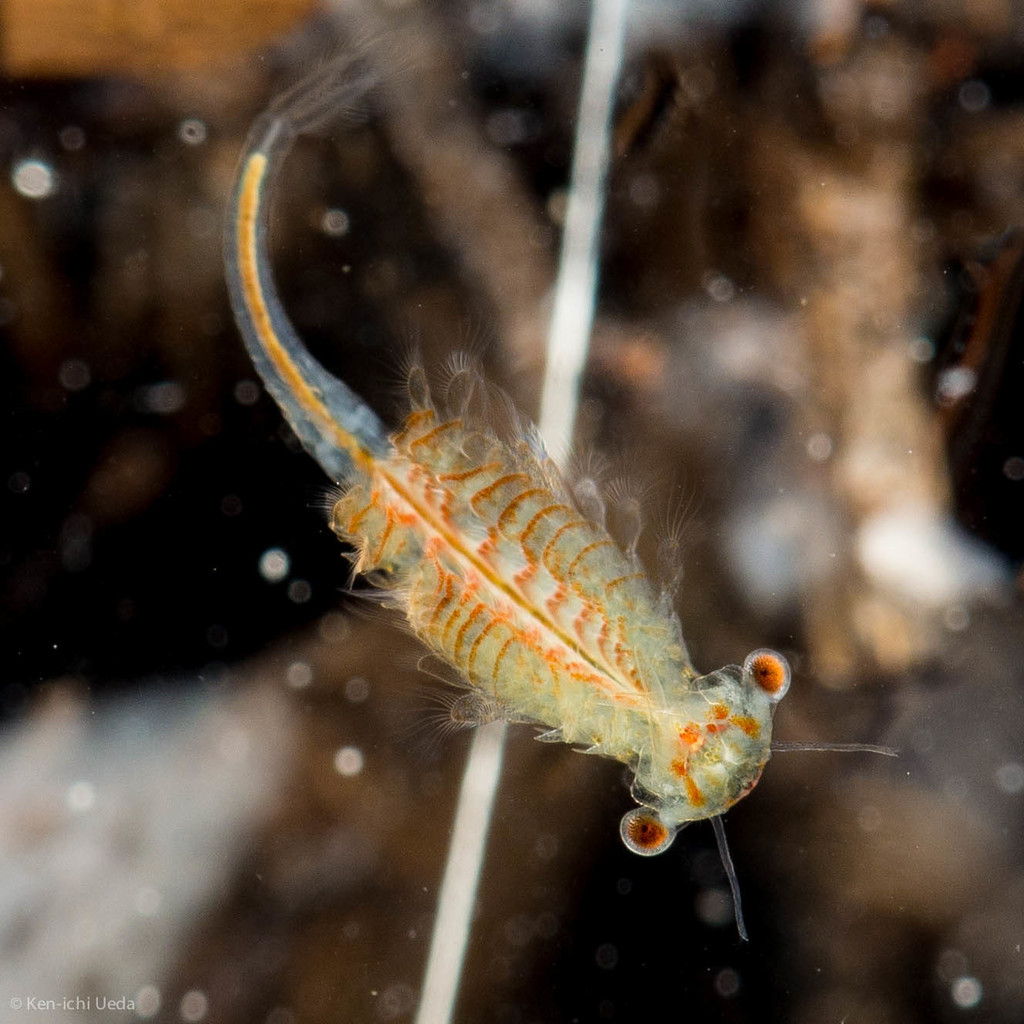
(c) Ken-ichi Ueda, some rights reserved (CC BY) · licence
Family: Chirocephalidae · Class: Branchiopoda · Order: Anostraca
Conservation status: G2G3 S2S3
Linderiella occidentalis (California Linderiella) is a California animal in the Chirocephalidae family.
California linderiella (Linderiella occidentalis) is a small freshwater crustacean belonging to the family Chirocephalidae within the order Anostraca (fairy shrimp). Adults typically measure 10-15 mm in length and possess the characteristic elongated body form of fairy shrimp, with a segmented trunk bearing numerous pairs of swimming appendages called phyllopods. The species exhibits sexual dimorphism, with males possessing enlarged second antennae used for grasping females during mating. The translucent to pale coloration allows internal organs to be visible through the body wall. California linderiella ranges from near Redding in the north to Fresno County in the south, distributed mainly east of the Sacramento and San Joaquin Rivers. The species occurs throughout the Central Valley and adjacent foothills, with documented populations in Sacramento, San Joaquin, Stanislaus, Merced, Madera, and Fresno counties. Historical records indicate a broader distribution that has contracted due to habitat loss and modification. This species inhabits seasonal wetlands, particularly vernal pools and constructed seasonal wetlands that mimic natural pool conditions. California linderiella occurs in both natural pools and constructed pools, demonstrating some adaptability to created habitats (USFWS 2024). The species requires ephemeral aquatic habitats that fill with winter and spring rains and gradually dry by late spring or summer. These pools typically hold water for 2-5 months, providing sufficient time for the species to complete its life cycle. Unlike some fairy shrimp species, California linderiella tends to avoid surface waters and seeks refuge in slightly cooler deeper areas of pools (USFWS 2024). California linderiella exhibits a relatively long lifespan compared to other vernal pool crustaceans, living significantly longer than most co-occurring species (USFWS 2002). Adults are filter feeders, using their phyllopods to create feeding currents that capture algae, bacteria, protozoa, and organic detritus from the water column. Reproduction occurs through production of drought-resistant cysts that remain dormant in dried pool sediments until favorable conditions return. These cysts can survive multiple years of drought, allowing populations to persist through unfavorable periods. California linderiella has a global rank of G2G3 (imperiled to vulnerable) and a state rank of S2S3 in California, indicating conservation concern but not federal protection. This species is included on the California Department of Fish and Wildlife's Special Animals List. The species was initially proposed for federal endangered species listing in 1992 alongside several other vernal pool crustaceans, but was withdrawn from consideration in 1994 when additional surveys revealed it was more abundant than previously known (USFWS 1994). The species is currently designated as a species of conservation concern and is monitored at several national wildlife refuges, including the San Luis National Wildlife Refuge Complex and Steve Thompson North Central Valley Wildlife Management Area. Primary threats include habitat loss due to urban development, agricultural conversion, water diversions, and invasive species that alter pool hydrology and water quality. Conservation efforts focus on protecting existing vernal pool complexes and creating constructed seasonal wetlands to supplement natural habitat.
Classification
Class: Branchiopoda · Order: Anostraca · Family: Chirocephalidae
Conservation status
G2G3 S2S3
Frequently asked questions
How is Linderiella occidentalis classified?
Linderiella occidentalis belongs to class Branchiopoda, order Anostraca, family Chirocephalidae.
What family does Linderiella occidentalis belong to?
Linderiella occidentalis is in the Chirocephalidae family.
Is Linderiella occidentalis protected or of conservation concern?
Linderiella occidentalis carries the following status: G2G3 S2S3.
What is Linderiella occidentalis?
California linderiella (Linderiella occidentalis) is a small freshwater crustacean belonging to the family Chirocephalidae within the order Anostraca (fairy shrimp).
Is Linderiella occidentalis found in California?
Yes. Linderiella occidentalis is recorded in California in The California Species Project's catalogue.
Related species
Other California species in the same genus, family, or bioregion.
Data from The California Species Project — 14,000+ California species with verified data from CNPS, CDFW, USFWS, and more.