Lineodes integra
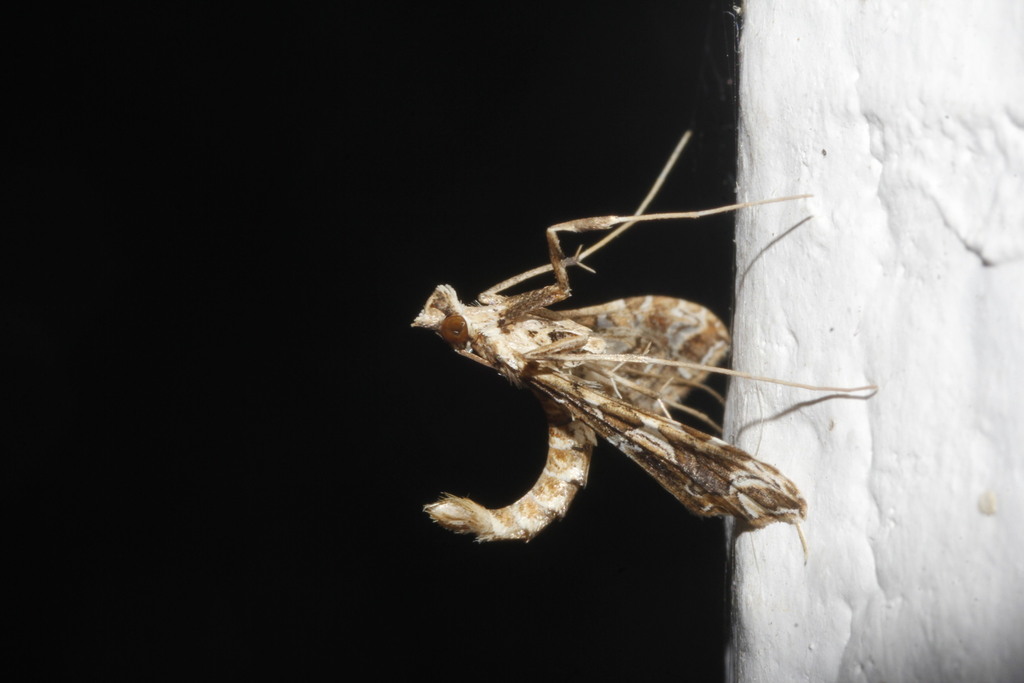
(c) Juan Cruzado Cortés, some rights reserved (CC BY-SA) · licence
Family: Pyralidae · Class: Insecta · Order: Lepidoptera
Lineodes integra is a California animal in the Pyralidae family.
Lineodes integra is a moth species belonging to the family Pyralidae, commonly known as grass moths or snout moths. This lepidopteran species represents one of numerous crambid moths found in North America, though detailed morphological descriptions in the scientific literature remain limited. Adult Lineodes integra moths exhibit the typical crambid body plan, with narrow forewings and relatively broad hindwings. The wingspan measurements and specific coloration patterns have not been extensively documented in readily available taxonomic literature. Like other members of the Pyralidae family, adults likely possess elongated labial palps that project forward from the head, giving the characteristic snout-like appearance that defines this moth family. The documented range of Lineodes integra includes portions of North America, though specific distributional records require verification through museum collections and taxonomic databases. The species' presence in California has been noted, but detailed county-level distribution data are not readily available in current online taxonomic resources. Historical collecting records and museum specimens would provide the most reliable distributional information for this species. Habitat preferences for Lineodes integra have not been thoroughly documented in accessible scientific literature. Members of the Pyralidae family typically occupy diverse habitats ranging from grasslands to forest edges, with larval stages often associated with specific host plants. The microhabitat requirements and elevation range preferences for this particular species remain poorly characterized in current taxonomic accounts. Ecological information for Lineodes integra is limited in readily available sources. Crambid moths generally undergo complete metamorphosis, with larvae developing through multiple instars before pupation. Adult flight periods, mating behaviors, and larval host plant associations have not been specifically documented for this species in accessible literature. The feeding habits of larvae, whether they function as leaf feeders, stem borers, or root feeders, require clarification through detailed life history studies. The conservation status of Lineodes integra has not been formally assessed by federal or state wildlife agencies. The species does not appear on current endangered species lists or species of special concern designations. Population trends and threat assessments are not available in current conservation databases. The apparent lack of recent ecological studies and limited representation in online taxonomic resources may indicate either genuine rarity or simply insufficient scientific attention to this particular crambid species. Further taxonomic research and field surveys would be necessary to provide comprehensive biological and ecological information for Lineodes integra. Museum collections and specialized lepidopteran databases may contain additional specimen records and distributional data not reflected in current online resources.
Classification
Class: Insecta · Order: Lepidoptera · Family: Pyralidae
Frequently asked questions
How is Lineodes integra classified?
Lineodes integra belongs to class Insecta, order Lepidoptera, family Pyralidae.
What family does Lineodes integra belong to?
Lineodes integra is in the Pyralidae family.
What is Lineodes integra?
Lineodes integra is a moth species belonging to the family Pyralidae, commonly known as grass moths or snout moths.
Is Lineodes integra found in California?
Yes. Lineodes integra is recorded in California in The California Species Project's catalogue.
Related species
Other California species in the same genus, family, or bioregion.
Data from The California Species Project — 14,000+ California species with verified data from CNPS, CDFW, USFWS, and more.