Linepithema humile
Argentine Ant
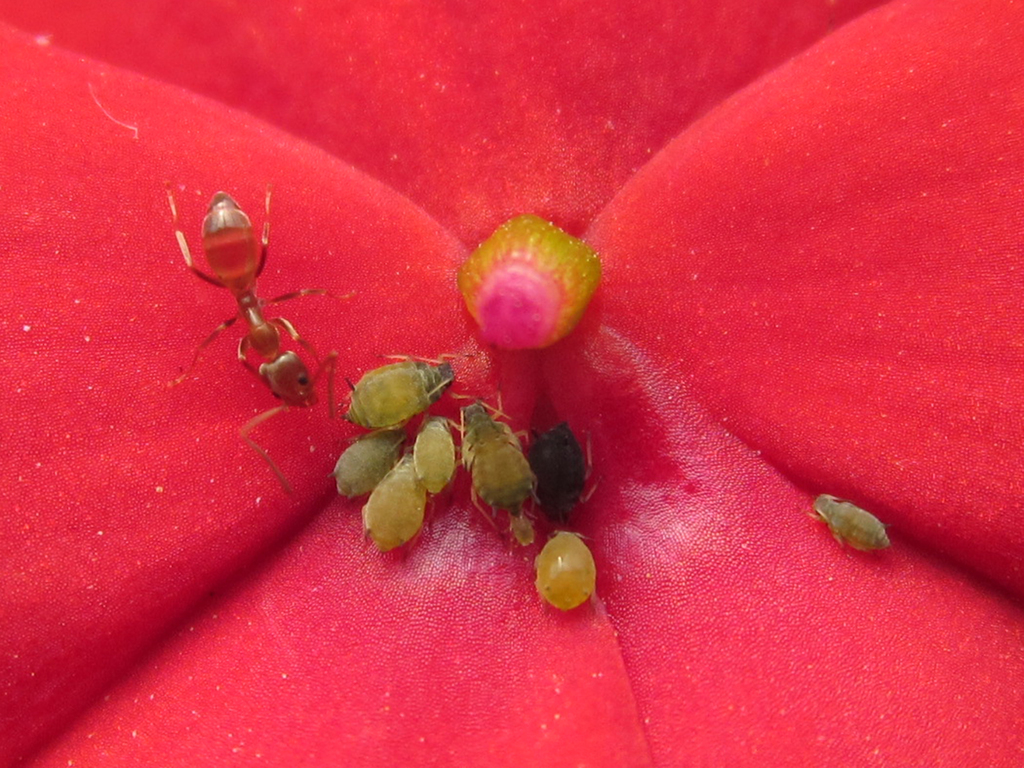
(c) Asiel Olivares, some rights reserved (CC BY) · licence
Family: Formicidae · Class: Insecta · Order: Hymenoptera
Linepithema humile (Argentine Ant) is a California animal in the Formicidae family.
The Argentine ant is a small, invasive hymenopteran species native to South America that has become one of the most problematic introduced ants in California. Worker ants measure approximately 2.2 to 2.6 mm in length, with a uniform light to dark brown coloration. The species exhibits a relatively slender build compared to native ant species, with long legs and antennae. Workers lack a distinct waist constriction and possess a single petiolar node. The species is distinguished from native ants by its musty, rancid butter-like odor when crushed. Argentine ants are now established throughout much of California, from sea level to moderate elevations. The species is particularly abundant in coastal regions, the Central Valley, and urban areas throughout the state. In southern California, populations extend from San Diego County north through Los Angeles and Ventura counties. The species has also established populations in the San Francisco Bay Area and Central Valley. Argentine ants prefer Mediterranean-type climates and are most successful in areas with mild winters and access to moisture. This species thrives in disturbed habitats, urban environments, and areas with regular irrigation. Argentine ants are commonly found in residential gardens, agricultural areas, riparian zones, and coastal scrub habitats. They construct shallow nests in soil, under stones, in wall crevices, and beneath structures. The species requires consistent moisture and is often found near water sources, irrigation systems, or areas with regular watering. Unlike many native ant species, Argentine ants cannot tolerate extremely dry conditions. Argentine ants are omnivorous foragers that feed on honeydew produced by aphids and scale insects, as well as plant nectar, seeds, and small invertebrates. The species forms large, aggressive colonies that can contain multiple queens and interconnected nests spanning extensive areas. These supercolonies lack the territorial behavior typical of native ant species, allowing them to achieve extremely high population densities. Argentine ants are active year-round in California's mild climate, with peak activity during spring and fall months. Reproduction is continuous, with new queens produced throughout the year rather than during discrete nuptial flights. Argentine ants are not protected under federal or state endangered species legislation, as they are an introduced species. However, they represent a significant ecological threat to native ant communities and other invertebrates. Research in coastal southern California has documented that Argentine ant invasions dramatically reduce native arthropod diversity and abundance (Suarez et al. 1998). The species displaces native ants through aggressive competition and superior recruitment to food sources. This displacement cascades through ecosystems, affecting seed dispersal, soil aeration, and predation patterns that native species provide. Management efforts focus on reducing irrigation and moisture sources that facilitate Argentine ant establishment, though complete eradication from established areas remains extremely difficult. The species' ecological impact and rapid spread make it a priority target for invasive species management programs throughout California.
Classification
Class: Insecta · Order: Hymenoptera · Family: Formicidae
Frequently asked questions
How is Linepithema humile classified?
Linepithema humile belongs to class Insecta, order Hymenoptera, family Formicidae.
What family does Linepithema humile belong to?
Linepithema humile is in the Formicidae family.
What is Linepithema humile?
The Argentine ant is a small, invasive hymenopteran species native to South America that has become one of the most problematic introduced ants in California.
Is Linepithema humile found in California?
Yes. Linepithema humile is recorded in California in The California Species Project's catalogue.
Related species
Other California species in the same genus, family, or bioregion.
Data from The California Species Project — 14,000+ California species with verified data from CNPS, CDFW, USFWS, and more.